

The reason for this success is so fundamental and should be so apparent—however, it is missed by almost every attorney throughout their career. Because it is missed so often, many attorneys end up unfulfilled, unsuccessful, and unable to advance and be happy when they should be.
Read more:
- How to Succeed in the Practice of Law
- The Only Way to Be Happy Practicing Law: How to Immediately Find Happiness Practicing Law
- How to Make a Lot of Money Practicing Law

|
| Harrison Barnes |
You can learn what these attorneys are doing wrong by looking around you. There are examples of this everywhere you turn. The cause of why attorneys succeed or fail can be seen just by watching businesses in whatever area of the country you are.
My office is in an upscale shopping mall in the center of Malibu, California. Since Malibu is a small town of no more than 10,000 full-time residents (probably far less) and the rent is expensive, this mall cannot support many stores—and the stores that open there need to know exactly what to do to appeal to customers. While there are summer tourists and people who come out on the weekends, Malibu is about an hour from most areas of Los Angeles with traffic, so the majority of shoppers there are local.
Most of the stores in this mall are overpriced clothing stores from France and New York, expensive restaurants, real estate agencies that sell very expensive homes, a few art galleries, places that sell natural juices for $12 a bottle, and the like. Unless they have an extremely high markup, these businesses cannot survive. I have seen tons of businesses open here in the ten years that I have worked in this mall, and most them fail. Unless they can attract full-time residents or the visitors who spend money on the weekends and during the summers, they close very rapidly. Some fold after just a few months.
Recently, right beneath my office, a French motorcycle shop opened that is staffed by a man from France. Each day he sits there, and I walk by him several times a day and never see anyone in the store. Most people who live in Malibu do not have motorcycles. It is one of the most bizarre things I have ever seen. It is inconceivable that there is a need for this in Malibu. Why would someone open a tiny motorcycle shop in a small town of 10,000 people, one hour outside of a large city, where no one even owns motorcycles? To make matters worse, the shop is in a small outdoor mall with no street visibility.
See also: How Much Do You Want Your Dream?
"My boss likes Malibu, and he wanted a shop here," the man who runs the shop told me one day. He was brought over from France to talk to people in Malibu about his motorcycles. The shop is beautiful and very nice inside. I estimate it must have cost at least $100,000 to build it out. This poor man sits behind a laptop computer all day surfing the net. As far as I can tell, he has never sold a single motorcycle. I have no idea how long this shop will be open—but I do not imagine it will be that long.
Before I tell you the huge mistake this man made, I need to tell you that he is not the first, nor will he be the last. I have seen people open candle shops, budget clothing stores, meditation studios, and all sorts of other businesses that were destined to—and did—fail. These businesses failed for the same reason that most attorneys fail. But before I explain the thought process behind these failures, I need to tell you another story first.
Are You a Giver or a Taker?
One of the most interesting things about holidays, birthdays, and other events is that they often bring out the best and worst in people. On one hand, many people go over the top and do a lot for others to show how much they care about them. People who make a big effort to celebrate others seem to attract friends naturally. People like them, include them, and they are empowered by the care and affection they receive in return. This is not always the case, of course—but most often it is. Many people are natural givers who truly enjoy doing nice things for others.
On the other hand, many people do not. They feel entitled to receive gifts and attention on their birthdays—despite the fact that they do not do the same for others. On holidays when people are giving gifts and helping others, they give little yet often expect much in return. This is another very common personality type—arguably just as common as the natural giver. These personalities typically do not have as many friends and are not cared about as much as the givers, although there are always exceptions.
For a companion perspective on the single trait attorneys struggle most to maintain, see this video: The Most Important Characteristic Attorneys Need to Succeed.
See related:
Someone I often see on holidays and birthdays falls into the entitled category. For other peoples' birthdays, he does things like purchase books he wants and then reads them himself before giving them as gifts. He also frequently forgets birthdays. However, when it is his birthday, he is sure to make plans to visit his relatives with the expectation that simply by showing up, he will be treated to a nice dinner, gifts, cake, and a celebration. When he is invited to someone else’s birthday event, he will always take more than he gives—either in food or by insuring that he is the center of attention by talking about himself.
On holidays like Christmas, he will go to a dollar store and purchase all sorts of gifts that people could not possibly want. A 40-year old woman with no interest in math might be given an old book about math equations that originally cost $30 but is now $1, so it looks like he is generous (the $1 price tag will be peeled off, but the original price is left visible). A child might be given a $1 jar of Play-Doh that originally cost $5 but is now hardened and worthless. At the same time, the child will give him a shaving kit that cost $20 even though she is only seven years old.
To highlight this man’s selfishness, one year I bought him (among many gifts) a fake lottery ticket where everyone was a winner. I put the envelope in a card and told him that if he won, I expected him to split the earnings with me. When he scratched off the numbers, sure enough, it showed he "won" $100,000 (every ticket was a winner!). When I asked him how much he won, he told me the ticket was not a winner—then he very quickly put it in his wallet and squirreled it away. The last thing in the world he was going to do was share his winnings.
See also: The Importance of Sharing
It is not the idea of giving nice gifts that is important—it is putting thought, effort and care into those gifts. While this man could surely afford to do more, it is his sense that others should do for him without him ever contributing in return that is the problem. There are too many people who expect a lot to be done for them without contributing to others.
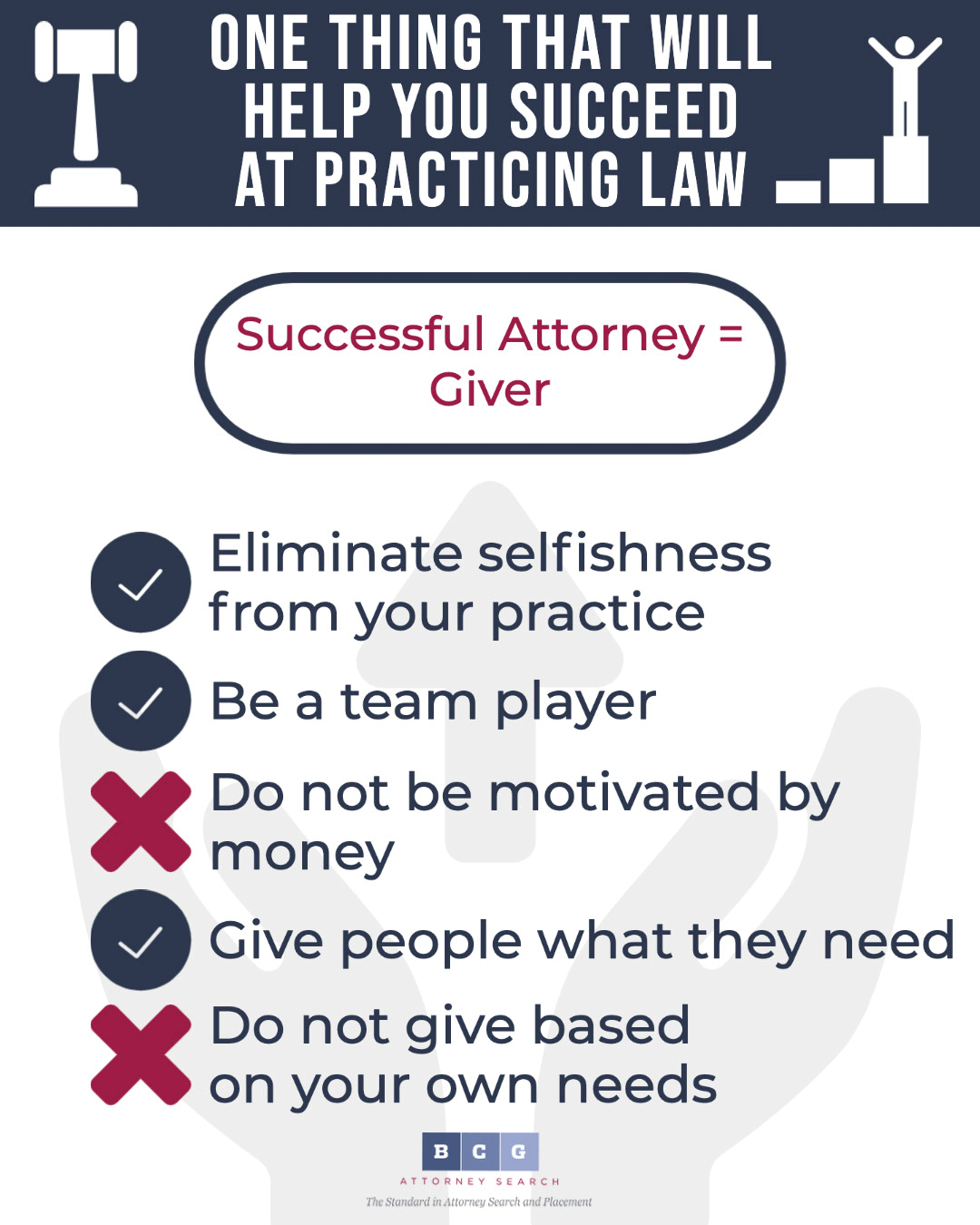
There are also people who give and contribute based on their own needs, not the needs of others. It is making contributions based on your own needs—not what others need— that breeds unhappiness, a lack of success, and other problems in your professional and business life.
See related:
- How Important Are Intelligence, Work Ethic, Perseverance, and Social Intelligence to Succeeding in Large Law Firms?
- The One Simple Rule You Must Understand for Succeeding in a Law Firm: Ignore this Rule at Your Own Peril
As you might expect, this man who gives such bad gifts has never had much of a career because he is always concerned with taking and not giving. He does not have long-term relationships or friendships because they are also characterized by taking, manipulation, and getting as much as possible for as little as possible. People exist to serve him. When he does contribute, he does so based on his own rules and what he wants—not what others want or need.
The French man who wanted a motorcycle shop in the center of Malibu in a boutique shopping mall did it for his own vanity. He gave absolutely no regard to what the market wanted or would support. The only person's interest he is serving is his own.
The man who does not give gifts, but expects so much in return, is also only capable of serving his own interest.
What Are You Willing to Do?
When social media first came along, I did not understand exactly where it was going to go. To me, it just seemed to be something that people could use to serve their own vanity and post their stories and interests for others. However, in reality, social media is about much more than this. Social media is about making others feel validated, connected, and part of a community. It is about being a contributor—not just one person and their selfishness. If you can make others feel good by liking the things they say and do, then this will come back to you. Social media is a way for others to show how selfless or selfish they are. When you give others what they want (such as attention or validation), they are likely to give the same to you.
One of the most interesting things about the careers of attorneys is that their success is often directly in proportion with how willing they are to contribute to others in a selfless fashion. They do this by anticipating and doing what other people want and need—not just clients, but people they are working for in their firms, their peers, people they are close to, and others around them. If someone is continually selfish and only does what is only best for them, they will experience all sorts of problems in their personal, professional, and even their financial lives in the future.
In my first position after law school, I worked for a judge. When I started working for him, I realized that another clerk who was leaving got his mail each morning and put it on his desk for him. This was not something that was part of her job description, or something that any other clerks did, but he appreciated it. It saved him a trip to the mailbox and additional time out of his day, but it was also a sign of respect. Getting mail was not something I wanted to do, but I believed it was an important part of the job—so I made a point to do it each morning.
When I started practicing law, I heard other attorneys say things like "I did not go to law school to make photocopies" and the like. Some even quit positions over stuff like this. However, these statements are not really about the tasks at hand—they are about themselves. They are not about what other people need, and they are not selfless. Many attorneys struggling with this exact issue will relate to the insights in Why You Are Unhappy Practicing Law, which explains how frustration often stems from being stuck in a perpetual “order-taking” role.
Many young attorneys quit jobs and/or move firms when they are not given depositions and other responsibilities early in their careers, because they feel they are not being challenged enough. Instead of realizing they may be in a firm that will give them massive potential to succeed in the future, these attorneys unwisely show their unwillingness to contribute in the ways they have been hired to contribute. They end up leaving to go someplace they believe will better fulfill their needs when it does not. Gaining clarity on what drives success, the 25 Reasons to Move to a New Firm video illustrates actionable steps attorneys take to improve their careers.
I know of one associate who joined a major law firm out of law school. He worked very hard, but there was never anything extraordinary about the quality of his work or his interpersonal skills. He kept his head down, however, and continued to do what was asked of him. He was a litigation attorney and never got a lot of experience doing depositions, arguing motions in court, or performing other tasks that are par for the course for young attorneys trying to advance. One day he was tasked with going to a trial with arguably the most powerful partner in the law firm. His job was to make sure the partner had the documents needed to argue the trial, anticipate any issues the partner needed to be aware of, and more. Essentially, his job was to be a gopher. No one expected anything spectacular out of the attorney other than being there and doing what he was told.
A lot of senior associate attorneys would be angry about having to be a gopher for a senior partner in a trial. This position is behind the scenes and has none of the glory of making opening and closing statements, writing motions during the trial, examining witnesses, and so forth. Despite this, the attorney chose to do the best job he possibly could. He threw himself into it and decided he would be the best gopher anyone had ever seen. He studied the case files in depth. He spoke with other attorneys who had been busy writing briefs on the case. When he got to the trial, by all accounts he did everything he possibly could to make sure the partner was as well-prepared as possible—even going so far as to write memos for him each day, discussing the case in-depth with him each morning and having an incredible set of files prepared each day that went far beyond what any normal gopher would do.
As a consequence, the partner felt extremely grateful and taken care of. When he returned from the trial, the partner made sure that someone who had been a gopher was made a partner in the firm. To the astonishment of associates who believed they worked harder and were more valuable to the firm—and had more and better experience—the gopher showed that when you give people what they want and need, they will help you.
See related posts:
Remember, It’s Not about You
Giving people what they want and need is always about others and never about you. You should always anticipate what clients need and give it to them. Regardless of the type of client, every client needs something—and the better the attorney is at giving it to them, the happier the client will be. A divorce client may need someone to listen to them and take their side, no matter how ludicrous it may seem. A litigation client may also need someone to believe in them and take their side about what may be possible. A business client will need someone to tell them that a certain type of deal is possible and they will do whatever they can to get it done. An entrepreneur will need someone who believes in them and in their business. The law firm partner who hires you will need someone they feel will support them and help them as well. The world is about others helping others.
In general, your personal, professional, and economic success will always come down to how well you meet the needs of others in the world. If you are able to meet the needs of others effectively, they will do what they can to keep you around and meet your needs in return. You need to think of how you can best meet the needs of others and do so in the most effective way possible.
The people who are the best in any profession have the ability to anticipate what others want and need. A good portion of their waking day is spent thinking about the people they are serving and what they can give them—not the other way around. The law is a service business, and service means trying to understand what others want and fulfilling their needs constantly. If you are able to fulfill others' needs, you will succeed—if you are not able to, you will not succeed. It is as simple as that. People only open their pocketbooks to pay you and reward you if you are giving them what they need.
Everyone in the law firm world needs something:
- Law firms need associates who are smart, willing to work hard, make others feel important, impress clients, and make partners look good to these clients.
- Law firms need partners who are able to bring in business, train associates, work hard, and generate revenue.
- Clients need attorneys who are able to anticipate their needs, protect them, charge them fair prices, make them look good, and keep them out of trouble.
- Clients also need law firms that are well-run, protect their reputations, hire the best people possible, and have a culture and way of operating that produces the best possible results.
Each step of this process is about what others need, anticipating these needs, and then fulfilling them. The attorneys who understand their role in this process and work to fulfill others' needs do well. Attorneys who do not anticipate what others need or do the necessary work do not do well. The more you think everything is about you, the more issues you will have and the more you will hold yourself back.
Since before I was even in law school almost three decades ago, potential attorneys and others have been obsessed with salaries and how much they can make working inside of law firms. Motivated by money and not the practice of law, many of these people do not succeed. They believe very early on that it is all about them, and they do not consider what they need to contribute to succeed in the process. To better appreciate why dedication and purpose drive success in this field, 21 Unsurpassed Reasons Why Practicing Law Is the Best Profession expands on how passion for the law turns challenges into lasting fulfillment.
See also:
- Never Focus on the Money: Focus on Your Higher Purpose and Contribution
- Why You Should Find Your "Tribe" and Not Just Focus on Money in Making Law Firm Job Decisions
Remove Selfishness from the Equation
Some attorneys who are selfish always think about what they can take from others and how to manipulate others to get what they want. I have seen many people go to solo practitioners and end up spending far more money than they would have if they had used a large, reputable law firm. The reason they ended up spending more was because the solo practitioner was all about himself, did as little work as possible, and took as much as he possibly could, as fast as he could. This is probably why he is a solo practitioner in the first place. He could not get along with groups where giving and making contributions was expected of everyone. He wanted to work on his own terms and take everything for himself. These attorneys never have long-term clients because their clients run after they are taken advantage of and their problems are not solved. Once you’ve mastered this key concept, consult the Likely Ranking of Attorneys in Different Practice Areas to align your efforts with market data.
The very best attorneys and the ones who succeed at the highest levels have learned how to eliminate selfishness from their practices. The most successful attorneys in the largest law firms are often much better team players than it might appear. They may develop a reputation in some quarters for being ruthless—however, they still contribute far more than they take from their law firms. Their clients respect them, and their relationships with their clients are very strong. They are not out to gouge clients, but to help them the best way they possibly can.
See also: Can You Be Trusted? Why Credibility is One of the Most Important Characteristics of the Most Successful Attorneys
The attorneys who get in trouble in their careers and do not succeed are often driven by self- seeking and the belief that they must take or they will be taken from. They are calculating and invariably step on the toes of others, who eventually retaliate in different ways. Many attorneys try to run their lives doing only what they want based on what is most important to them. They do not think about what is important to their clients, superiors, fellow attorneys, or others. They believe that they can be successful through games, manipulation, charm, and gamesmanship. When it does not work, these attorneys becomes bitter and angry. They may try harder the next time, but they are rarely sincere in what they are trying to achieve and become even more bitter and angry. To see how this mindset plays out in real-world legal careers, this video on why attorneys need to be exploited to succeed offers a powerful expansion on the same theme.
If you are going to succeed at practicing law, you need to understand that it is all about pleasing others and giving them what they want. You need to provide a product that others want, and you need to give them this product exactly the way they want it—and never make it about you.
See related articles for more information:
- How to Attract Success
- Putting Yourself Out There and Your Heart, Body and Soul
- 21 Pieces of Career Advice No One Gives Attorneys
- Karma, Universal Laws, and Your Career
- The Only Thing That Matters Is Commitment
- The Most Important Characteristic Attorneys Need to Succeed and Why It Is Almost Impossible for Them to Keep It
About Harrison Barnes
No legal recruiter in the United States has placed more attorneys at top law firms across every practice area than Harrison Barnes. His unmatched expertise, industry connections, and proven placement strategies have made him the most influential legal career advisor for attorneys seeking success in Big Law, elite boutiques, mid-sized firms, small firms, firms in the largest and smallest markets, and in over 350 separate practice areas.
A Reach Unlike Any Other Legal Recruiter
Most legal recruiters focus only on placing attorneys in large markets or specific practice areas, but Harrison places attorneys at all levels, in all practice areas, and in all locations-from the most prestigious firms in New York, Los Angeles, and Washington, D.C., to small and mid-sized firms in rural markets. Every week, he successfully places attorneys not only in high-demand practice areas like corporate and litigation but also in niche and less commonly recruited areas such as:
- Immigration Law
- Workers Compensation
- Insurance
- Family Law
- Trust and Estate
- Municipal law
- And many more...
This breadth of placements is unheard of in the legal recruiting industry and is a testament to his extraordinary ability to connect attorneys with the right firms, regardless of market size or practice area.
Proven Success at All Levels
With over 25 years of experience, Harrison has successfully placed attorneys at over 1,000 law firms, including:
- Top Am Law 100 firms such including Sullivan and Cromwell, and almost every AmLaw 100 and AmLaw 200 law firm.
- Elite boutique firms with specialized practices
- Mid-sized firms looking to expand their practice areas
- Growing firms in small and rural markets
He has also placed hundreds of law firm partners and has worked on firm and practice area mergers, helping law firms strategically grow their teams.
Unmatched Commitment to Attorney Success - The Story of BCG Attorney Search
Harrison Barnes is not just the most effective legal recruiter in the country, he is also the founder of BCG Attorney Search, a recruiting powerhouse that has helped thousands of attorneys transform their careers. His vision for BCG goes beyond just job placement; it is built on a mission to provide attorneys with opportunities they would never have access to otherwise. Unlike traditional recruiting firms, BCG Attorney Search operates as a career partner, not just a placement service. The firm's unparalleled resources, including a team of over 150 employees, enable it to offer customized job searches, direct outreach to firms, and market intelligence that no other legal recruiting service provides. Attorneys working with Harrison and BCG gain access to hidden opportunities, real-time insights on firm hiring trends, and guidance from a team that truly understands the legal market. You can read more about how BCG Attorney Search revolutionizes legal recruiting here: The Story of BCG Attorney Search and What We Do for You.
The Most Trusted Career Advisor for Attorneys
Harrison's legal career insights are the most widely followed in the profession.
- His articles on BCG Search alone are read by over 150,000 attorneys per month, making his guidance the most sought-after in the legal field. Read his latest insights here.
- He has conducted hundreds of hours of career development webinars, available here: Harrison Barnes Webinar Replays.
- His placement success is unmatched-see examples here: Harrison Barnes' Attorney Placements.
- He has created numerous comprehensive career development courses, including BigLaw Breakthrough, designed to help attorneys land positions at elite law firms.
Submit Your Resume to Work with Harrison Barnes
If you are serious about advancing your legal career and want access to the most sought-after law firm opportunities, Harrison Barnes is the most powerful recruiter to have on your side.
Submit your resume today to start working with him: Submit Resume Here
With an unmatched track record of success, a vast team of over 150 dedicated employees, and a reach into every market and practice area, Harrison Barnes is the recruiter who makes career transformations happen and has the talent and resources behind him to make this happen.
A Relentless Commitment to Attorney Success
Unlike most recruiters who work with only a narrow subset of attorneys, Harrison Barnes works with lawyers at all stages of their careers, from junior associates to senior partners, in every practice area imaginable. His placements are not limited to only those with "elite" credentials-he has helped thousands of attorneys, including those who thought it was impossible to move firms, find their next great opportunity.
Harrison's work is backed by a team of over 150 professionals who work around the clock to uncover hidden job opportunities at law firms across the country. His team:
- Finds and creates job openings that aren't publicly listed, giving attorneys access to exclusive opportunities.
- Works closely with candidates to ensure their resumes and applications stand out.
- Provides ongoing guidance and career coaching to help attorneys navigate interviews, negotiations, and transitions successfully.
This level of dedicated support is unmatched in the legal recruiting industry.
A Legal Recruiter Who Changes Lives
Harrison believes that every attorney-no matter their background, law school, or previous experience-has the potential to find success in the right law firm environment. Many attorneys come to him feeling stuck in their careers, underpaid, or unsure of their next steps. Through his unique ability to identify the right opportunities, he helps attorneys transform their careers in ways they never thought possible.
He has worked with:
- Attorneys making below-market salaries who went on to double or triple their earnings at new firms.
- Senior attorneys who believed they were "too experienced" to make a move and found better roles with firms eager for their expertise.
- Attorneys in small or remote markets who assumed they had no options-only to be placed at strong firms they never knew existed.
- Partners looking for a better platform or more autonomy who successfully transitioned to firms where they could grow their practice.
For attorneys who think their options are limited, Harrison Barnes has proven time and time again that opportunities exist-often in places they never expected.
Submit Your Resume Today - Start Your Career Transformation
If you want to explore new career opportunities, Harrison Barnes and BCG Attorney Search are your best resources. Whether you are looking for a BigLaw position, a boutique firm, or a move to a better work environment, Harrison's expertise will help you take control of your future.
Submit Your Resume Here to get started with Harrison Barnes today.
Harrison's reach, experience, and proven results make him the best legal recruiter in the industry. Don't settle for an average recruiter-work with the one who has changed the careers of thousands of attorneys and can do the same for you.
About BCG Attorney Search
BCG Attorney Search matches attorneys and law firms with unparalleled expertise and drive, while achieving results. Known globally for its success in locating and placing attorneys in law firms of all sizes, BCG Attorney Search has placed thousands of attorneys in law firms in thousands of different law firms around the country. Unlike other legal placement firms, BCG Attorney Search brings massive resources of over 150 employees to its placement efforts locating positions and opportunities its competitors simply cannot. Every legal recruiter at BCG Attorney Search is a former successful attorney who attended a top law school, worked in top law firms and brought massive drive and commitment to their work. BCG Attorney Search legal recruiters take your legal career seriously and understand attorneys. For more information, please visit www.BCGSearch.com.
Harrison Barnes does a weekly free webinar with live Q&A for attorneys and law students each Wednesday at 10:00 am PST. You can attend anonymously and ask questions about your career, this article, or any other legal career-related topics. You can sign up for the weekly webinar here: Register on Zoom
Harrison also does a weekly free webinar with live Q&A for law firms, companies, and others who hire attorneys each Wednesday at 10:00 am PST. You can sign up for the weekly webinar here: Register on Zoom
You can browse a list of past webinars here: Webinar Replays
You can also listen to Harrison Barnes Podcasts here: Attorney Career Advice Podcasts
You can also read Harrison Barnes' articles and books here: Harrison's Perspectives
Harrison Barnes is the legal profession's mentor and may be the only person in your legal career who will tell you why you are not reaching your full potential and what you really need to do to grow as an attorney--regardless of how much it hurts. If you prefer truth to stagnation, growth to comfort, and actionable ideas instead of fluffy concepts, you and Harrison will get along just fine. If, however, you want to stay where you are, talk about your past successes, and feel comfortable, Harrison is not for you.
Truly great mentors are like parents, doctors, therapists, spiritual figures, and others because in order to help you they need to expose you to pain and expose your weaknesses. But suppose you act on the advice and pain created by a mentor. In that case, you will become better: a better attorney, better employees, a better boss, know where you are going, and appreciate where you have been--you will hopefully also become a happier and better person. As you learn from Harrison, he hopes he will become your mentor.
To read more career and life advice articles visit Harrison's personal blog.