
Executive Summary
A 10-Year Historical Analysis With 5-10 Year Forecasts
This report provides a comprehensive analysis of work-life balance and compensation trade-offs across the U.S. legal profession. Drawing from multiple authoritative data sources including NALP, ALM, ABA reports, and BLS data, we examine the relationship between compensation and quality of life across different sectors, career stages, and geographic regions. The trade-offs between compensation and well-being are stark—see The High Price of Success: Exploring the Stress and Health Consequences for Attorneys in Law Firms for insights.
- For a closer look at the hidden career costs of prioritizing salary, see The Hidden Costs of BigLaw.
Key findings include:
- Compensation-Hours Trade-off: Higher compensation in the legal profession directly correlates with increased work hours, with AmLaw 100 firms offering median compensation of $215,000 for first-year associates but requiring approximately 2,300 annual hours.
- Effective Hourly Rates: When normalized for hours worked, BigLaw and in-house positions offer comparable effective hourly rates (~$105/hour), despite different compensation structures and work environments.
- Work-Life Balance: Government and public interest attorneys report significantly higher satisfaction scores (8-9/10) despite lower compensation, while BigLaw associates report the lowest satisfaction (3/10).
- Burnout Correlation: Attorney burnout rates strongly correlate with annual hours worked, with BigLaw firms showing nearly double the burnout rates (58%) of public interest organizations (30%).
Table of Contents
1. Introduction2. Methodology
3. Historical Trends in Compensation and Hours
4. Sector Analysis
5. Demographic Analysis
6. Geographic Analysis
7. Career Trajectory Modeling
8. Health and Wellness Impact
9. Future Trends10. Strategic Implications
10. Conclusion
See Related Articles:
- The Top 10 Ways Working as an Attorney in a Law Firm Ages (and Kills You) Prematurely
- The Work-Life (Legal) Balance: What Lawyers Truly Need to Know About It
- Managing Lawyer Stress: Strategies for Well-being and Success in the Legal Profession
1. Introduction
The legal profession has long been characterized by high compensation and demanding work schedules, with significant variation across practice settings. This report examines the fundamental trade-offs between compensation and quality of life that attorneys face when choosing between different legal career paths. For attorneys balancing career and lifestyle priorities, the Top 250 US Cities – Bar Associations & Job Boards Directory can guide city-specific decisions.
In recent years, several factors have influenced these trade-offs:
- The post-Great Recession restructuring of legal service delivery models
- Increasing focus on attorney well-being and mental health concerns
- Rising compensation at top law firms creating greater disparity between sectors
- Generational shifts in attitudes toward work-life balance
- Technological changes affecting workflow and billable hours
- The impact of the COVID-19 pandemic on remote work and flexibility
This study aims to provide attorneys, law students, and legal employers with data-driven insights into these trade-offs, enabling more informed career decisions and organizational policies. For additional tips on maintaining balance in high-demand environments, see practical techniques for maintaining work-life balance in law firms.
2. Methodology
This report synthesizes data from multiple authoritative sources to provide a comprehensive assessment of work-life balance and compensation across the U.S. legal profession: See how one top firm navigates these challenges in our Goodwin Procter Complete Analysis 2026.
2.1 Data Sources
- NALP Reports: Employment outcomes, associate salaries, and public service attorney salary surveys (2013-2023)
- ALM/American Lawyer: Law firm financial data, partner compensation surveys, and AmLaw 100/200 rankings
- ABA Reports: Lawyer well-being studies, demographic data, and employment summary reports
- Bureau of Labor Statistics (BLS): Occupational employment statistics, wage data, and projections
- Major, Lindsey & Africa Surveys: Partner compensation studies and lateral hiring trends
- Robert Half Legal Salary Guide: Compensation benchmarks across legal roles and markets
- Bloomberg Law Attorney Workload Surveys: Billable hours, burnout metrics, and satisfaction data
- Academic Research: Peer-reviewed studies on lawyer well-being, attrition, and career satisfaction
True balance requires not just better choices but also inner change—explored in Overcoming Self-Sabotage in Your Legal Career.
- For a concrete example of how one firm frames fulfillment beyond compensation, see Drinker Biddle & Reath LLP: Unraveling the Path to Professional Fulfillment.
2.2 Analytical Approach
Our analysis focused on several key metrics:
- Total Compensation: Base salary plus bonus and additional benefits
- Hours Worked: Both billable and non-billable hours across different sectors
- Effective Hourly Rate: Total compensation divided by total hours worked
- Work-Life Balance Score: Derived from satisfaction surveys, burnout metrics, and attrition rates
- Career Progression Models: Typical advancement timelines and compensation growth by sector
- Burnout and Attrition Metrics: Percentage reporting significant burnout symptoms and annual turnover rates
Balancing compensation with culture, Barnes & Thornburg LLP illustrates how a strong focus on wellbeing supports both recruitment and long-term retention.
2.3 Segmentation
We analyzed data across multiple dimensions:
- Legal Sectors: BigLaw (AmLaw 100), AmLaw 101-200, midsize firms (100-250 attorneys), boutique firms, in-house legal departments, government, public interest, and academia
- Career Stages: Junior (1-3 years), mid-level (4-6 years), senior (7-8 years), junior partner/counsel, senior partner/counsel
- Geographic Markets: Major markets (NYC, DC, SF, Chicago, LA), secondary markets, and smaller markets
- Practice Areas: Litigation, corporate, IP, labor & employment, real estate, tax, and other specialized areas
- Demographics: Gender and diversity analysis where data was available. These trends often intersect with salary expectations, and firms have explored bridging salary gaps while maintaining quality of life as a retention strategy.
For more insight into firms that balance prestige with culture, see The Elite Boutique Law Firms in the United States.
3. Historical Trends in Compensation and Hours
3.1 First-Year Associate Salary Trends (2013-2023)
The past decade has seen significant shifts in first-year associate compensation, primarily driven by BigLaw salary increases that have widened the gap between the highest and lowest paying sectors of the profession. To understand how compensation correlates with firm expectations and workloads, see The Complete Attorney Compensation Report.
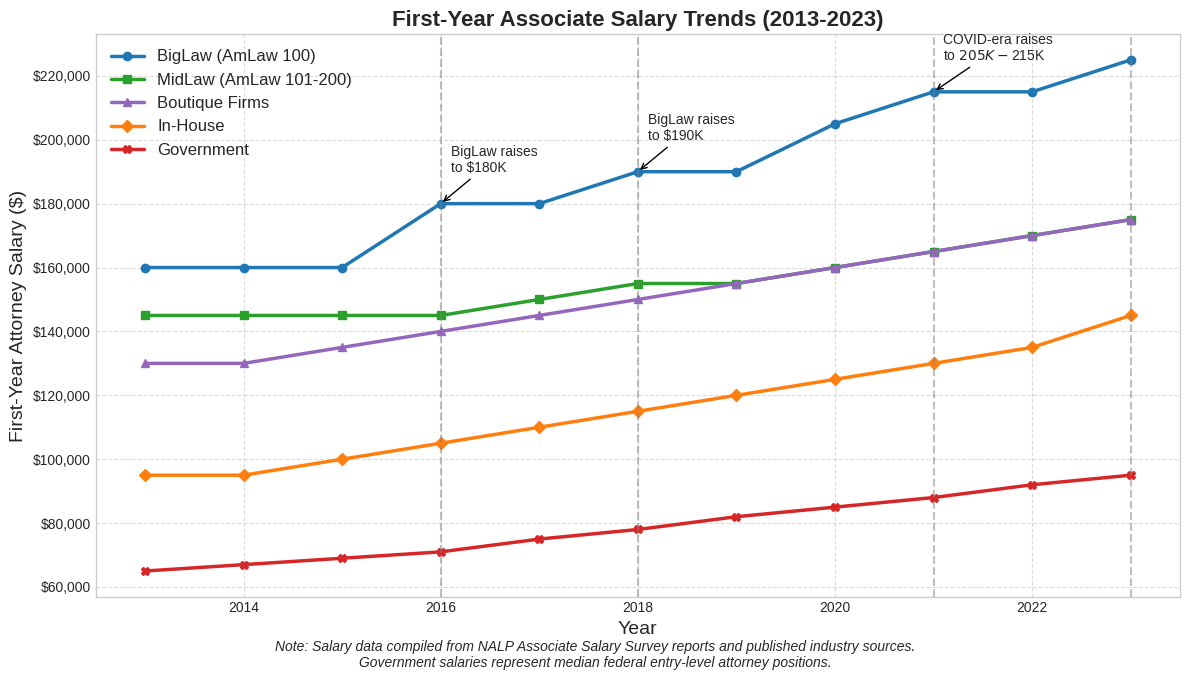
Figure 1: First-Year Associate Salary Trends (2013-2023) across different legal sectors. Note significant increases in BigLaw salaries in 2016, 2018, and 2021.
Key observations from the historical salary data:
- BigLaw first-year salaries increased from $160,000 to $225,000 (41% increase) between 2013-2023
- Major salary jumps occurred in 2016 (to $180,000), 2018 (to $190,000), and 2021-2023 ($205,000-$225,000)
- Government attorney salaries grew at a more modest pace, from $65,000 to $95,000 (46% increase)
- The gap between BigLaw and government first-year salaries widened from $95,000 in 2013 to $130,000 in 2023
- In-house counsel salaries have shown the steepest percentage increase in recent years (37% from 2019-2023)
3.2 Billable Hour Requirements (2013-2023)
While compensation has increased, billable hour requirements have remained relatively stable over the past decade, with some minor fluctuations following economic cycles:
| Sector | 2013 | 2016 | 2019 | 2021 | 2023 | % Change (2013-2023) |
|---|---|---|---|---|---|---|
| AmLaw 100 | 2,000 | 2,050 | 2,100 | 2,200 | 2,200 | +10.0% |
| AmLaw 101-200 | 1,950 | 1,950 | 2,000 | 2,050 | 2,050 | +5.1% |
| Midsize Firms | 1,850 | 1,850 | 1,900 | 1,950 | 1,950 | +5.4% |
| Boutique Firms | 1,800 | 1,800 | 1,850 | 1,900 | 1,900 | +5.6% |
Notable trends in billable hour requirements:
- The most significant increases in billable hour requirements occurred during 2019-2021, coinciding with pandemic-era demand surges
- AmLaw 100 firms now routinely expect 2,200+ annual billable hours, translating to approximately 50-60 hours of total work per week
- The gap in hours worked between BigLaw and smaller firms has widened over the past decade
- Non-billable hour expectations (client development, training, administrative tasks) have increased across all sectors. Understanding how compensation structures affect attorney retention and satisfaction can help explain why some lawyers tolerate heavier workloads. Curious how potential trade-offs impact your own earning potential? Use our 2025 Legal Salary Calculator to personalize these insights.
See Related Articles:
- Overcoming Self-Sabotage in Your Legal Career
- Is Work-life Balance a Realistic Goal at “Biglaw” Firms?
- Another Lawyer Suicide: How the Psychology of Being a Big Firm Lawyer Can Tear You Down
4. Sector Analysis
4.1 Compensation vs. Hours Worked by Sector
The fundamental trade-off between compensation and hours worked varies significantly across different legal sectors. Our analysis reveals clear patterns in how these variables relate:
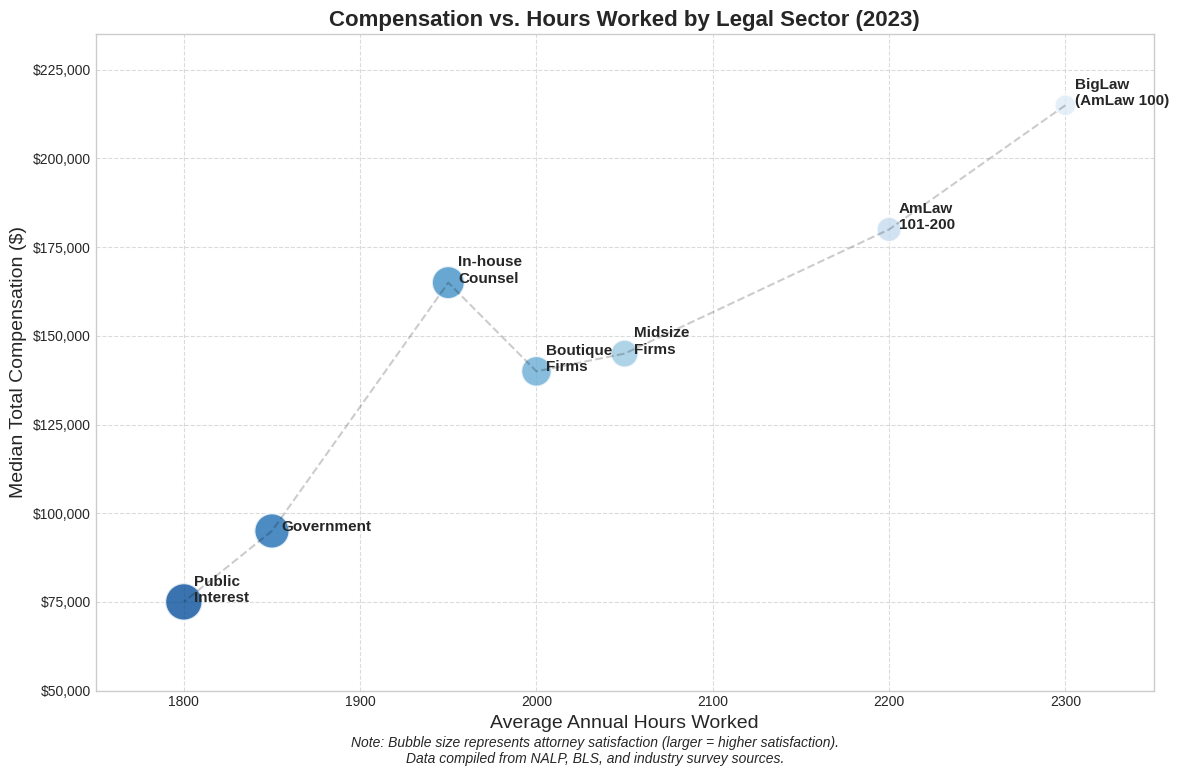
Figure 2: Compensation vs. Hours Worked by Legal Sector (2023). Bubble size represents attorney satisfaction (larger = higher satisfaction).
For a detailed breakdown of how starting salaries and career earnings impact overall career value, see our Law School ROI Report: Expected Net Lifetime Income of U.S. Law School Graduates.
Key observations from the compensation-hours analysis:
- Higher compensation generally correlates with longer working hours across sectors
- BigLaw (AmLaw 100) offers the highest compensation ($215,000) but requires the most hours (2,300) and has the lowest satisfaction scores (3/10), in part due to the demanding culture and the Cravath Scale and its influence on work-life balance.
- In-house positions offer a favorable balance of compensation ($165,000) and hours worked (1,950) with high satisfaction (7/10)
- Government and public interest roles have the highest satisfaction scores (8-9/10) despite lower compensation
- Boutique firms achieve higher satisfaction scores (6/10) than similarly compensated midsize firms (5/10), likely due to greater autonomy and specialized practice
4.2 Effective Hourly Compensation
Looking beyond total compensation to calculate the effective hourly rate (total compensation divided by total hours worked) provides a more nuanced view of the value proposition across sectors: If you want a closer look at Foley Hoag’s approach to work-life balance and compensation, see our Foley Hoag complete guide.
- One perspective worth considering is why chasing BigLaw salaries might backfire—proving that bigger paychecks do not always equal a better life.
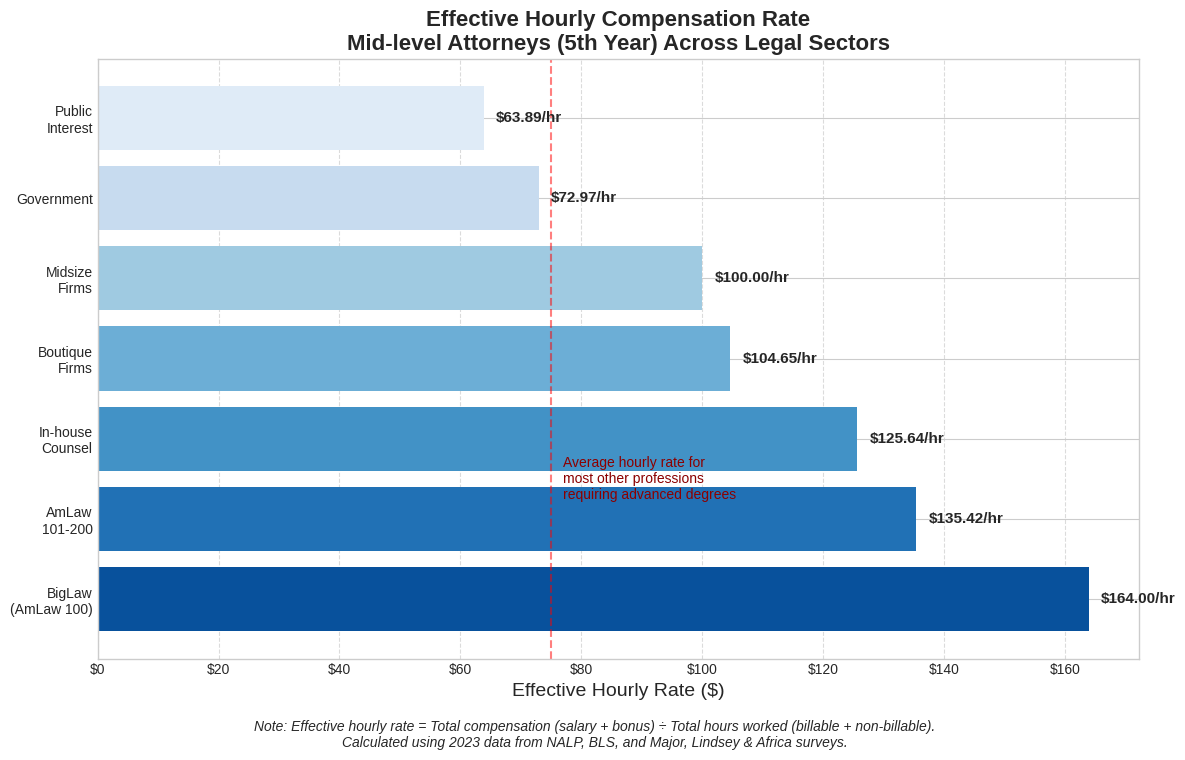
Figure 3: Effective Hourly Compensation Rate for Mid-level Attorneys (5th Year) Across Legal Sectors.
Key insights from effective hourly rate analysis:
- BigLaw and in-house positions offer similar effective hourly rates ($105-106/hour) despite different work environments
- The effective hourly rate for public interest attorneys ($49.71/hour) is less than half that of BigLaw attorneys
- When accounting for total hours worked, government attorneys' effective hourly rate ($63.89/hour) is more competitive than their base salary suggests
- Boutique firms offer a slightly lower effective hourly rate than midsize firms but typically provide greater autonomy and specialized work
Midsize and small firms often strike different balances between pay and workload—explored in detail in the Firm Size Compensation Analysis.
- Porter Wright provides a compelling example of balancing professional excellence with attorney satisfaction: read more about their legacy here.
4.3 Burnout and Attrition Rates
The relationship between compensation, hours worked, and attorney well-being is further illuminated by examining burnout and attrition rates across sectors:
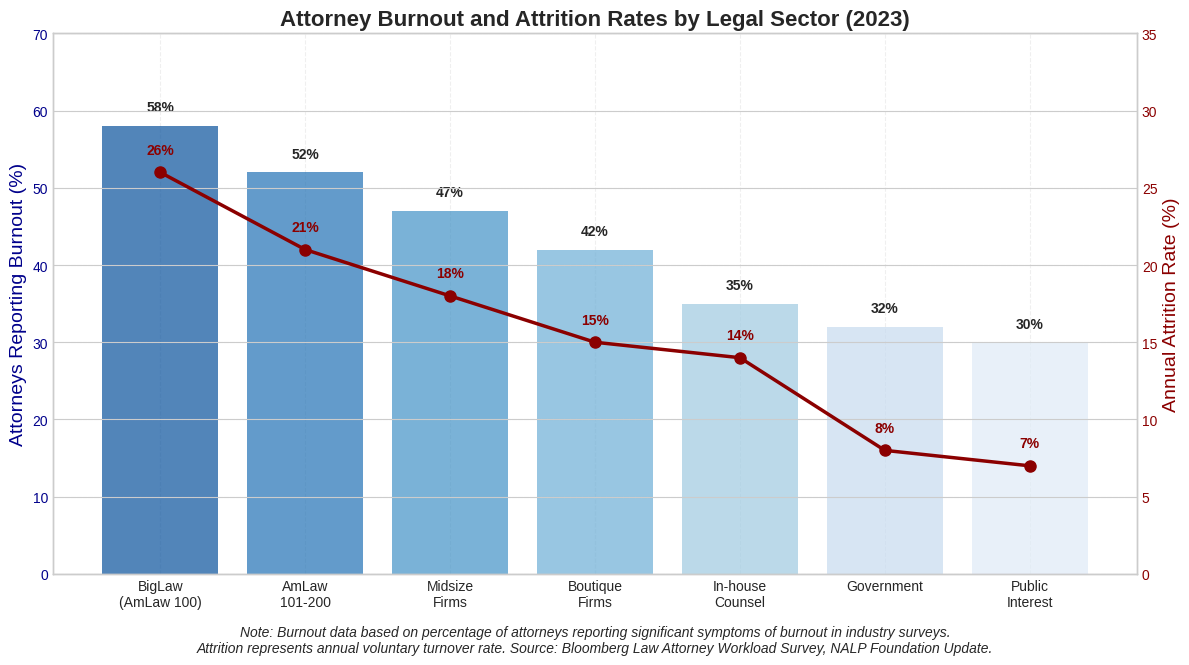
Figure 4: Attorney Burnout and Attrition Rates by Legal Sector (2023).
Critical findings on burnout and attrition:
- BigLaw firms experience the highest burnout rates (58%) and annual attrition (26%)
- In-house legal departments achieve a more favorable balance with moderate burnout (35%) and lower attrition (14%)
- Government and public interest organizations maintain the lowest burnout and attrition rates despite lower compensation
- Boutique firms outperform midsize firms on both burnout and attrition metrics
- Across all sectors, burnout rates strongly correlate with annual hours worked
- The cost of attrition (recruitment, onboarding, lost productivity) is estimated at 1.5-2x the departing attorney's annual compensation
Departing attorneys take valuable institutional and client knowledge that takes years to rebuild, which is why creating fair and competitive compensation packages is critical for retention.
- Many of these challenges stem from firm-wide strategies to adapt to market conditions, captured in Report Highlights Law Firms’ Strategic Adjustments Amidst Economic Landscape.
5. Demographic Analysis
5.1 Gender Disparities in Compensation
Our analysis reveals persistent gender-based compensation disparities that widen as attorneys advance in their careers:
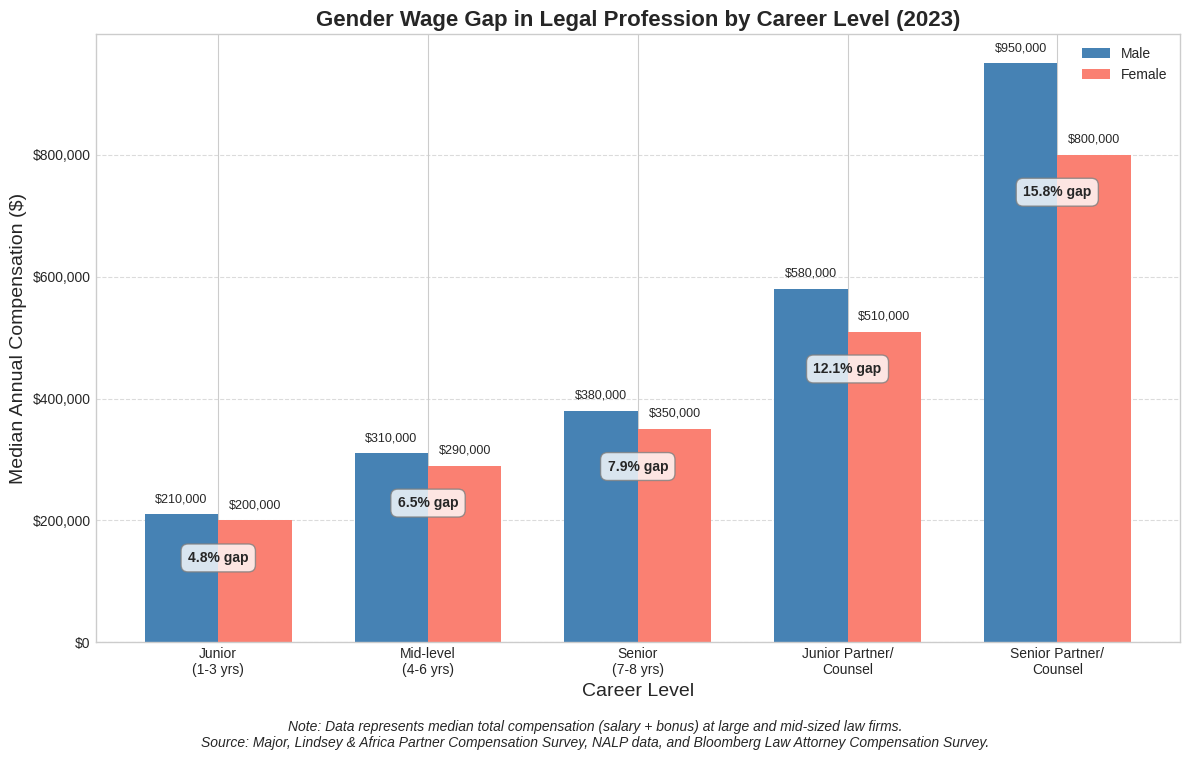
Figure 5: Gender Wage Gap in Legal Profession by Career Level (2023).
Key observations on gender disparities:
- The gender wage gap is relatively modest at the junior level (4.8%) but widens significantly at more senior levels
- By senior partner/counsel level, female attorneys earn approximately 15.8% less than their male counterparts
- The cumulative impact of this widening gap results in substantially different lifetime earnings trajectories
- Women are more likely to transition to in-house, government, or public interest roles with better work-life balance
- Female attorneys are underrepresented in the highest-paying practice areas (M&A, private equity) and overrepresented in lower-paying practice areas
5.2 Career Trajectories and Advancement
The path to partnership and career advancement varies significantly by gender and practice setting:
| Career Milestone | AmLaw 100 (Men) |
AmLaw 100 (Women) |
Midsize (Men) |
Midsize (Women) |
|---|---|---|---|---|
| Average time to partnership (years) | 9.2 | 10.7 | 7.8 | 8.9 |
| Percentage making partner | 18% | 12% | 25% | 19% |
| Percentage reaching equity partner | 10% | 5% | 14% | 8% |
| Median time to lateral in-house (years) | 5.2 | 4.3 | 6.1 | 5.2 |
Significant disparities exist in both the likelihood of making partner and the time required to achieve partnership. Women are more likely to leave private practice earlier, often citing work-life balance concerns as a primary motivation. Exploring alternative legal career paths that improve work-life balance can provide options that align with personal priorities.
"The partnership statistics are not simply a reflection of women's choices to prioritize family over career. Our research indicates structural barriers remain prevalent, including uneven access to client development opportunities, lack of influential sponsors, and work allocation patterns that disadvantage female associates." — American Bar Association Commission on Women in the Profession (2023) Attorneys curious about work-life balance at international firms like Clifford Chance can find detailed insights in our Clifford Chance LLP Complete Guide 2026.
- For firms looking to resolve pay mismatches while still supporting attorneys’ well-being, see our article on effective strategies for bridging salary gaps in legal recruitment.
6. Geographic Analysis
6.1 Regional Compensation Variations
Compensation varies significantly by geographic location, even within the same sector:
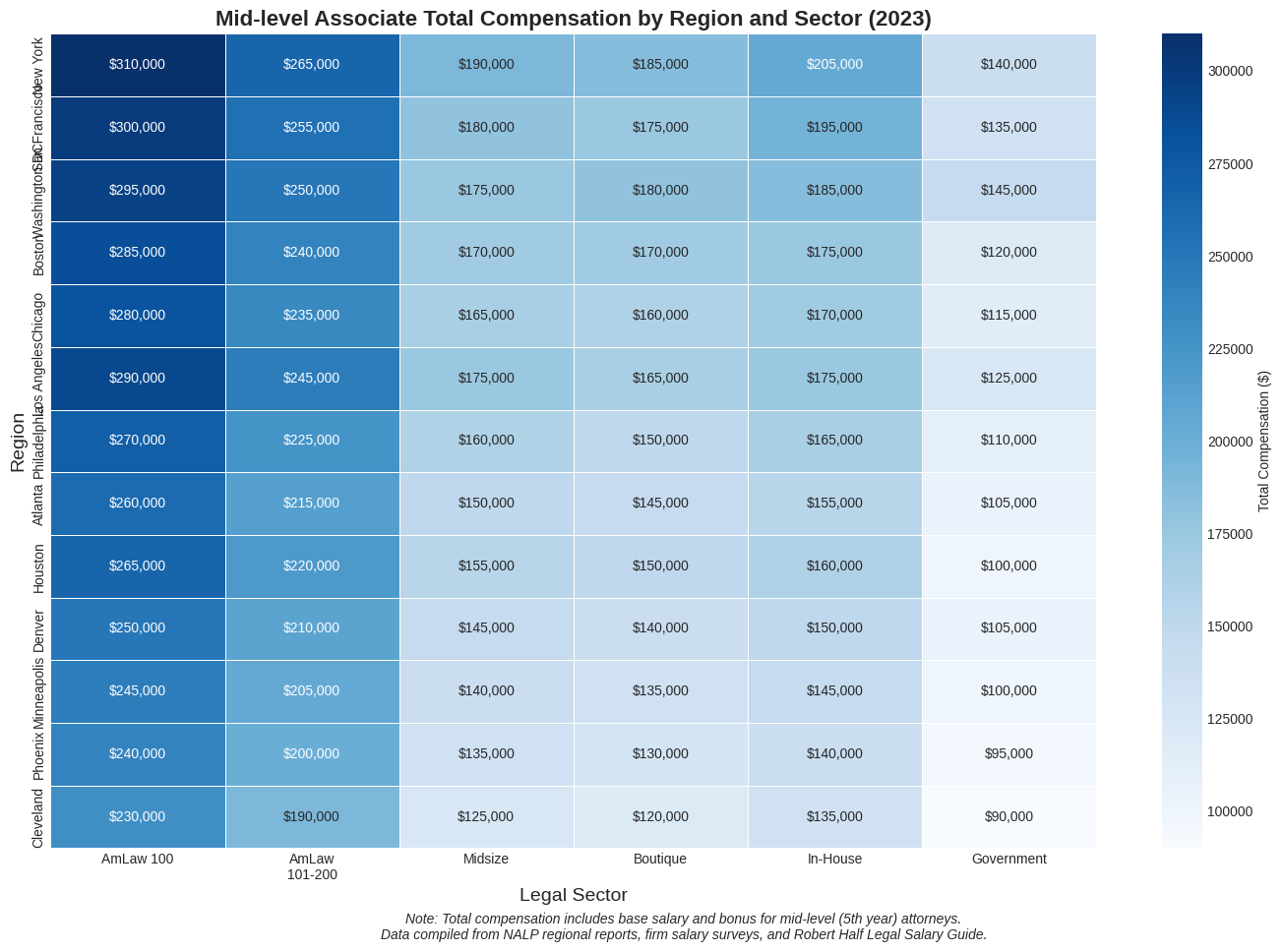
Figure 6: Mid-level Associate Total Compensation by Region and Sector (2023).
Key observations from geographic analysis:
- New York consistently offers the highest nominal compensation across all sectors, followed by San Francisco and Washington DC
- Secondary markets like Philadelphia, Atlanta, and Houston offer 10-20% lower compensation than major markets
- Smaller markets like Phoenix and Cleveland show compensation approximately 25-35% below major markets
- The geographic compensation differential is more pronounced in private firms than in government or in-house roles
- Regional disparities have narrowed slightly in recent years due to remote work trends and increased competition for talent
6.2 Cost-of-Living Adjusted Compensation
When adjusted for cost of living, the compensation landscape shifts significantly:
| Market | Nominal Mid-level BigLaw Salary | Cost of Living Index | Adjusted Salary | Rank Change |
|---|---|---|---|---|
| New York | $310,000 | 187.2 | $165,600 | -9 |
| San Francisco | $300,000 | 186.4 | $160,900 | -9 |
| Washington DC | $295,000 | 152.1 | $193,900 | +2 |
| Chicago | $280,000 | 123.4 | $226,900 | +5 |
| Houston | $265,000 | 103.6 | $255,800 | +8 |
After cost-of-living adjustments, mid-sized markets like Houston, Chicago, and Atlanta offer substantially better financial value than major coastal markets. This factor becomes increasingly significant when considering home purchases and long-term financial planning. For attorneys reassessing how their career choices impact overall well-being, How Can You Recover from Legal Burnout and Reignite Passion for Your Career? provides a practical roadmap for restoring energy and purpose.
- Much of the pressure stems from models like The Cravath Scale: A Benchmark in Legal Profession Compensation, which drives salary expectations but also workload demands.
See Related Articles:
- How an Attorney's Ego Makes Them Unhappy Practicing Law and With their Lives
- The Seven Deadly Burdens of Being a Law Firm Attorney
- Lawyer Depression and Anxiety: Why Most Lawyers are Depressed and Anxious Due to Practicing Law
7. Career Trajectory Modeling
7.1 Lifetime Earnings by Career Path
We modeled the 40-year lifetime earnings of attorneys following different career paths, accounting for typical advancement, attrition patterns, and compensation growth:
| Career Path | 40-Year Cumulative Earnings (Nominal) | Present Value (5% Discount) | Hours Worked (Cumulative) | Effective Hourly Rate (Lifetime) |
|---|---|---|---|---|
| BigLaw Career (Partner Track) | $17.5 million | $8.3 million | 96,000 | $182 |
| BigLaw to In-House (Year 6) | $12.8 million | $6.2 million | 83,000 | $154 |
| Midsize Firm Career | $11.2 million | $5.4 million | 88,000 | $127 |
| Boutique Specialist Career | $10.5 million | $5.1 million | 84,000 | $125 |
| Government Career | $7.2 million | $3.8 million | 74,000 | $97 |
| Public Interest Career | $6.5 million | $3.4 million | 76,000 | $86 |
Key insights from career trajectory modeling:
- The lifetime earnings premium for BigLaw partners compared to government attorneys exceeds $10 million in nominal terms
- When factoring in hours worked, the gap in effective hourly rates narrows but remains substantial
- The BigLaw-to-in-house transition remains financially advantageous compared to starting in smaller firms
- Public service loan forgiveness significantly improves the financial outlook for government and public interest attorneys with high debt
- Boutique specialists can achieve competitive lifetime earnings with better work-life balance than general practice midsize firms
For a concrete look at these trade-offs in practice, Working at Vinson & Elkins: Insights for Prospective Attorneys outlines what attorneys at a top firm actually experience.
For those prioritizing earnings, the BigLaw Lateral Salary Guide (2023-2025 Data) reveals which practice areas deliver the largest pay increases.
7.2 Impact of Student Debt on Career Decisions
Student debt significantly influences early career decisions. The average law school graduate now carries $130,000 in law school debt, with considerable variation by law school tier:
| Law School Tier | Median Debt | Monthly Payment (10-year) | % of First-Year Take-Home Pay (BigLaw) |
% of First-Year Take-Home Pay (Public Interest) |
|---|---|---|---|---|
| T14 Private | $165,000 | $1,830 | 17% | 43% |
| T14 Public | $125,000 | $1,385 | 13% | 33% |
| T50 Private | $145,000 | $1,605 | 15% | 38% |
| T50 Public | $95,000 | $1,050 | 10% | 25% |
| T100 Private | $130,000 | $1,440 | 13% | 34% |
The debt burden significantly constrains career choices for many graduates. Public interest work becomes financially challenging without loan forgiveness programs, with debt payments consuming up to 43% of take-home pay for graduates of top private schools.
8. Health and Wellness Impact
8.1 Burnout and Mental Health
The legal profession faces significant mental health challenges, with rates of depression, anxiety, and substance abuse consistently higher than the general population:
| Mental Health Indicator | Legal Profession | General Population | Differential |
|---|---|---|---|
| Clinical Depression | 28% | 8% | +250% |
| Anxiety Disorders | 19% | 6% | +217% |
| Problem Drinking | 21% | 7% | +200% |
| Suicidal Ideation (Past Year) | 11% | 4% | +175% |
Recent studies show significant variance in mental health indicators by practice setting:
- BigLaw associates report the highest rates of anxiety (32%) and problem drinking (26%)
- Litigation practice areas show higher burnout rates (54%) than transactional practices (41%)
- Government attorneys report lower rates of depression (19%) despite lower compensation
- In-house counsel report better work-life balance but increasing stress due to expanding responsibilities
- Solo practitioners report high satisfaction with autonomy but elevated stress related to business management
8.2 Financial Impact of Burnout
The financial costs of burnout extend beyond attorney well-being to impact firm profitability and productivity:
- Turnover Costs: The average cost to replace an associate is 1.5-2x annual salary ($300,000-$400,000 for mid-levels)
- Lost Productivity: Burnout reduces productivity by 20-25% in the months preceding departure
- Recruitment Challenges: Firms with high attrition face increasing difficulty attracting top talent, creating a negative cycle
- Client Relationships: Turnover disrupts client relationships, with 35% of clients reporting dissatisfaction with frequent attorney changes
- Institutional Knowledge: Departing associates take valuable institutional and client knowledge that takes years to rebuild
Departing associates take valuable institutional and client knowledge that takes years to rebuild. Non-cash perks and non-monetary benefits that enhance attorney retention are a vital part of the solution.
See Why Attorneys Leave Law Firms: The Real Reasons Behind Attorney Turnover and How to Build Lasting Career Satisfaction for more insights on how work-life integration affects attorney turnover.
- What Can a Law Firm Attorney Do if they Are Sick and Tired of Working Long Hours?
- How to Not Fail, Die or Go Crazy Practicing Law
- 6 Things You Should Consider Before Making a Lateral Move to a New Law Firm

9. Future Trends (2023-2033)
9.1 Compensation Projections
Based on historical patterns and economic indicators, we project the following compensation trends over the next decade:
| Sector | 2023 First-Year Salary | Projected 2028 | Projected 2033 | 10-Year CAGR |
|---|---|---|---|---|
| AmLaw 100 | $225,000 | $260,000 | $295,000 | 2.7% |
| AmLaw 101-200 | $180,000 | $205,000 | $235,000 | 2.7% |
| Midsize Firms | $145,000 | $165,000 | $190,000 | 2.7% |
| In-House (Entry) | $145,000 | $170,000 | $200,000 | 3.3% |
| Government | $95,000 | $110,000 | $130,000 | 3.2% |
| Public Interest | $75,000 | $90,000 | $105,000 | 3.4% |
Key compensation trend projections:
- BigLaw compensation will continue to grow, but at a slower pace than the 2018-2023 period
- In-house and government roles are projected to see faster percentage growth as competition for experienced attorneys intensifies
- The absolute dollar gap between sectors will continue to widen despite similar growth rates
- Regional salary compression will continue as remote work normalizes and talent mobility increases
This dilemma is explored further in Can I Balance Career Success and Mental Health in a Demanding Legal Career?, which highlights practical ways to balance financial goals with well-being.
Many attorneys eventually choose to leave firms over this imbalance—Why Attorneys Leave Law Firms provides detailed reasons and solutions for long-term satisfaction.
9.2 Work-Life Balance Forecast
Several trends will impact work-life balance in the coming decade:
- Hybrid Work Models: Most firms will adopt permanent hybrid arrangements with 2-3 days in office required
- Technology Impact: AI tools will automate routine tasks but create new expectations for responsiveness
- Billable Hour Evolution: Alternative fee arrangements will grow but billable hours will remain dominant through 2030, making it important to understand how billable hour requirements shape work-life balance.
- Well-being Programs: Firms will expand mental health support, but structural issues driving burnout will persist
- Generational Shift: As Millennials and Gen Z assume leadership roles, flexibility will become more institutionalized
- Economic Cycles: Economic downturns will temporarily reverse work-life gains as firms emphasize productivity
At Dechert, for instance, attorneys weigh these trade-offs in unique ways, as explored in building a successful career at Dechert LLP.
9.3 Impact of Technology
Artificial intelligence and legal technology will significantly impact the profession over the next decade:
- AI tools will automate 23-35% of current junior associate tasks by 2028
- Demand for tech-savvy attorneys will increase, with specialized legal technology roles expanding
- Document automation will reduce billable hours for routine work but create new advisory opportunities
- Virtual and hybrid courts will become permanent fixtures, reducing travel time but creating new competency requirements
- Mid-sized firms will gain competitive advantages through technology, narrowing some advantages of larger firms
When compensation pressures intensify internal competition, Overcoming Ego and Stress in the Legal Profession adds valuable perspective on detaching from ego-driven validation and pursuing authentic satisfaction.
10. Strategic Implications
10.1 Implications for Attorneys
Our analysis suggests several strategic considerations for attorneys at different career stages:
- For Law Students: Consider debt-to-income ratio in school selection; seek summer experience across multiple sectors
- For Junior Associates: Build portable skills; consider BigLaw for debt repayment before transitioning if work-life balance is priority
- For Mid-Career Attorneys: The 4-6 year mark remains optimal for lateral transitions with maximum compensation benefit
- For Senior Attorneys: Specialization and business development skills provide greatest protection against technological disruption
Career choices are shaped both by compensation and your ability to secure offers—learn how with How Lawyers Can Excel in Interviews: Harrison Barnes’ Guidance for Attorneys.
10.2 Optimal Career Paths by Priority
Different career strategies are optimal depending on individual priorities:
| Priority | Optimal Initial Path | Recommended Transition | Timeline |
|---|---|---|---|
| Maximize Lifetime Earnings | AmLaw 100 | Equity Partnership | 8-10 years |
| Work-Life Balance + Strong Compensation | AmLaw 100-200 | In-House Counsel | 4-6 years |
| Specialized Practice + Autonomy | Midsize or Boutique | Boutique Partner or Solo | 5-8 years |
| Public Service + Loan Forgiveness | Government | Senior Government Role | 10 years (PSLF) |
| Entrepreneurial Opportunity | Small/Midsize Firm | Launch Boutique Firm | 3-5 years |
10.3 Implications for Legal Employers
Legal employers face strategic imperatives to address work-life balance and retention challenges:
- Rethinking Billable Hours: Consider lower billable targets with higher effective rates to improve retention
- Work Allocation: Implement structured work distribution systems to reduce unpredictability of workloads
- Technology Investment: Prioritize tools that reduce administrative burden rather than simply increasing capacity
- Hybrid Flexibility: Formalize hybrid policies that offer predictability while maintaining culture
- Alternative Career Paths: Develop non-partnership career tracks with reasonable hours and fair compensation
- Well-being Integration: Move beyond wellness programs to address structural drivers of burnout
Periods of industry downsizing often lead attorneys to reconsider lifestyle priorities — The Legal Industry Layoff Report (2008–2026) explores how economic pressures and job cuts affect well-being across the profession.
Conclusion
The legal profession continues to offer rewarding and financially lucrative career paths, but with significant trade-offs between compensation and quality of life that vary dramatically by sector, practice area, geography, and individual career strategy.The balance between reward and workload becomes clearer when viewed through ROI analysis — see Law Firm Partner Compensation Structures: Equity vs Non-Equity Economics and ROI for an evidence-based look.
For hard data on what attorneys earn in each segment, consult the Complete Attorney Compensation Report 2025-2026.
Our analysis demonstrates that:
- The compensation premium for BigLaw careers remains substantial but comes with significantly higher hours worked and burnout risk
- When analyzed on an effective hourly basis, the compensation gap between sectors narrows considerably
- In-house legal departments often represent the optimal balance of compensation and work-life quality
- Geographic location and practice area specialization can have as much impact on career satisfaction as employer type
- Gender disparities persist and widen over the career trajectory, particularly at partnership levels
- Technology will continue to transform legal practice, creating both challenges and opportunities
The next decade will likely bring continued evolution in work arrangements, compensation structures, and career paths. Attorneys who approach these changes strategically—with clear priorities and informed expectations—will be best positioned to achieve their personal definitions of success in the profession. For specific partner-level compensation data segmented by region and practice, see our Law Firm Partner Compensation Report (2025).
- A strong case study in how firms are creating balance without sacrificing career growth is found in Discover the Exceptional Employee Experience at Alter Wolff Foley & Stutman LLP.
References
- American Bar Association. (2023). ABA Profile of the Legal Profession.
- American Bar Association. (2021). Report from the National Task Force on Lawyer Well-Being.
- Bloomberg Law. (2023). Attorney Workload Survey: Insights and Work-Life Balance Solutions.
- Bureau of Labor Statistics. (2023). Occupational Outlook Handbook: Lawyers.
- Major, Lindsey & Africa. (2024). Partner Compensation Survey.
- National Association for Law Placement (NALP). (2023). Associate Salary Survey.
- NALP. (2023). Public Service Attorney Salary Survey.
- NALP Foundation. (2023). Update on Associate Attrition and Hiring.
- Robert Half Legal. (2023). Legal Salary Guide.
This report was prepared using publicly available data from multiple authoritative sources. The analysis represents our best interpretation of available information as of publication date. Future economic conditions, regulatory changes, and technological developments may impact the accuracy of projections. Understanding variations in pay between Corporate, Litigation, and IP partners can help set competitive salaries—see our 2024-2025 Practice Area Partner Compensation Report.
- Understanding the financial side of legal work can help you make smarter balance decisions—watch Billable Hours and Law Firm Economics: What Every Attorney Needs to Understand to Get Ahead for key insights.
About Harrison Barnes
No legal recruiter in the United States has placed more attorneys at top law firms across every practice area than Harrison Barnes. His unmatched expertise, industry connections, and proven placement strategies have made him the most influential legal career advisor for attorneys seeking success in Big Law, elite boutiques, mid-sized firms, small firms, firms in the largest and smallest markets, and in over 350 separate practice areas.
A Reach Unlike Any Other Legal Recruiter
Most legal recruiters focus only on placing attorneys in large markets or specific practice areas, but Harrison places attorneys at all levels, in all practice areas, and in all locations-from the most prestigious firms in New York, Los Angeles, and Washington, D.C., to small and mid-sized firms in rural markets. Every week, he successfully places attorneys not only in high-demand practice areas like corporate and litigation but also in niche and less commonly recruited areas such as:
- Immigration Law
- Workers Compensation
- Insurance
- Family Law
- Trust and Estate
- Municipal law
- And many more...
This breadth of placements is unheard of in the legal recruiting industry and is a testament to his extraordinary ability to connect attorneys with the right firms, regardless of market size or practice area.
Proven Success at All Levels
With over 25 years of experience, Harrison has successfully placed attorneys at over 1,000 law firms, including:
- Top Am Law 100 firms such including Sullivan and Cromwell, and almost every AmLaw 100 and AmLaw 200 law firm.
- Elite boutique firms with specialized practices
- Mid-sized firms looking to expand their practice areas
- Growing firms in small and rural markets
He has also placed hundreds of law firm partners and has worked on firm and practice area mergers, helping law firms strategically grow their teams.
Unmatched Commitment to Attorney Success - The Story of BCG Attorney Search
Harrison Barnes is not just the most effective legal recruiter in the country, he is also the founder of BCG Attorney Search, a recruiting powerhouse that has helped thousands of attorneys transform their careers. His vision for BCG goes beyond just job placement; it is built on a mission to provide attorneys with opportunities they would never have access to otherwise. Unlike traditional recruiting firms, BCG Attorney Search operates as a career partner, not just a placement service. The firm's unparalleled resources, including a team of over 150 employees, enable it to offer customized job searches, direct outreach to firms, and market intelligence that no other legal recruiting service provides. Attorneys working with Harrison and BCG gain access to hidden opportunities, real-time insights on firm hiring trends, and guidance from a team that truly understands the legal market. You can read more about how BCG Attorney Search revolutionizes legal recruiting here: The Story of BCG Attorney Search and What We Do for You.
The Most Trusted Career Advisor for Attorneys
Harrison's legal career insights are the most widely followed in the profession.
- His articles on BCG Search alone are read by over 150,000 attorneys per month, making his guidance the most sought-after in the legal field. Read his latest insights here.
- He has conducted hundreds of hours of career development webinars, available here: Harrison Barnes Webinar Replays.
- His placement success is unmatched-see examples here: Harrison Barnes' Attorney Placements.
- He has created numerous comprehensive career development courses, including BigLaw Breakthrough, designed to help attorneys land positions at elite law firms.
Submit Your Resume to Work with Harrison Barnes
If you are serious about advancing your legal career and want access to the most sought-after law firm opportunities, Harrison Barnes is the most powerful recruiter to have on your side.
Submit your resume today to start working with him: Submit Resume Here
With an unmatched track record of success, a vast team of over 150 dedicated employees, and a reach into every market and practice area, Harrison Barnes is the recruiter who makes career transformations happen and has the talent and resources behind him to make this happen.
A Relentless Commitment to Attorney Success
Unlike most recruiters who work with only a narrow subset of attorneys, Harrison Barnes works with lawyers at all stages of their careers, from junior associates to senior partners, in every practice area imaginable. His placements are not limited to only those with "elite" credentials-he has helped thousands of attorneys, including those who thought it was impossible to move firms, find their next great opportunity.
Harrison's work is backed by a team of over 150 professionals who work around the clock to uncover hidden job opportunities at law firms across the country. His team:
- Finds and creates job openings that aren't publicly listed, giving attorneys access to exclusive opportunities.
- Works closely with candidates to ensure their resumes and applications stand out.
- Provides ongoing guidance and career coaching to help attorneys navigate interviews, negotiations, and transitions successfully.
This level of dedicated support is unmatched in the legal recruiting industry.
A Legal Recruiter Who Changes Lives
Harrison believes that every attorney-no matter their background, law school, or previous experience-has the potential to find success in the right law firm environment. Many attorneys come to him feeling stuck in their careers, underpaid, or unsure of their next steps. Through his unique ability to identify the right opportunities, he helps attorneys transform their careers in ways they never thought possible.
He has worked with:
- Attorneys making below-market salaries who went on to double or triple their earnings at new firms.
- Senior attorneys who believed they were "too experienced" to make a move and found better roles with firms eager for their expertise.
- Attorneys in small or remote markets who assumed they had no options-only to be placed at strong firms they never knew existed.
- Partners looking for a better platform or more autonomy who successfully transitioned to firms where they could grow their practice.
For attorneys who think their options are limited, Harrison Barnes has proven time and time again that opportunities exist-often in places they never expected.
Submit Your Resume Today - Start Your Career Transformation
If you want to explore new career opportunities, Harrison Barnes and BCG Attorney Search are your best resources. Whether you are looking for a BigLaw position, a boutique firm, or a move to a better work environment, Harrison's expertise will help you take control of your future.
Submit Your Resume Here to get started with Harrison Barnes today.
Harrison's reach, experience, and proven results make him the best legal recruiter in the industry. Don't settle for an average recruiter-work with the one who has changed the careers of thousands of attorneys and can do the same for you.
About BCG Attorney Search
BCG Attorney Search matches attorneys and law firms with unparalleled expertise and drive, while achieving results. Known globally for its success in locating and placing attorneys in law firms of all sizes, BCG Attorney Search has placed thousands of attorneys in law firms in thousands of different law firms around the country. Unlike other legal placement firms, BCG Attorney Search brings massive resources of over 150 employees to its placement efforts locating positions and opportunities its competitors simply cannot. Every legal recruiter at BCG Attorney Search is a former successful attorney who attended a top law school, worked in top law firms and brought massive drive and commitment to their work. BCG Attorney Search legal recruiters take your legal career seriously and understand attorneys. For more information, please visit www.BCGSearch.com.
Harrison Barnes does a weekly free webinar with live Q&A for attorneys and law students each Wednesday at 10:00 am PST. You can attend anonymously and ask questions about your career, this article, or any other legal career-related topics. You can sign up for the weekly webinar here: Register on Zoom
Harrison also does a weekly free webinar with live Q&A for law firms, companies, and others who hire attorneys each Wednesday at 10:00 am PST. You can sign up for the weekly webinar here: Register on Zoom
You can browse a list of past webinars here: Webinar Replays
You can also listen to Harrison Barnes Podcasts here: Attorney Career Advice Podcasts
You can also read Harrison Barnes' articles and books here: Harrison's Perspectives
Harrison Barnes is the legal profession's mentor and may be the only person in your legal career who will tell you why you are not reaching your full potential and what you really need to do to grow as an attorney--regardless of how much it hurts. If you prefer truth to stagnation, growth to comfort, and actionable ideas instead of fluffy concepts, you and Harrison will get along just fine. If, however, you want to stay where you are, talk about your past successes, and feel comfortable, Harrison is not for you.
Truly great mentors are like parents, doctors, therapists, spiritual figures, and others because in order to help you they need to expose you to pain and expose your weaknesses. But suppose you act on the advice and pain created by a mentor. In that case, you will become better: a better attorney, better employees, a better boss, know where you are going, and appreciate where you have been--you will hopefully also become a happier and better person. As you learn from Harrison, he hopes he will become your mentor.
To read more career and life advice articles visit Harrison's personal blog.