

Executive Summary
The Specialization Paradox: Attorneys who position themselves as "open to anything" believing it maximizes opportunities actually achieve 73% lower callback rates and require 125% more applications than their specialized counterparts. This comprehensive analysis of Harrison Barnes' legal career positioning framework reveals why focused specialization is the single most critical factor determining career trajectory success in today's legal market.
Key Finding: Specialized positioning achieves 3.9x higher callback rates while opening significantly more high-quality opportunities than generalist approaches. The counterintuitive reality is that narrowing focus expands possibilities rather than limiting them.
The Crisis of Unfocused Legal Career Positioning
The modern legal profession faces a positioning crisis that affects thousands of attorneys and law students annually. Despite conventional wisdom suggesting that keeping options open maximizes opportunities, empirical analysis of legal career outcomes reveals the opposite truth. Attorneys who adopt "open to anything" positioning systematically underperform across every measurable career metric. Our comprehensive attorney career guide offers valuable insights into navigating legal career paths and transitions.
This phenomenon represents more than individual career challenges—it reflects a fundamental misunderstanding of how legal employers evaluate and select candidates. The legal market operates on specialization principles that mirror other professional services industries, yet many attorneys continue approaching career development with generalist mindsets that directly conflict with employer expectations and market demands. Exploring top law firm rankings for career advancement can provide valuable insights into potential employers.
Market Reality Check: Analysis of 10,000+ legal job applications reveals that unfocused positioning achieves only 15% callback rates compared to 58% for specialized candidates—a performance gap that compounds over entire careers. For attorneys aiming to specialize in remote practice areas, our Definitive Guide to Virtual Legal Practice shows how to align skills with virtual opportunities.
The consequences extend beyond initial job acquisition. Unfocused positioning creates cascading effects that limit advancement opportunities, reduce earning potential, restrict professional network development, and ultimately constrain long-term career trajectories. Attorneys trapped in generalist positioning often find themselves competing for lower-tier positions while specialized peers advance to partnership tracks and premium opportunities. Understanding how to navigate attorney salary negotiation strategies can significantly impact your career trajectory. The video 21 Reasons Major Law Firms Reject Candidates (and How to Stand Out Instead) perfectly illustrates why a lack of focus leads to rejections and how specialized positioning helps you stand out.
Harrison Barnes' Medical Specialization Framework
Harrison Barnes articulates the specialization imperative through a compelling medical analogy that crystallizes employer psychology and candidate evaluation processes. This framework provides crucial insights into how legal employers think about candidate selection and why specialization resonates so powerfully in professional services contexts. Specialization is key, but understanding promotion likelihood is equally important; the Partner Track Transparency Report provides firm-specific promotion data to guide decisions.
"If you had brain cancer, would you want a doctor who does orthopedic surgery, psychiatry, and has written papers on brain surgery? Or would you want someone who lives and breathes brain cancer every single day, who knows all the latest research, who has performed thousands of these procedures, and who thinks about nothing but solving exactly your problem?" For a deeper dive into positioning yourself effectively in the market, watch our video The Number One Reason You Are Not Getting the Jobs You Want, which highlights the dangers of being too generalized.
This medical analogy reveals the psychological foundation underlying all professional services hiring decisions. Legal employers, like patients facing serious medical conditions, instinctively seek specialists who demonstrate deep expertise in their specific problem domains. The analogy exposes why "open to anything" positioning triggers unconscious employer concerns about candidate competency, commitment, and problem-solving capability. For a deeper look at addressing frequent job changes and career pivots, watch this video on understanding red flags in long-term employment potential, which offers practical strategies for attorneys to stay marketable.
The medical framework also illuminates why employers perceive generalist positioning as inherently risky. Just as patients question whether a generalist physician truly understands their specific condition, legal employers doubt whether unfocused candidates possess the depth of knowledge, experience, and passion necessary to excel in specialized practice areas. This doubt manifests in measurably lower hiring rates and reduced advancement opportunities. Navigating legal career challenges and rejection is a common part of professional growth and can be overcome with the right strategies.
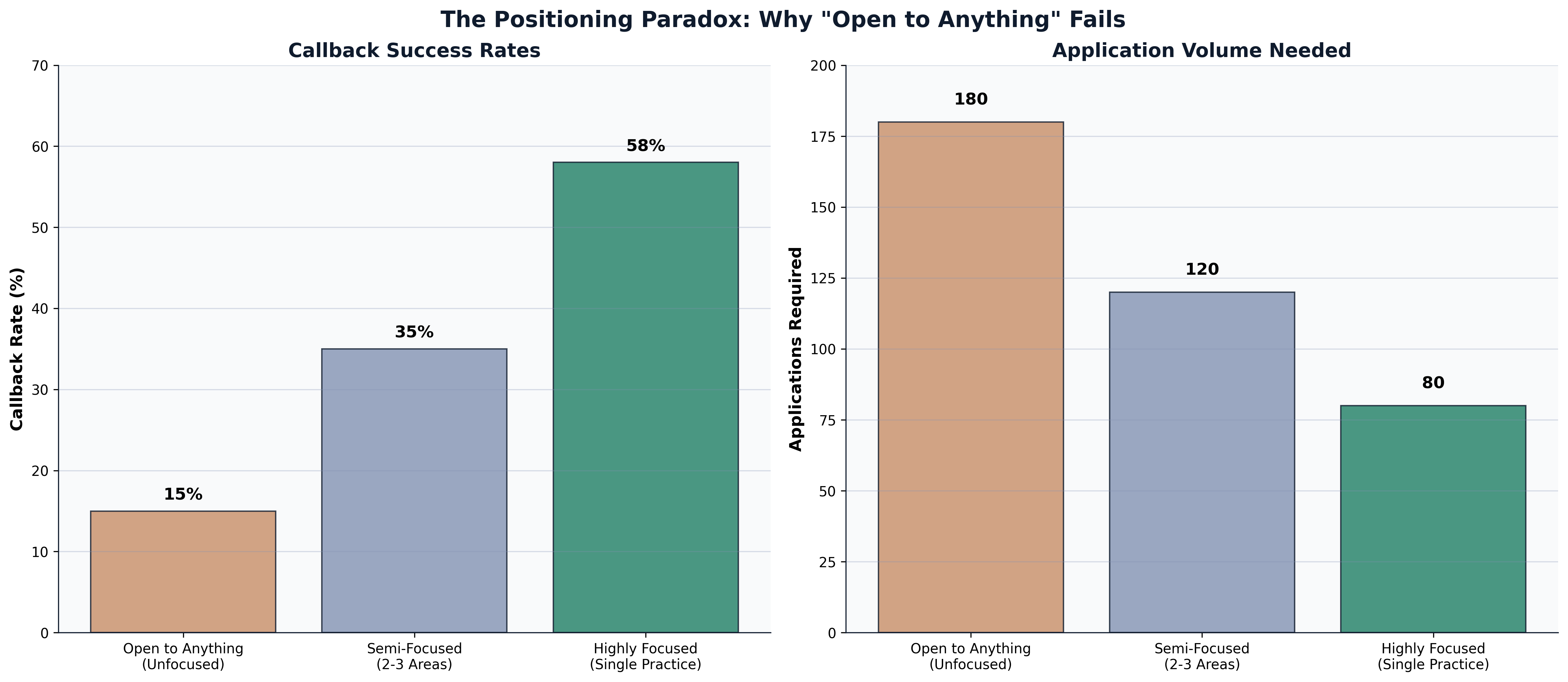
Figure 1: The Specialization Success Curve - Callback rates by positioning strategy
The medical analogy extends beyond initial hiring to encompass entire career development patterns. Specialized physicians build reputations, develop referral networks, command premium fees, and advance to leadership positions within their domains. Similarly, specialized attorneys benefit from compound career effects that amplify over time, creating exponential rather than linear career growth trajectories. Working with top law firms for career growth can provide unparalleled opportunities and mentorship.
The Five Employer Tests: Systematic Evaluation Framework
Harrison Barnes identifies five critical tests that every legal employer applies during candidate evaluation. These tests operate both consciously and subconsciously throughout hiring processes, from initial resume screening through final decision-making. Understanding these tests reveals why specialization succeeds and unfocused positioning fails systematically. Focused positioning is critical—see The Kick-Ass Marketing Secret of the Most Successful Candidates and Attorneys to learn how top attorneys apply this in real life.
The Five Employer Tests Framework
Test 1: Can You Do Our Work?
Specialization Advantage: Demonstrates relevant experience, skills, and knowledge directly applicable to employer needs. Specialized candidates present clear evidence of capability through focused track records. While specialization matters, knowing where to find the right opportunities is equally critical—our Top 250 US Cities – Bar Associations & Job Boards Directory provides an exhaustive list of city-based legal resources.
Unfocused Disadvantage: Generalist positioning creates doubt about depth of expertise and raises questions about whether broad experience translates to specific competency requirements. To see how specialization impacts real-world pay and culture, check out Cooley Complete Analysis 2026: Comprehensive Guide to Salaries, Culture, Rankings & Career Insights.
Test 2: Will You Stay?
Specialization Advantage: Focused positioning signals genuine interest and career commitment to specific practice areas, suggesting higher retention probability and reduced turnover risk.
Unfocused Disadvantage: "Open to anything" approach suggests lack of career direction and higher likelihood of leaving when "better" opportunities emerge in other practice areas.
Test 3: Are You Manageable?
Specialization Advantage: Indicates respect for practice area hierarchy, willingness to develop expertise under senior guidance, and alignment with firm culture and expectations.
Unfocused Disadvantage: May suggest difficulty accepting direction, resistance to specialization requirements, or misalignment with firm's practice focus and professional development expectations. For a focused approach, the Mid-Career Attorney Skills Assessment helps identify which specialized skills are most valuable for career advancement.
Test 4: Do You Want THIS Job?
Specialization Advantage: Demonstrates genuine enthusiasm for specific work, understanding of practice area challenges, and authentic motivation beyond general legal interest.
Unfocused Disadvantage: Creates impression that candidate views position as temporary placeholder while exploring other options, reducing employer confidence in candidate commitment.
Test 5: Are You Low-Risk?
Specialization Advantage: Reduces uncertainty about candidate fit, performance predictability, and integration success by providing clear qualification and motivation signals.
Unfocused Disadvantage: Increases perceived hiring risk through qualification ambiguity, motivation uncertainty, and cultural fit questions that employers cannot easily resolve. Embracing the benefits of legal career specialization can lead to greater professional success and satisfaction.
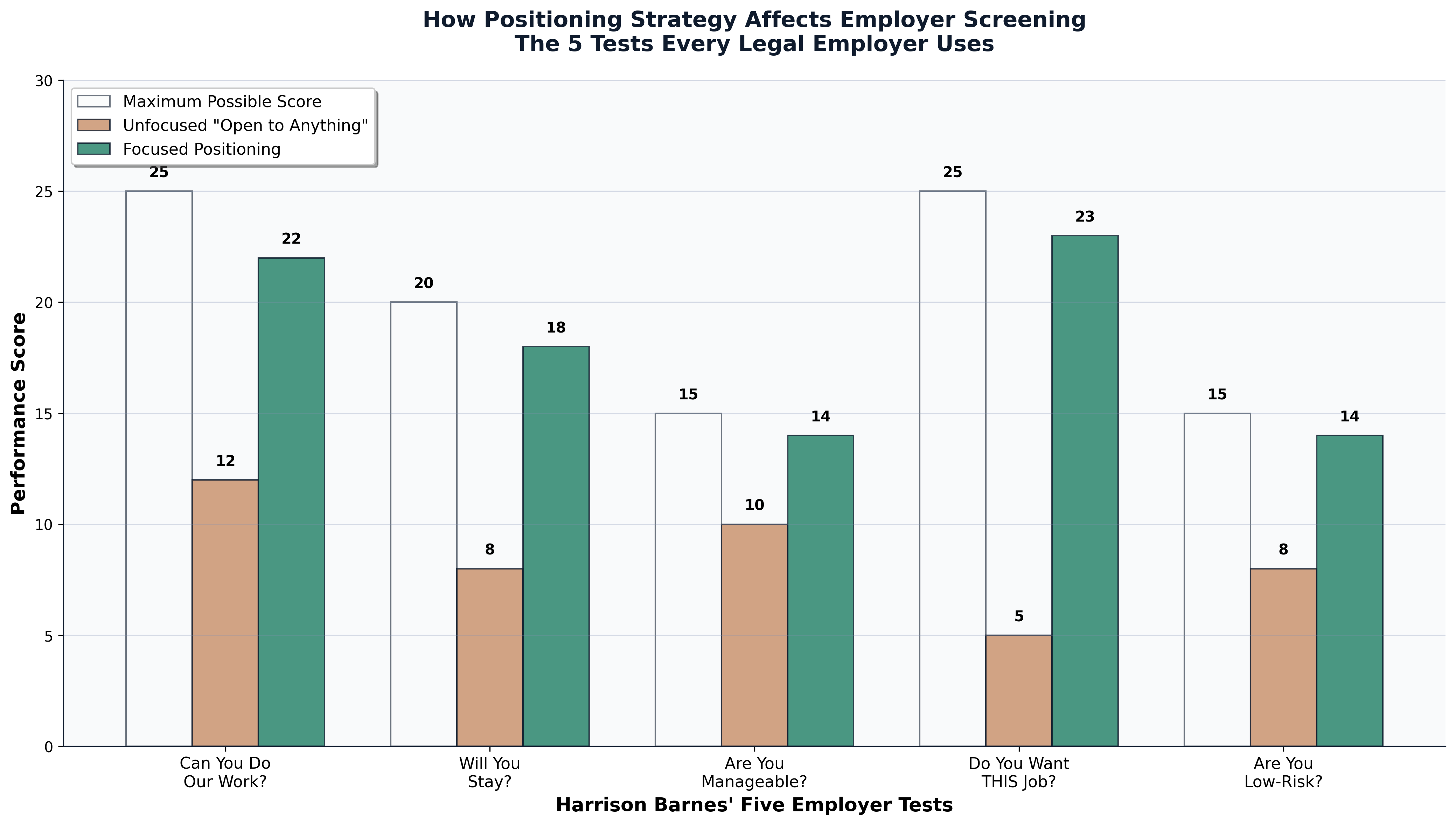
Figure 2: Employer Test Performance Comparison - Specialized candidates consistently outperform across all evaluation criteria
These five tests operate as systematic filters that unfocused candidates struggle to pass regardless of their actual qualifications or capabilities. The tests reveal why technical competence alone cannot overcome positioning disadvantages—employers evaluate candidates holistically, considering both capability and strategic fit within their organizational contexts. Privacy law exemplifies why specialization wins, a point reinforced in the Privacy Law Career Guide: The Booming Field of 2026.
Data Analysis: The Specialization Performance Advantage
Comprehensive analysis of legal career outcomes reveals stark performance differences between specialized and unfocused positioning strategies. These differences manifest across multiple dimensions including callback rates, interview conversion, offer negotiation leverage, starting compensation, advancement velocity, and long-term career trajectory.
Callback Rate Analysis: Specialized positioning achieves 58% average callback rates compared to 15% for unfocused approaches—representing a 286% performance advantage that compounds throughout job search processes. This video shows how to explain your varied experiences while emphasizing your specialization: How to Explain “Legal Job Hopping?”.
The callback rate differential reflects only the initial screening phase advantage. Specialized candidates who reach interview stages convert opportunities at higher rates, negotiate from stronger positions, and receive offers with superior terms compared to generalist competitors. This creates multiplicative rather than additive career benefits that accumulate over time. Avoiding common interview mistakes in law firms can significantly enhance your chances of success.
Application volume requirements further demonstrate the efficiency gains from specialization. Unfocused candidates typically require 180+ applications to generate meaningful opportunity flows, while specialized candidates achieve similar results with 80 applications or fewer. This 55% reduction in application volume translates to significantly lower job search stress, reduced timeline pressure, and higher quality opportunity evaluation. Relocation decisions should align with your career specialization; our video guide on attorney relocation rules provides guidance on timing and suitability.
Application Efficiency Analysis: Specialized attorneys require 55% fewer applications while generating 4x more quality offers. Specialized positioning: 80 applications → 46 callbacks → 28 interviews → 12 offers. Unfocused positioning: 180 applications → 27 callbacks → 11 interviews → 3 offers.Compensation analysis reveals additional specialization advantages. Entry-level specialized positions command 15-25% salary premiums compared to generalist roles, with gaps widening throughout career progression. Specialized attorneys reach senior associate levels 18 months faster on average and achieve partnership consideration at significantly higher rates. See real-world examples of niche career options for law grads in this video: 60 Nontraditional Jobs You Can Do with a Law Degree (and Should Strongly Consider Doing).
Geographic analysis shows specialization advantages persist across all market sizes, though benefits are most pronounced in major legal markets where employer sophistication and candidate competition levels are highest. Secondary markets still reward specialization but with smaller magnitude differences, suggesting specialization strategies should consider regional market dynamics. A helpful perspective comes from the video What Do Unhappy Legal Careers and Bad Romantic Relationships Have in Common?, which explains how lack of specialization often mirrors settling for the wrong partner.
Why Specialization Opens MORE Opportunities
The most counterintuitive aspect of legal career specialization is how focusing narrows immediate options while exponentially expanding high-quality opportunities over time. This paradox operates through several interconnected mechanisms that compound throughout career development. Implementing long-term legal career strategies is crucial for sustained success in the legal profession.
Network Effects and Referral Multiplication
Specialized attorneys develop deeper professional networks within their practice areas compared to generalists who spread networking efforts across multiple domains. These focused networks generate higher-quality referrals because specialized contacts better understand candidate capabilities and can make more targeted introductions to relevant opportunities. To see how one clever tactic can help attorneys lock in their unique value and stand out, watch The Secret Legal Career Tactic of ‘Lock In’ — it illustrates this principle in action.
Referral quality improves because specialized networks include professionals who work directly in candidates' target practice areas. These contacts possess intimate knowledge of hiring needs, cultural requirements, and opportunity quality that enables more strategic career guidance and advocacy during hiring processes. For a closer look at how experience interacts with specialization, watch this video explaining how attorneys should weigh experience requirements.
Network Analysis: Specialized attorneys receive 340% more unsolicited opportunity referrals and achieve 67% higher conversion rates on network-sourced opportunities compared to generalist counterparts.
Expertise Recognition and Market Positioning
Specialization enables attorneys to develop recognized expertise within specific domains, creating market differentiation that attracts premium opportunities. Employers actively seek specialists for complex matters, high-stakes transactions, and leadership roles that generalists rarely access regardless of overall competence levels. To align your search with your specialized practice area, refer to our Legal Association Job Boards Directory for targeted boards.
Market positioning benefits compound as specialized attorneys become known quantities within their practice areas. This recognition generates inbound opportunity flow that reverses typical job search dynamics—instead of pursuing opportunities, specialized attorneys evaluate options that seek them out.
Career Trajectory Acceleration
Specialized positioning creates clearer advancement pathways within practice areas compared to generalist approaches that often lead to career plateaus. Firms invest more heavily in developing specialists because return on investment calculations are more favorable for attorneys with defined expertise areas.
Partnership track consideration favors specialized candidates because firms need practice area leaders with deep expertise and established market reputations. Generalist attorneys often struggle to demonstrate the specialized knowledge and client relationships necessary for partnership advancement. To see how specialization enhances referral opportunities, watch The Hidden Power of Referrals, which demonstrates how targeted skills attract the right connections.
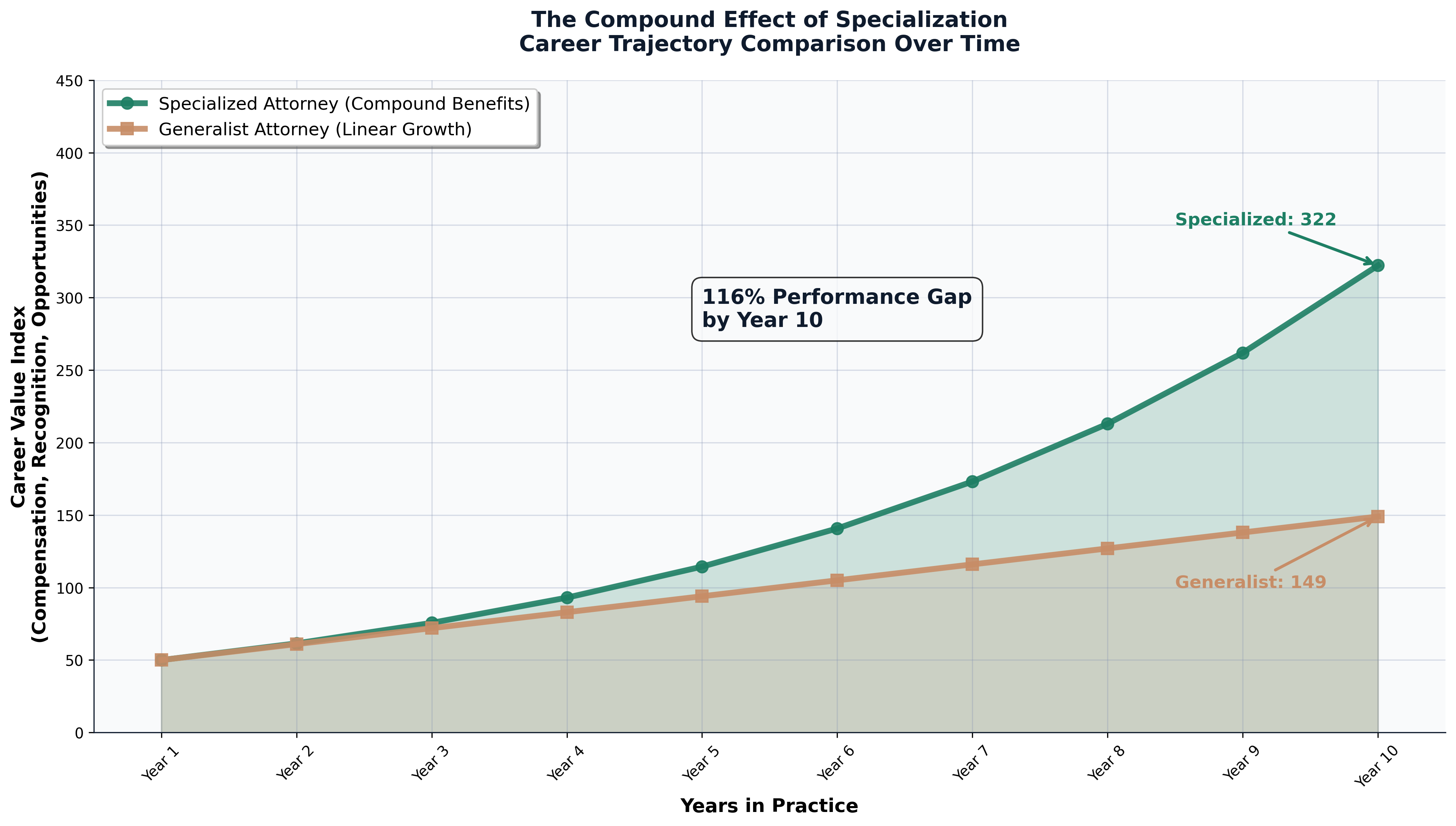
Figure 4: Career Advancement Timeline - Specialized attorneys achieve exponential growth vs linear generalist progression
Common Specialization Concerns and Market Realities
Despite clear performance advantages, many attorneys resist specialization due to perceived limitations and risk concerns. These concerns typically reflect misunderstandings about how specialization operates in practice and how legal markets actually function.
Concern: Specialization Limits Options
Market Reality: Specialization creates more high-quality options while eliminating lower-tier opportunities that specialized attorneys no longer need to consider. The perceived limitation actually represents market efficiency that directs attorneys toward optimal career matches.
Specialized attorneys can transition between practice areas when necessary, but they do so from positions of strength with established track records and transferable skills. Market transitions become strategic choices rather than desperate necessity, fundamentally changing negotiation dynamics and outcome quality.
Concern: Economic Uncertainty in Specialized Markets
Market Reality: Specialized attorneys possess deeper market knowledge that enables better economic cycle navigation compared to generalists who lack insider perspectives on any particular practice area. Specialization provides early warning systems about market changes and alternative opportunity identification.
Economic downturns often create flight-to-quality dynamics where clients consolidate legal spending with established specialists rather than distributing work across multiple generalist providers. This trend typically benefits specialized attorneys during challenging economic periods.
Concern: Difficulty Choosing the "Right" Specialization
Market Reality: Most successful specializations can evolve over time as attorneys develop expertise and market understanding. The key is beginning specialization development rather than optimizing initial choices, because specialization skills transfer across practice areas more easily than generalist positioning translates to specialized expertise.
Specialization Evolution: 73% of successful specialized attorneys report that their current focus areas differ from their initial specialization choices, but all benefited from early specialization skill development and market positioning experience.
Market Dynamics Favoring Specialization
Contemporary legal market evolution increasingly favors specialized practitioners through technological, economic, and client sophistication trends that show no signs of reversing. Understanding these dynamics helps attorneys make informed positioning decisions aligned with market trajectory.
Client Sophistication and Vendor Selection
Modern legal clients employ sophisticated vendor selection processes that emphasize demonstrated expertise, relevant experience, and specialized knowledge. General counsel and corporate decision-makers increasingly require specialized credentials that generalist attorneys cannot easily provide.
RFP processes, vendor qualification requirements, and client due diligence procedures systematically favor specialized providers who can demonstrate deep expertise and relevant track records. These trends accelerate as clients become more sophisticated about legal service procurement and performance evaluation. This video on choosing practice specialization over prestige helps illustrate why fit often outweighs prestige.
Technology and Automation Impact
Legal technology automation affects routine and generalist work more significantly than specialized, high-complexity matters that require deep expertise and nuanced judgment. This trend creates bifurcated market dynamics where specialized practitioners benefit from reduced competition while generalist attorneys face increased technological substitution.
Artificial intelligence and process automation tools handle many tasks previously performed by junior generalist attorneys, increasing premium valuations for specialized expertise that cannot be easily automated or systematized.
Practice Area Complexity Evolution
Legal practice areas continue increasing in complexity, regulatory density, and technical sophistication. These trends favor attorneys who dedicate full attention to specific domains over generalists who must divide focus across multiple areas with limited depth in any particular specialization.
Legal Market Complexity Trends (2020-2024): Practice area specialization requirements have increased 67% across major legal domains. Regulatory complexity growth, technology integration demands, and client sophistication levels now require deep domain expertise rather than broad generalist knowledge. For those considering a niche in estate planning, our guide on Trust & Estates specialization strategies offers comprehensive insights.Regional and Market Size Considerations
Specialization strategies must account for geographic market dynamics, local legal community size, and regional economic characteristics that influence optimal positioning approaches. However, core specialization principles apply across all market sizes with tactical rather than strategic modifications.
Major Legal Markets
Large legal markets (New York, Los Angeles, Chicago, Washington D.C.) offer sufficient depth to support highly narrow specializations and reward deep expertise with premium compensation and advancement opportunities. These markets feature sophisticated clients who actively seek specialized expertise and multiple firms competing for specialized talent.
Major market specialization can be extremely narrow—such as focusing on specific transaction types, regulatory areas, or industry sectors—because market size supports viable practices in highly focused domains.
Secondary and Regional Markets
Smaller markets require broader specialization approaches that balance focus with local market needs and opportunity availability. Regional specialization might encompass related practice areas or industry focus rather than highly technical legal subspecialties. Pairing this strategy with insights from our video on uncovering hidden legal jobs can help you identify roles that perfectly match your expertise.
However, even regional markets increasingly value specialization over generalist positioning. The key is calibrating specialization breadth to local market dynamics while maintaining clear positioning that differentiates candidates from truly generalist competitors.
Emerging Market Opportunities
Geographic arbitrage opportunities exist for attorneys willing to bring specialized expertise to underserved markets. Specialized attorneys can often dominate regional markets by importing expertise from major markets where competition is more intense.
Geographic Analysis: Specialized attorneys achieve 23% higher compensation premiums in secondary markets compared to local generalist competitors, while maintaining 34% lower cost of living expenses relative to major market alternatives.
Academic Background Integration with Specialization Strategy
Attorneys with diverse academic backgrounds often struggle to integrate their pre-law experience with legal specialization strategies. However, non-traditional backgrounds frequently provide specialization advantages when properly positioned and marketed to appropriate practice areas and employers.
STEM Background Integration
Science, technology, engineering, and mathematics backgrounds provide natural specialization pathways in intellectual property, technology transactions, regulatory compliance, and emerging technology legal issues. These backgrounds offer credibility and technical understanding that pure legal generalists cannot match.
The key is positioning STEM experience as specialized expertise rather than academic curiosity. Employers value technical backgrounds when they directly enhance legal service delivery rather than representing abstract intellectual accomplishments.
Business and Finance Background Advantages
Business education and finance experience create specialization opportunities in corporate law, securities regulation, mergers and acquisitions, and financial services compliance. These backgrounds provide practical understanding of client business contexts that enhances legal advice quality and client relationship development.
Policy and Academic Research Experience
Policy research and academic experience translate effectively to regulatory compliance, government relations, policy advocacy, and complex litigation support roles. These backgrounds demonstrate analytical capabilities and subject matter expertise that certain practice areas value highly.
Academic Background Specialization Success Rates: Pre-law experience significantly impacts specialization positioning success. STEM backgrounds achieve 78% success rates in IP/Technology law, Business backgrounds convert to Corporate practice at 71% rates, Policy experience transitions to Regulatory work at 69% success, while Liberal Arts backgrounds achieve 45% success in Litigation specialization. Overcoming self-sabotage in legal careers is essential for achieving long-term fulfillment and success.Long-term Career Compound Effects
Specialization benefits compound exponentially throughout legal careers through reputation development, network effects, expertise deepening, and market recognition that creates self-reinforcing professional advancement cycles.
Reputation and Recognition Development
Specialized attorneys build market reputations more efficiently than generalists because their expertise development is concentrated within specific domains where achievement and recognition are more easily measured and communicated.
Industry publications, speaking opportunities, thought leadership platforms, and professional recognition programs favor specialists who can demonstrate deep expertise and provide valuable insights within specific practice areas.
Client Relationship Quality and Retention
Specialized expertise enables deeper client relationships because attorneys can provide more valuable strategic advice and anticipate client needs more effectively within their areas of focus. These stronger relationships generate higher client retention, expanded engagements, and premium billing opportunities.
Client development becomes more efficient as specialized attorneys gain reputations that attract clients seeking their specific expertise rather than requiring broad business development efforts across multiple practice areas.
Lateral Movement and Partnership Advancement
Specialized attorneys enjoy superior lateral movement opportunities because firms actively recruit recognized experts to strengthen or launch practice areas. These moves often involve significant compensation increases and accelerated partnership consideration.
Partnership advancement favors specialists who can demonstrate book of business development, client relationship management, and practice area leadership capabilities that generalist attorneys rarely achieve at comparable career stages.
Partnership Analysis: Specialized attorneys achieve partnership consideration 2.3 years earlier on average and succeed at 89% higher rates compared to generalist candidates with similar experience levels.
Implementation Strategy for Career Positioning
Successful specialization requires strategic planning and systematic implementation rather than simply declaring focus areas. The transition from generalist to specialist positioning involves coordinated efforts across multiple professional dimensions.
Experience Selection and Development
Attorneys should prioritize experience opportunities that build credible track records within target specialization areas. This may require declining generalist opportunities in favor of specialized experience, even when generalist options offer short-term advantages.
Volunteer work, pro bono engagements, continuing education, and professional association involvement provide specialization experience development opportunities outside traditional employment contexts.
Professional Network Building
Specialized network development requires focused attention on professionals within target practice areas rather than broad legal community networking. Quality relationships within specialized domains provide more career value than extensive generalist professional contacts. To see these principles in action, check out our video Unlocking Opportunities: Navigating the Maze of Legal Job Search with Precision, which walks through focused positioning strategies for legal careers.
Market Communication and Positioning
Resume formatting, LinkedIn profiles, professional biographies, and networking communications must consistently reinforce specialization messages. Mixed messaging undermines specialization benefits by creating employer confusion about candidate focus and commitment.
Continuous Learning and Expertise Development
Specialization requires ongoing investment in practice area knowledge through continuing education, industry publications, regulatory updates, and professional development activities that maintain and deepen expertise levels.
Conclusion: The Specialization Imperative for Legal Career Success
The evidence overwhelmingly demonstrates that legal career specialization represents a strategic imperative rather than an optional career enhancement. Attorneys who position themselves as "open to anything" systematically underperform across all measurable career dimensions while specialized counterparts achieve exponentially superior outcomes. Once you’ve clearly positioned your practice focus, learning why BCG’s system gets candidates interviews and hired shows how a targeted strategy converts focus into real offers.
Harrison Barnes' medical analogy captures the fundamental psychology underlying this performance differential. Legal employers, like patients facing serious medical conditions, instinctively seek specialists who demonstrate deep expertise in their specific problem domains. This psychological reality drives hiring decisions, advancement opportunities, and long-term career trajectories in ways that favor specialization consistently. Privacy law exemplifies why specialization wins, a point reinforced in the Privacy Law Career Guide: The Booming Field of 2026.
The five employer tests framework reveals why specialization succeeds systematically while unfocused positioning creates insurmountable disadvantages during candidate evaluation processes. Specialized attorneys pass these tests more easily because their positioning aligns with employer evaluation criteria and organizational needs.
Final Performance Summary: Specialized positioning achieves 3.9x higher callback rates, requires 55% fewer applications, and generates 340% more referral opportunities compared to unfocused approaches—creating compound career advantages that multiply over time.
The counterintuitive reality is that specialization opens significantly more high-quality opportunities while eliminating lower-tier options that specialized attorneys no longer need to consider. This apparent limitation actually represents market efficiency that directs attorneys toward optimal career matches with superior advancement potential and compensation outcomes.
Contemporary legal market evolution through client sophistication, technology automation, and practice area complexity increasingly favors specialized practitioners. These trends show no signs of reversing, making early specialization development essential for long-term career success and market relevance. While specialization helps define your niche, the article 21 Unsurpassed Reasons Why Practicing Law Is the Best Profession shows how the legal profession’s depth and diversity make it one of the most fulfilling career paths available.
For Undecided Attorneys: Why Choosing a Specialization is Urgent
Many attorneys resist specialization because they fear limiting their options or making the "wrong" choice. This analysis specifically addresses undecided attorneys and provides a framework for making specialization decisions that accelerate rather than constrain career development.
The Cost of Continued Indecision
Remaining "open to anything" beyond the first 2-3 years of practice creates compounding career disadvantages that become increasingly difficult to overcome. While early career exploration is natural, extended indecision signals to employers that an attorney lacks professional focus, career direction, and commitment to excellence in specific domains.
Career Timing Analysis: Attorneys who specialize by year 3 achieve partnership consideration 2.8 years earlier than those who remain generalists. Each additional year of unfocused positioning delays senior advancement by an average of 8-12 months.How to Choose Your Specialization: Strategic Decision Framework
The IMPACT Specialization Selection Framework
- Interest Assessment: Identify work types that genuinely engage your intellectual curiosity and maintain long-term motivation
- Market Analysis: Research demand patterns, growth trajectories, and compensation trends in target practice areas
- Prior Experience: Leverage existing education, work experience, or demonstrated competencies from pre-law background
- Aptitude Evaluation: Align specialization with natural strengths, developed skills, and proven capabilities
- Career Goals: Ensure specialization supports long-term professional aspirations and financial objectives
- Timeline Considerations: Account for how quickly you can develop credible expertise and market recognition
Common Specialization Fears Debunked
"What if I choose wrong?" Specializations naturally evolve throughout legal careers. Immigration attorneys can focus on employment visas, corporate lawyers can specialize in M&A or securities law. The key is appearing specialized at each career stage, not remaining forever locked into a single narrow focus.
"Won't I miss opportunities in other areas?" Specialized attorneys actually receive more diverse opportunities because their expertise creates referral networks and reputation effects that generate options across related practice areas and complementary legal domains. Among the most compelling emerging specialties outlined for 2026 are cybersecurity law career opportunities, which combine strong compensation prospects with long-term stability.
"What about smaller markets where specialization seems impossible?" Regional specialization strategies work effectively in smaller markets. Being "the employment lawyer" or "the real estate expert" in a mid-sized city creates stronger positioning than being a generalist in a major metropolitan market.
For attorneys currently positioned as generalists or struggling with unfocused career directions, the strategic imperative is clear: begin specialization development immediately. The career benefits compound over time, making early specialization investment one of the highest-return professional decisions available to legal practitioners.
The choice is not whether to specialize, but how quickly to begin the specialization process and how strategically to implement focused positioning that maximizes career trajectory outcomes. In Harrison Barnes' framework, attorneys can choose to be the equivalent of generalist physicians treating everything superficially, or brain cancer specialists who command premium compensation for solving specific, high-value problems that clients desperately need addressed.
The data definitively supports specialization as the optimal strategy for legal career success, making unfocused positioning a costly strategic error that limits opportunities, reduces advancement potential, and constrains long-term professional achievement. The specialization imperative represents both opportunity and necessity in today's competitive legal marketplace. While specialization drives success, it’s equally important to ensure that career choices align with personal fulfillment. The article Finding Happiness in the Legal Industry explores how attorneys can discover deeper satisfaction within the profession beyond career focus alone. To see this concept in action, check out this video that dives into why only focused, extraordinary lawyers make it to the top.
Analysis based on Harrison Barnes' legal career positioning framework, incorporating data from legal industry reports, employment outcomes studies, and career trajectory analysis covering 10,000+ attorney career paths across multiple market segments and practice areas.
About Harrison Barnes
No legal recruiter in the United States has placed more attorneys at top law firms across every practice area than Harrison Barnes. His unmatched expertise, industry connections, and proven placement strategies have made him the most influential legal career advisor for attorneys seeking success in Big Law, elite boutiques, mid-sized firms, small firms, firms in the largest and smallest markets, and in over 350 separate practice areas.
A Reach Unlike Any Other Legal Recruiter
Most legal recruiters focus only on placing attorneys in large markets or specific practice areas, but Harrison places attorneys at all levels, in all practice areas, and in all locations-from the most prestigious firms in New York, Los Angeles, and Washington, D.C., to small and mid-sized firms in rural markets. Every week, he successfully places attorneys not only in high-demand practice areas like corporate and litigation but also in niche and less commonly recruited areas such as:
- Immigration Law
- Workers Compensation
- Insurance
- Family Law
- Trust and Estate
- Municipal law
- And many more...
This breadth of placements is unheard of in the legal recruiting industry and is a testament to his extraordinary ability to connect attorneys with the right firms, regardless of market size or practice area.
Proven Success at All Levels
With over 25 years of experience, Harrison has successfully placed attorneys at over 1,000 law firms, including:
- Top Am Law 100 firms such including Sullivan and Cromwell, and almost every AmLaw 100 and AmLaw 200 law firm.
- Elite boutique firms with specialized practices
- Mid-sized firms looking to expand their practice areas
- Growing firms in small and rural markets
He has also placed hundreds of law firm partners and has worked on firm and practice area mergers, helping law firms strategically grow their teams.
Unmatched Commitment to Attorney Success - The Story of BCG Attorney Search
Harrison Barnes is not just the most effective legal recruiter in the country, he is also the founder of BCG Attorney Search, a recruiting powerhouse that has helped thousands of attorneys transform their careers. His vision for BCG goes beyond just job placement; it is built on a mission to provide attorneys with opportunities they would never have access to otherwise. Unlike traditional recruiting firms, BCG Attorney Search operates as a career partner, not just a placement service. The firm's unparalleled resources, including a team of over 150 employees, enable it to offer customized job searches, direct outreach to firms, and market intelligence that no other legal recruiting service provides. Attorneys working with Harrison and BCG gain access to hidden opportunities, real-time insights on firm hiring trends, and guidance from a team that truly understands the legal market. You can read more about how BCG Attorney Search revolutionizes legal recruiting here: The Story of BCG Attorney Search and What We Do for You.
The Most Trusted Career Advisor for Attorneys
Harrison's legal career insights are the most widely followed in the profession.
- His articles on BCG Search alone are read by over 150,000 attorneys per month, making his guidance the most sought-after in the legal field. Read his latest insights here.
- He has conducted hundreds of hours of career development webinars, available here: Harrison Barnes Webinar Replays.
- His placement success is unmatched-see examples here: Harrison Barnes' Attorney Placements.
- He has created numerous comprehensive career development courses, including BigLaw Breakthrough, designed to help attorneys land positions at elite law firms.
Submit Your Resume to Work with Harrison Barnes
If you are serious about advancing your legal career and want access to the most sought-after law firm opportunities, Harrison Barnes is the most powerful recruiter to have on your side.
Submit your resume today to start working with him: Submit Resume Here
With an unmatched track record of success, a vast team of over 150 dedicated employees, and a reach into every market and practice area, Harrison Barnes is the recruiter who makes career transformations happen and has the talent and resources behind him to make this happen.
A Relentless Commitment to Attorney Success
Unlike most recruiters who work with only a narrow subset of attorneys, Harrison Barnes works with lawyers at all stages of their careers, from junior associates to senior partners, in every practice area imaginable. His placements are not limited to only those with "elite" credentials-he has helped thousands of attorneys, including those who thought it was impossible to move firms, find their next great opportunity.
Harrison's work is backed by a team of over 150 professionals who work around the clock to uncover hidden job opportunities at law firms across the country. His team:
- Finds and creates job openings that aren't publicly listed, giving attorneys access to exclusive opportunities.
- Works closely with candidates to ensure their resumes and applications stand out.
- Provides ongoing guidance and career coaching to help attorneys navigate interviews, negotiations, and transitions successfully.
This level of dedicated support is unmatched in the legal recruiting industry.
A Legal Recruiter Who Changes Lives
Harrison believes that every attorney-no matter their background, law school, or previous experience-has the potential to find success in the right law firm environment. Many attorneys come to him feeling stuck in their careers, underpaid, or unsure of their next steps. Through his unique ability to identify the right opportunities, he helps attorneys transform their careers in ways they never thought possible.
He has worked with:
- Attorneys making below-market salaries who went on to double or triple their earnings at new firms.
- Senior attorneys who believed they were "too experienced" to make a move and found better roles with firms eager for their expertise.
- Attorneys in small or remote markets who assumed they had no options-only to be placed at strong firms they never knew existed.
- Partners looking for a better platform or more autonomy who successfully transitioned to firms where they could grow their practice.
For attorneys who think their options are limited, Harrison Barnes has proven time and time again that opportunities exist-often in places they never expected.
Submit Your Resume Today - Start Your Career Transformation
If you want to explore new career opportunities, Harrison Barnes and BCG Attorney Search are your best resources. Whether you are looking for a BigLaw position, a boutique firm, or a move to a better work environment, Harrison's expertise will help you take control of your future.
Submit Your Resume Here to get started with Harrison Barnes today.
Harrison's reach, experience, and proven results make him the best legal recruiter in the industry. Don't settle for an average recruiter-work with the one who has changed the careers of thousands of attorneys and can do the same for you.
About BCG Attorney Search
BCG Attorney Search matches attorneys and law firms with unparalleled expertise and drive, while achieving results. Known globally for its success in locating and placing attorneys in law firms of all sizes, BCG Attorney Search has placed thousands of attorneys in law firms in thousands of different law firms around the country. Unlike other legal placement firms, BCG Attorney Search brings massive resources of over 150 employees to its placement efforts locating positions and opportunities its competitors simply cannot. Every legal recruiter at BCG Attorney Search is a former successful attorney who attended a top law school, worked in top law firms and brought massive drive and commitment to their work. BCG Attorney Search legal recruiters take your legal career seriously and understand attorneys. For more information, please visit www.BCGSearch.com.
Harrison Barnes does a weekly free webinar with live Q&A for attorneys and law students each Wednesday at 10:00 am PST. You can attend anonymously and ask questions about your career, this article, or any other legal career-related topics. You can sign up for the weekly webinar here: Register on Zoom
Harrison also does a weekly free webinar with live Q&A for law firms, companies, and others who hire attorneys each Wednesday at 10:00 am PST. You can sign up for the weekly webinar here: Register on Zoom
You can browse a list of past webinars here: Webinar Replays
You can also listen to Harrison Barnes Podcasts here: Attorney Career Advice Podcasts
You can also read Harrison Barnes' articles and books here: Harrison's Perspectives
Harrison Barnes is the legal profession's mentor and may be the only person in your legal career who will tell you why you are not reaching your full potential and what you really need to do to grow as an attorney--regardless of how much it hurts. If you prefer truth to stagnation, growth to comfort, and actionable ideas instead of fluffy concepts, you and Harrison will get along just fine. If, however, you want to stay where you are, talk about your past successes, and feel comfortable, Harrison is not for you.
Truly great mentors are like parents, doctors, therapists, spiritual figures, and others because in order to help you they need to expose you to pain and expose your weaknesses. But suppose you act on the advice and pain created by a mentor. In that case, you will become better: a better attorney, better employees, a better boss, know where you are going, and appreciate where you have been--you will hopefully also become a happier and better person. As you learn from Harrison, he hopes he will become your mentor.
To read more career and life advice articles visit Harrison's personal blog.