
- Actors are performers.
- Then again, so are attorneys.
- And to be regarded as legitimate in their prospective fields, both the actor and the attorney have to continually be at the top of their game.
- Also, more importantly, they have to know their game.
Summary: Learn what the best attorneys and actors both have that enables them to rise above their peers.


|
| Harrison Barnes |
Over the past several years I have met and been exposed to legions of amateur and professional actors and actresses. At one point, I was even spending several days a week in acting class and travelling the world for various conferences with professional actors. Additionally, I live in a neighborhood and around various well-known and famous actors and actresses. I see these people at school functions and other social functions. Our children play together and I meet and see these people regularly.
I say none of this because I think it is a "special" thing. I am not, by any means, part of this or friends with any of the famous people in this business. I bring it up because I have observed that the people who become (and stay) famous in the film industry have certain common characteristics, and I have observed that the attorneys who succeed (and stay successful) in the legal world have these same common characteristics. You can only rise to the top and stay there when you have the characteristics of a "true star"—and are not an amateur. If you are an amateur, you will rarely go far.
Many people go into acting because they want to be famous, be rich, or they want the approval of an audience (or something in between). These sorts of people are common and comprise the majority of people in the acting world and also the legal world. These sorts of people are motivated by their own need to feel important. They may have some natural looks, natural talent and enough drive to blast past others, but they are not necessarily as talented as the people they outshine.
- Just because you are extremely attractive does not mean you can be a good actor.
- Just because you are extremely smart does not mean you will be a good attorney.
- See The Only Thing That Matters is Commitment for more information.
Amateurs Are Calculating, Self-Important and Don't Care About Their Craft
When I first moved to Los Angeles, my wife at the time had a friend who was engaged to a man trying to be a professional actor. At the time I had a few friends who had experienced quite phenomenal success at young ages in Hollywood. One had produced a few very successful movies; and the other had already been cast in a few important roles in major movies. I was also working for an important entertainment attorney at the time, and to my astonishment was working on and negotiating various contracts for well-known actors.
This man who was trying to be a professional actor was so eager to get ahead that he did everything he could to be my friend. He was angling for an introduction to my connections in the industry and he wasn't even subtle about it. He was very good looking and spent several hours a day in the gym perfecting his body. He already had plans for what he was going to do with the money that he was sure he was going to make. But there was zero depth to him and he had no interest in acting other than being famous and making a lot of money. Like many before him, there was just nothing there. No "real" interest in acting. No character or depth of it. His success attracting good-looking women, or being in various modeling "shoots" in Pittsburgh, was meaningless when it came right down to it. His heart was not in the right place.
- See Putting Yourself Out There and Your Heart, Body and Soul for more information.
In addition to his heart not being in the right place, he was so opportunistic and obvious that it was amazing. His only interest in going out was to try and meet people who might be able to advance his career. He had no interest in meeting people if they could not help him. When he met people who could not help him, he simply blew them off and was rude. He spent a great deal of time self-grooming and feeling important. He was a user, a short-term person, and someone who was motivated to get as much as he could in the short run.
Even if this guy had somehow gotten a part in some sort of young person's drama show, not much would have happened for him. For whatever reason, I've met several people from shows like that and most simply had careers that died after the young person's drama show ended. They may be acceptable in a young drama show where being one-dimensional works, but their attitude off camera quickly catches up to them. Their careers rarely last.
It is quite common for attorneys to believe that because they went to good schools, got good grades and even got into a good firm that they have somehow been anointed, like a good-looking young actor who gets a role on a television show. This attitude does not sustain a career by any means. These delusional (and amateur) lawyers may be openly critical of their law firms, believe they deserve special treatment due to their "pedigree," and believe that just because they are doing the work (as opposed to a lesser-credentialed attorney), the law firm should be incredibly thankful.
This sort of attitude never works. There are plenty of good-looking people in Hollywood and there are plenty of well-credentialed attorneys out there as well. The difference between the amateurs and the stars can be found in why and how the actor or attorney does what he or she does. Amateurs place more importance on form over substance and people don't want to help them because they have nothing underneath. True stars, on the other hand, place more importance on substance over form and people want to help them because they radiate the kind of positive energy that comes from having the genuine goods.
As an example, I could have helped the guy I discussed earlier if I had wanted to. I could have introduced him to my friend who was a producer (and went on to make a major picture and successfully produce television shows). I could have said to my producer-friend: "This guy is so genuine. He really cares about acting and is a true artist. He also happens to be good looking, but the main thing is his heart is in the right place …" If I had been motivated to do this, and at all inspired by this guy, I might have been able to convince my friend to meet him and see if he could help him. But I did not do this. I did not want to help him because I thought he was one-dimensional and not referable.
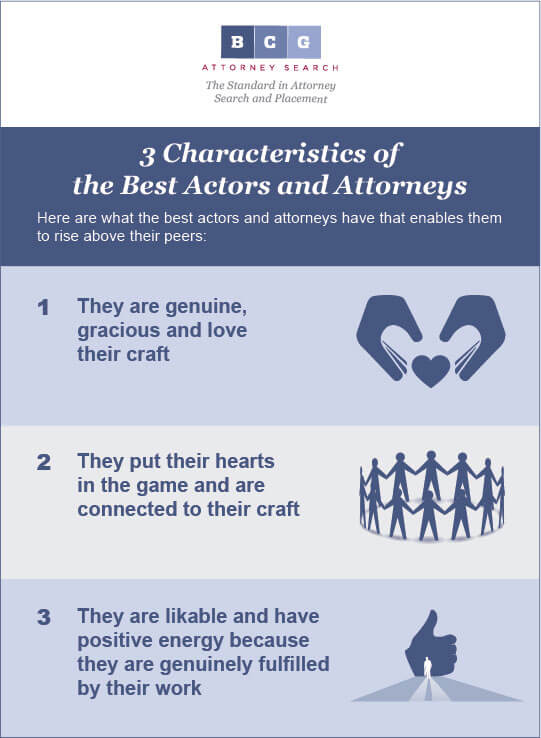
True Stars Are Genuine, Gracious and Love Their Craft
A few years ago when he was just becoming famous, Bradley Cooper rented a house from my family over the Christmas holiday and brought his girlfriend and mother to stay. At the time I was living in a house that was quite extraordinary and that I rented out and used for films, commercials and other similar pursuits.
Cooper was one of the best guests we ever had. When he left the house he left us several bottles of expensive champagne and wrote a long, glowing thank you note. Prior to the visit, he stopped by the house and spent an hour or so chatting with my wife and walking around the property. He was incredibly nice, gracious and friendly—so much so that I am writing about it today.
The same goes for numerous other famous people like this I have interacted with and met throughout the years. They are incredibly nice, open and friendly—and even were before they became famous. They may try and keep their distance from annoying fans, but when they meet people they will generally be quite gracious and nice.
In contrast, it is the opposite for people who never become famous—or flirt with it by getting a few choice roles in this or that. These people, more often than not, exhibit the sorts of characteristics I noticed in the man that was trying to become famous by being one-dimensional and calculating. This sort of thing never works. They are not nice, they look down on people who are not successful like them and they polarize people around them. At the time that Cooper stayed in our house, a few other up and coming actors did as well. These people were rude and polarizing. They complained, demanded refunds, fought with staff and exhibited strange and offensive behavior to everyone they came in contact with.
No surprise, these people had careers that stalled, and five years later (now) their careers are in the toilet. Their attitudes stopped them in their tracks. In fact, I have seen this so often and among so many actors that I believe I can actually tell who will become famous and who will not, and who will stay famous and who will not.
I take Bikram yoga classes occasionally and a (formerly) well-known actor was coming to my classes for a while. He has not had any roles in probably 10 years and was a famous child actor who is now known to be a jerk and never got any substantive roles after the age of 21 or so. If you know anything about Bikram yoga, you know that it gets extremely hot in the class, and after the class everyone runs to the showers. This guy had a habit of getting up right before the class ended (which broke the pace of the class and disturbed everyone) and running into the shower room (which was also the bathroom) and locking the door and leaving everyone locked out. We would all stand outside for several minutes with the door locked before we all went in and took showers.
One day someone said something to him: "There are several showers in there and we would like to take showers too! You do not have to lock us all out."
"Sorry guys," he puffed. "I'm not going to risk any of you snapping a picture of me and selling it to TMZ."
I thought maybe this was something unusual, but then a guy from my acting class got a role in Buffy the Vampire Slayer and came back to a few of our classes to share stories of his limited success. After a break we all tried to go to the bathroom and everyone went to the large office-building bathroom. Like the guy from Bikram yoga, he had locked us all out of the entire bathroom—numerous stalls and more.
"What's up with that?" I asked a guy from our class who has been in several shows like Dexter and others.
"He thinks we may try and take a picture of his junk. He's out of control and acting like everyone does who is never going anywhere in this business. Just because he is getting $10,000 per episode does not make him Brad Pitt. Jesus. I made $60k two weeks ago for one day's worth of work on a commercial and you do not see me locking 10 guys out of a bathroom."
This guy lost his role on the series after one season.
People whose hearts are not in the game think it is all about them. They look down on others and show their insecurity in a variety of ways instead of realizing that everything they do and everyone they come into contact with can either advance their career or kill it. Your actions show where your mind is and who you are. There was also a high-ranking executive of a major studio in my Bikram yoga class. He was the sort of guy I imagine could have helped the career of the former actor if he wanted to. I do not know, but I am pretty sure he could have. He never said anything, but he too was one of the people who was always made to wait while the actor showered. I am sure that sort of behavior gets around.
True Stars Put Their Hearts in the Game and Are Connected to Their Craft
When you walk into an Apple store you know what the store is about. You know its products represent something. You know they do the best they can with every product. When you enter the store you are greeted by someone and salespeople wander the floor to make sure you get the help you need without having to wait in line. Everything this company does and every point of contact is done as well as it can be. No point of contact is squandered and everyone is treated well—regardless of how influential and important they may be. In addition, the company stands for something: It is not just about making money. It is about challenging the status quo and doing things the best way possible. This is important, significant and why the company does as well as it does. The company is passionate about what it does and you see this in everything they do. It is not just empty "me too" representations, it is for real and you know it.
When you go into the home of a real actor, you can tell his or her life is dedicated to what he or she does. Real actors have their hearts in the game. They love their craft so much they read about it and practice it every chance they get. They associate with other actors who share their passion and are part of a "real community" of actors. They don't have egos because of how they look. They are not pretentious. They have artistic standards and generally can be heard talking with each other about their art and what it means to them.
I once spent a few hours on an airplane behind Laura Dern, a well-known actress. She was sitting next to her daughter and chatting excitedly to her about the "art" of acting. Then, Bruce Dern (her father—also a well-known actor) came to an acting school I was at and spent 5 or 6 hours talking about the art form. I've seen the same from Al Pacino and other great actors. They are in it for the art of what they do and it is palpable.
The best attorneys are like this as well. They have books about their practice areas on their bookshelves. They go to CLE seminars relevant to their practice areas and are passionate about what they do. They take great delight in interpreting and discussing the law. They do what they do because they have a profound and deep interest in the subject matter of what they do. They would work in a firm that paid less, or was not as prestigious, if they felt that it would bring them closer to being a better attorney. For them, it is about the profession and doing what they love. It is not about the money, and this passion is what makes them so good.
You see well-known household name actors appearing in plays, small "Indie" films and so forth all the time. Why would they do this when they could make more money and be more famous by appearing in major productions? They do it because they are in love with the art of their profession and attracted to things that expose them to the art and make them feel more connected to it. They take any opportunity they can to hone their craft and be around other genuine artists who feel the same way.
It is the same thing with attorneys who take public service or public interest jobs that pay less than big law firm jobs but offer other rewards. These attorneys do clerkships, become prosecutors with the US Attorney's Office or county agencies, enter the trenches as public defenders, or take jobs with a host of public interest organizations dedicated to causes like helping poor people or the environment. These attorneys pursue legal jobs that appeal to them from a personal standpoint and not a rational (money-making) standpoint. They love what they do, are proud of it and believe it is important. They are connected to their work and to the other like-minded people who also are committed to that work.
And this is the difference between amateur lawyers and true professionals; you can't excel unless you believe in what you are doing and your connection to the work comes from a deep place within you. Just like actors who truly love the craft of acting will stand the test of time, so will lawyers who genuinely relish the "practice" of law in their chosen fields. No matter how good-looking you are or how much you crave fame or fortune (in the case of actors), or how well-credentialed you are or how much you want prestige and large paychecks (in the case of lawyers), you'll never be truly great unless you are connected on a visceral level to the work you do and to the reasons you do it.
- See You Need to Enjoy What You Are Doing for more information.
True Stars Are Likable and Have Positive Energy Because They Are Genuinely Fulfilled By Their Work
And here's the other piece of the puzzle. To succeed in any field, whether it's acting or law or something else, you need people to like you. Nobody can do it all by himself or herself; everybody needs help and the people whom others want most to help and to associate with are those people who have the kind of positive energy that comes from being genuinely inspired and fulfilled by their work and life. Your technical skill, grades and so forth matter very little in the long run. Instead, being passionate about your work matters more. In addition to passion, people need to like you and you need to be likable and liked by as many people as possible. The reality is that lawyers will advance, get clients and succeed to the degree that others like them. You need to be likable, and if you are not you will be in trouble.
If you are not likable then everything falls apart.
My wife recently fired a nanny that had worked for us for some time. The woman was technically very proficient. She showed up on time, did her work competently and did what was expected of her. She carried herself well and had a degree in childcare and other "surface" qualifications that made her suited to the job.
The problem was, however, that that her heart clearly was not in the right place. She was not present in the job. She complained often and was critical. She gossiped constantly about other families and how negative the lives and careers were of other people doing her job. She was constantly playing with her phone and not watching the children. Her work was rote and mechanical and she did only the minimum she needed to do. She cared very little about her job. We did not feel good having her around because her energy was negative and we knew she did not like the job and did not like us for having the job.
When she was fired and told all of this, she agreed and said that she was in the wrong profession because she did not like what she was doing. It is like this with attorneys as well. They believe that just because they have the qualifications they are suited to the job. Then they go into firms and their heart is not in the right place. They complain to others and take great pride and joy listening to others complain and hearing about bad things happening to other law firms. They hope for the worst—even for their bosses—and are critical of their employers for having work for them to do. When they leave work, the last thing they want to do is improve their legal skills or learn more. They are not "artists" and are no different than an actor with one decent part who is unlikely to ever go far.
Conclusions
People can tell when you do not like your job. People can tell when they are being used. People can tell when you are in the wrong profession. People can tell when your heart is not in the right place. People can tell when you really should not be an attorney. You can choose your own path, but you should not stay on that path unless you are someone who belongs on the path. You will only belong on the path if you would follow that path regardless of whether or not you could do something else.
You will be tested, but if you make being an attorney who you are and commit to it completely on a spiritual, mental, and physical level, you will succeed. The key is that very, very few attorneys understand that. That is the real test that awaits every attorney that ever hopes to have an extraordinary career and life.
Click here to contact Harrison
About Harrison Barnes
No legal recruiter in the United States has placed more attorneys at top law firms across every practice area than Harrison Barnes. His unmatched expertise, industry connections, and proven placement strategies have made him the most influential legal career advisor for attorneys seeking success in Big Law, elite boutiques, mid-sized firms, small firms, firms in the largest and smallest markets, and in over 350 separate practice areas.
A Reach Unlike Any Other Legal Recruiter
Most legal recruiters focus only on placing attorneys in large markets or specific practice areas, but Harrison places attorneys at all levels, in all practice areas, and in all locations-from the most prestigious firms in New York, Los Angeles, and Washington, D.C., to small and mid-sized firms in rural markets. Every week, he successfully places attorneys not only in high-demand practice areas like corporate and litigation but also in niche and less commonly recruited areas such as:
- Immigration Law
- Workers Compensation
- Insurance
- Family Law
- Trust and Estate
- Municipal law
- And many more...
This breadth of placements is unheard of in the legal recruiting industry and is a testament to his extraordinary ability to connect attorneys with the right firms, regardless of market size or practice area.
Proven Success at All Levels
With over 25 years of experience, Harrison has successfully placed attorneys at over 1,000 law firms, including:
- Top Am Law 100 firms such including Sullivan and Cromwell, and almost every AmLaw 100 and AmLaw 200 law firm.
- Elite boutique firms with specialized practices
- Mid-sized firms looking to expand their practice areas
- Growing firms in small and rural markets
He has also placed hundreds of law firm partners and has worked on firm and practice area mergers, helping law firms strategically grow their teams.
Unmatched Commitment to Attorney Success - The Story of BCG Attorney Search
Harrison Barnes is not just the most effective legal recruiter in the country, he is also the founder of BCG Attorney Search, a recruiting powerhouse that has helped thousands of attorneys transform their careers. His vision for BCG goes beyond just job placement; it is built on a mission to provide attorneys with opportunities they would never have access to otherwise. Unlike traditional recruiting firms, BCG Attorney Search operates as a career partner, not just a placement service. The firm's unparalleled resources, including a team of over 150 employees, enable it to offer customized job searches, direct outreach to firms, and market intelligence that no other legal recruiting service provides. Attorneys working with Harrison and BCG gain access to hidden opportunities, real-time insights on firm hiring trends, and guidance from a team that truly understands the legal market. You can read more about how BCG Attorney Search revolutionizes legal recruiting here: The Story of BCG Attorney Search and What We Do for You.
The Most Trusted Career Advisor for Attorneys
Harrison's legal career insights are the most widely followed in the profession.
- His articles on BCG Search alone are read by over 150,000 attorneys per month, making his guidance the most sought-after in the legal field. Read his latest insights here.
- He has conducted hundreds of hours of career development webinars, available here: Harrison Barnes Webinar Replays.
- His placement success is unmatched-see examples here: Harrison Barnes' Attorney Placements.
- He has created numerous comprehensive career development courses, including BigLaw Breakthrough, designed to help attorneys land positions at elite law firms.
Submit Your Resume to Work with Harrison Barnes
If you are serious about advancing your legal career and want access to the most sought-after law firm opportunities, Harrison Barnes is the most powerful recruiter to have on your side.
Submit your resume today to start working with him: Submit Resume Here
With an unmatched track record of success, a vast team of over 150 dedicated employees, and a reach into every market and practice area, Harrison Barnes is the recruiter who makes career transformations happen and has the talent and resources behind him to make this happen.
A Relentless Commitment to Attorney Success
Unlike most recruiters who work with only a narrow subset of attorneys, Harrison Barnes works with lawyers at all stages of their careers, from junior associates to senior partners, in every practice area imaginable. His placements are not limited to only those with "elite" credentials-he has helped thousands of attorneys, including those who thought it was impossible to move firms, find their next great opportunity.
Harrison's work is backed by a team of over 150 professionals who work around the clock to uncover hidden job opportunities at law firms across the country. His team:
- Finds and creates job openings that aren't publicly listed, giving attorneys access to exclusive opportunities.
- Works closely with candidates to ensure their resumes and applications stand out.
- Provides ongoing guidance and career coaching to help attorneys navigate interviews, negotiations, and transitions successfully.
This level of dedicated support is unmatched in the legal recruiting industry.
A Legal Recruiter Who Changes Lives
Harrison believes that every attorney-no matter their background, law school, or previous experience-has the potential to find success in the right law firm environment. Many attorneys come to him feeling stuck in their careers, underpaid, or unsure of their next steps. Through his unique ability to identify the right opportunities, he helps attorneys transform their careers in ways they never thought possible.
He has worked with:
- Attorneys making below-market salaries who went on to double or triple their earnings at new firms.
- Senior attorneys who believed they were "too experienced" to make a move and found better roles with firms eager for their expertise.
- Attorneys in small or remote markets who assumed they had no options-only to be placed at strong firms they never knew existed.
- Partners looking for a better platform or more autonomy who successfully transitioned to firms where they could grow their practice.
For attorneys who think their options are limited, Harrison Barnes has proven time and time again that opportunities exist-often in places they never expected.
Submit Your Resume Today - Start Your Career Transformation
If you want to explore new career opportunities, Harrison Barnes and BCG Attorney Search are your best resources. Whether you are looking for a BigLaw position, a boutique firm, or a move to a better work environment, Harrison's expertise will help you take control of your future.
Submit Your Resume Here to get started with Harrison Barnes today.
Harrison's reach, experience, and proven results make him the best legal recruiter in the industry. Don't settle for an average recruiter-work with the one who has changed the careers of thousands of attorneys and can do the same for you.
About BCG Attorney Search
BCG Attorney Search matches attorneys and law firms with unparalleled expertise and drive, while achieving results. Known globally for its success in locating and placing attorneys in law firms of all sizes, BCG Attorney Search has placed thousands of attorneys in law firms in thousands of different law firms around the country. Unlike other legal placement firms, BCG Attorney Search brings massive resources of over 150 employees to its placement efforts locating positions and opportunities its competitors simply cannot. Every legal recruiter at BCG Attorney Search is a former successful attorney who attended a top law school, worked in top law firms and brought massive drive and commitment to their work. BCG Attorney Search legal recruiters take your legal career seriously and understand attorneys. For more information, please visit www.BCGSearch.com.
Harrison Barnes does a weekly free webinar with live Q&A for attorneys and law students each Wednesday at 10:00 am PST. You can attend anonymously and ask questions about your career, this article, or any other legal career-related topics. You can sign up for the weekly webinar here: Register on Zoom
Harrison also does a weekly free webinar with live Q&A for law firms, companies, and others who hire attorneys each Wednesday at 10:00 am PST. You can sign up for the weekly webinar here: Register on Zoom
You can browse a list of past webinars here: Webinar Replays
You can also listen to Harrison Barnes Podcasts here: Attorney Career Advice Podcasts
You can also read Harrison Barnes' articles and books here: Harrison's Perspectives
Harrison Barnes is the legal profession's mentor and may be the only person in your legal career who will tell you why you are not reaching your full potential and what you really need to do to grow as an attorney--regardless of how much it hurts. If you prefer truth to stagnation, growth to comfort, and actionable ideas instead of fluffy concepts, you and Harrison will get along just fine. If, however, you want to stay where you are, talk about your past successes, and feel comfortable, Harrison is not for you.
Truly great mentors are like parents, doctors, therapists, spiritual figures, and others because in order to help you they need to expose you to pain and expose your weaknesses. But suppose you act on the advice and pain created by a mentor. In that case, you will become better: a better attorney, better employees, a better boss, know where you are going, and appreciate where you have been--you will hopefully also become a happier and better person. As you learn from Harrison, he hopes he will become your mentor.
To read more career and life advice articles visit Harrison's personal blog.