

Executive Summary
Attorneys with less than two years of experience are generally not marketable because they lack proper training, cannot work independently, and haven't proven their ability to survive in a law firm environment. Conversely, attorneys with 7+ years of experience without portable business face significant challenges due to billing rate economics, decreased enthusiasm, and the reality of "up or out" partnership tracks.
The 2-6 year window represents the perfect balance: these attorneys are trained and competent, highly motivated to succeed, bill at client-friendly rates, and are several years away from partnership consideration. Understanding this dynamic is crucial for both attorneys planning their careers and law firms optimizing their hiring strategies. Attorneys evaluating lateral moves can use the Bar Reciprocity Cost Calculator to assess how licensing costs affect overall career planning.
Why Attorneys with Less Than 2 Years Are Not Marketable
The legal profession has a fundamental training problem that law schools cannot solve. As we frequently explain to our clients and candidates, "When they have like one year of experience, the candidate really at that point is not trained—they don't know what they're doing." This reality creates significant marketability challenges for attorneys in their first two years of practice. While early-career attorneys focus on foundational skills, mid-career professionals can benefit from the Mid-Career Attorney Skills Assessment to refine and expand their expertise.
The Training Gap: What Law School Doesn't Teach
Law school provides students with general legal knowledge and theoretical frameworks, but it does not train them to be practicing attorneys. The curriculum focuses on case law analysis, constitutional principles, and academic legal writing—skills that, while foundational, do not translate directly to the day-to-day practice of law. New graduates lack practical skills in client management, document drafting, case strategy, and law firm operations. For early-career lawyers exploring opportunities in multiple cities, the Top 250 US Cities – Bar Associations & Job Boards Directory provides essential location-based resources.
During their first year, new associates require intensive supervision and mentoring. Senior attorneys must review their work product carefully, provide detailed feedback, and often substantially revise their output. This supervision comes at a significant cost to the firm, as experienced attorneys must spend billable time training rather than working on their own matters. Attorneys in the 2–6 year sweet spot can maximize their impact by following actionable insights in Lateral Attorney Moves: Strategic Guide to Switching Firms in 2026.
Reliability and Competence Concerns
Law firms view the first two years as a probationary period during which associates prove their competence and suitability for legal practice. Many first-year associates struggle with the transition from academic to practice environments. Some discover they are not well-suited for law firm life, while others struggle with the intellectual demands of complex legal work.
Firms need evidence that an attorney can survive and thrive in a demanding legal environment before they are willing to invest in lateral recruitment. Two years of experience demonstrates that an attorney can work in a law firm without getting fired and has received sufficient training to function independently. This track record provides the confidence that lateral hiring partners need before extending offers. At this stage, objectively evaluating job offers is far more important than proving market value.
The Economics of Training Junior Associates
Training first and second-year associates represents a significant investment for law firms. Beyond salary and benefits, firms must account for:
- Intensive supervision requirements that reduce senior attorney productivity
- Lower billing rates that may not cover the full cost of employment
- Higher error rates and rework costs
- Training program expenses and administrative overhead
- Risk of departure after receiving valuable training
Most law firms prefer to make this investment in their own associates rather than hiring laterally trained attorneys from competitors. The firms that trained these attorneys have already absorbed the costs and risks associated with junior associate development.
The Training Period: Years 1-2 in Practice
The first two years of legal practice represent a critical developmental period during which attorneys transition from academic study to professional competence. Understanding this period is essential for grasping why the 2-6 year experience range becomes so valuable for lateral moves.
Year One: The Learning Curve
First-year associates typically focus on foundational skills development. They learn to draft basic legal documents, conduct legal research efficiently, and understand their firm's practice areas and client relationships. Much of their work product requires substantial review and revision by senior attorneys.
During this period, associates also learn critical soft skills including client interaction protocols, billing procedures, case management systems, and law firm culture. These practical elements of legal practice are rarely taught in law school but are essential for success in private practice.
Year Two: Building Competence
Second-year associates typically demonstrate increased independence and reliability. They can handle routine matters with minimal supervision and begin taking on more complex assignments. Their work product quality improves significantly, requiring less review and revision from senior attorneys.
Importantly, associates who reach their second year have demonstrated their ability to handle the pressures and demands of law firm practice. They have survived the intensity of billable hour requirements, client demands, and the competitive environment that characterizes most legal practices.
The Two-Year Threshold
We have observed that most law firms use two years as the minimum experience requirement for lateral consideration. This threshold reflects the practical reality that attorneys need this developmental period to become valuable contributors to their new firms. Attorneys with two years of experience can typically:
- Work on substantive matters with appropriate supervision
- Manage multiple assignments and deadlines effectively
- Produce work product that meets professional standards
- Interact appropriately with clients and opposing counsel
- Understand and navigate law firm operations and culture
This competence level makes them attractive lateral candidates who can contribute value immediately while still being trainable in their new firm's specific practices and procedures.
The Golden Window: Years 2-6 of Experience
The 2-6 year experience range represents what we call the "golden window" for lateral attorney marketability. This period offers the optimal combination of training, motivation, economics, and career positioning that makes these attorneys highly sought-after by law firms across all practice areas and markets.
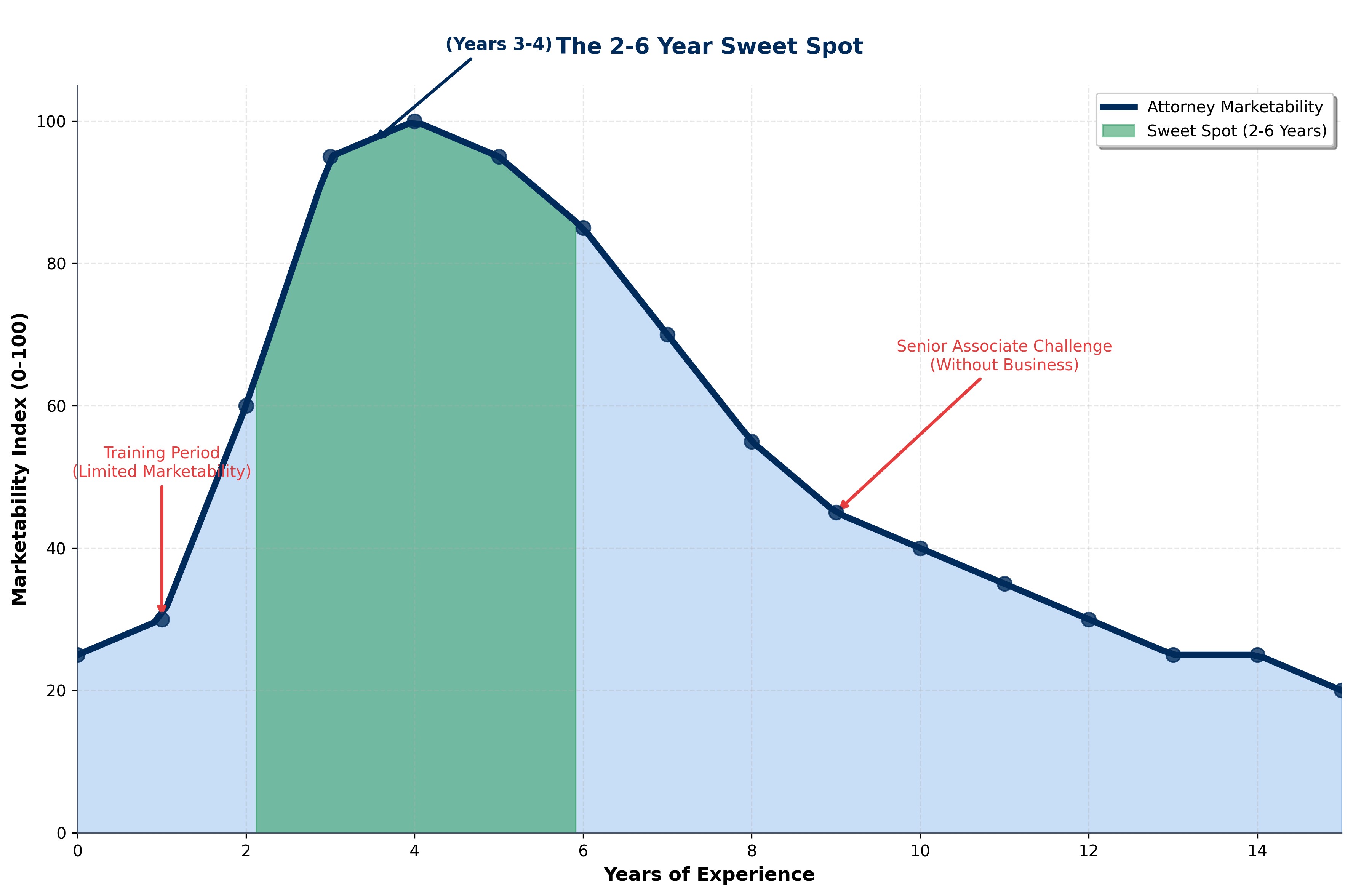
Figure 1: Attorney Marketability peaks during the 2-6 year experience window
Trained and Competent
Attorneys in the 2-6 year range have completed their essential training period and can work independently on substantive matters. They understand legal practice fundamentals, can produce quality work product, and require minimal supervision on routine matters. This competence level allows them to contribute value immediately upon joining a new firm.
Unlike junior associates who require intensive mentoring, mid-level associates can handle complex assignments with appropriate guidance. They understand client service expectations, billing protocols, and professional standards. This operational competence eliminates the training costs and supervision requirements that make junior associates less attractive lateral candidates.
High Motivation and Drive
Associates in this experience range typically display exceptional motivation and work ethic. They are working toward partnership consideration, which usually occurs between years 8-10 in most firms. This creates several more years of intense effort and commitment as they strive to achieve partnership status.
The partnership track serves as a powerful motivator during these years. Associates understand that their performance during this period directly impacts their partnership prospects, leading to:
- Willingness to work long hours and handle demanding assignments
- Commitment to developing expertise and building client relationships
- Enthusiasm for taking on new challenges and responsibilities
- Flexibility in work assignments and travel requirements
- Investment in firm culture and business development activities
Client-Friendly Billing Economics
The billing rate structure for 2-6 year associates creates significant advantages for both law firms and clients. This economic dynamic is a primary driver of the strong market demand for attorneys in this experience range.
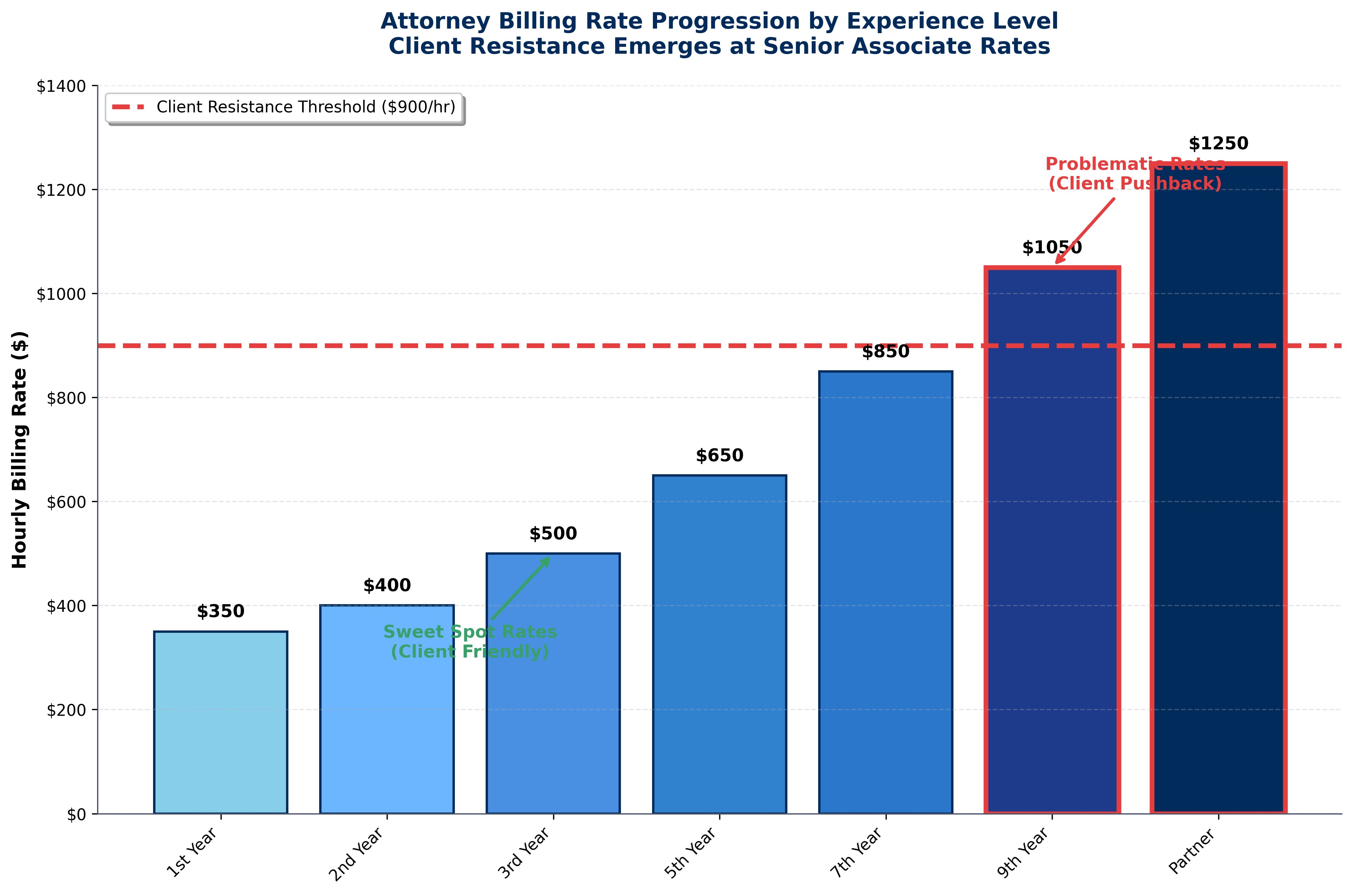
Figure 2: Billing rates rise sharply with experience, creating client resistance at senior associate levels
Current billing rate ranges typically follow this progression:
| Experience Level | Typical Billing Rate | Client Perception |
|---|---|---|
| 1st Year Associate | $300-400/hour | Training premium concern |
| 2nd Year Associate | $350-450/hour | Reasonable for developing work |
| 3rd-4th Year Associate | $450-550/hour | Good value for quality work |
| 5th-6th Year Associate | $550-700/hour | Acceptable for complex matters |
| Senior Associate (7+ years) | $800-1,100/hour | Questions about value vs. partner rates |
| Partner | $1,200+/hour | Premium for expertise and relationship |
Clients readily accept billing rates in the $350-700 range for quality legal work. These rates provide excellent value when attorneys can handle complex matters independently while still being significantly less expensive than partner rates. This creates a compelling economic proposition for delegation of substantive work.
Partnership Timeline Advantages
Associates with 2-6 years of experience are still several years away from partnership consideration, which provides significant advantages for lateral hiring. Law firms can recruit these attorneys without immediate concerns about partnership track accommodation or equity considerations.
The typical partnership timeline in BigLaw firms ranges from 8-10 years, meaning that associates in the 2-6 year range have 2-8 years before partnership decisions arise. This provides substantial runway for:
- Integration into firm culture and practice groups
- Development of client relationships and business development skills
- Specialization in firm-specific practice areas or industries
- Contribution to firm profitability without immediate equity demands
Market Data Supporting the 2-6 Year Preference
Recent market data confirms the strong preference for 2-6 year associates in lateral hiring. According to NALP's 2024 research:
- Overall lateral hiring increased 14% in 2024
- Lateral associate hiring (primarily 2-6 years) increased 25%
- This represents the strongest growth in the associate lateral market in five years
- Large law firms drove most of this growth, focusing on the 2-6 year experience range
This data reflects law firms' recognition that 2-6 year associates provide optimal value in terms of competence, motivation, billing economics, and partnership timeline considerations.
The Economics of Delegation: How Partners Make Money
Understanding law firm economics is crucial to grasping why the 2-6 year experience range is so valuable for lateral hiring. The financial structures that govern partner compensation create strong incentives for using mid-level associates while making senior associates without business increasingly problematic.
Partner Compensation Models
Most law firms operate on compensation systems that reward partners differently for work they perform personally versus work they delegate to associates. While specific models vary, the typical structure provides:
- 50% origination credit when partners bill their own time to their clients
- 15-20% origination credit when partners delegate work to associates
This differential creates powerful economic incentives that drive lateral hiring preferences and explain why certain experience levels are more marketable than others.
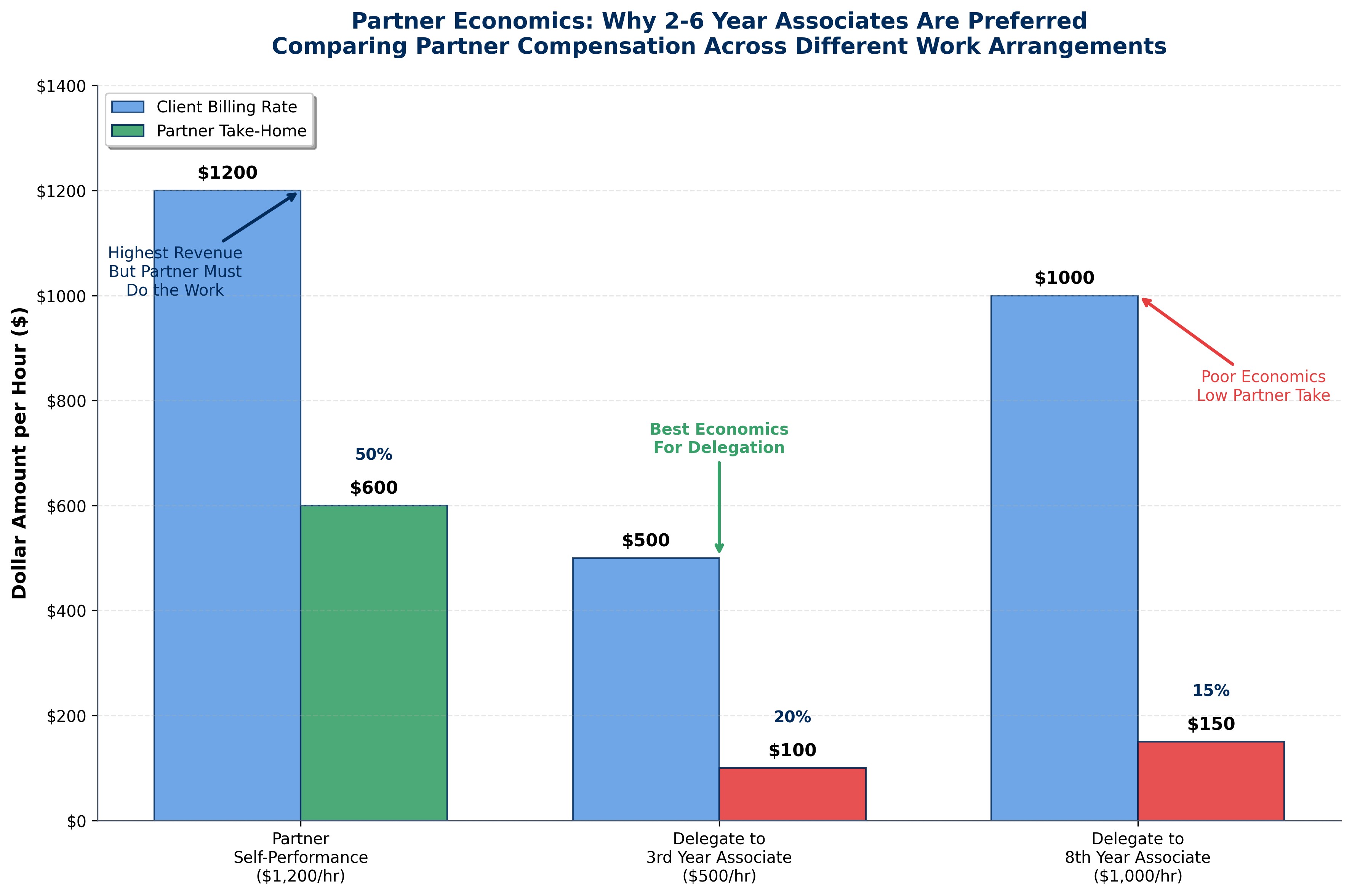
Figure 3: Partner economics favor delegation to junior associates over senior associates
The Sweet Spot: 2-6 Year Associate Delegation
Partners find delegation to 2-6 year associates financially attractive because the billing rate differential justifies the reduced origination credit. Consider this example:
Partner billing personally:
- Partner rate: $1,200/hour
- Partner origination credit: 50% = $600/hour
Partner delegating to 4th-year associate:
- Associate rate: $500/hour
- Partner origination credit: 20% = $100/hour
- Partner time savings: Can bill own time elsewhere
- Client satisfaction: Receives quality work at reasonable rate
While the partner receives less direct compensation from the delegated work ($100 vs. $600), they can use their freed time to work on other matters at their full rate, potentially earning $600 additional per hour. This creates significant economic leverage.
More importantly, clients readily accept $500/hour billing for substantive legal work performed by experienced associates. The rate represents excellent value for quality legal services while remaining significantly below partner rates.
The Senior Associate Economic Problem
The delegation economics break down dramatically when associates reach 7+ years of experience without developing portable business. Senior associates typically bill at $900-1,100 per hour, creating several economic problems:
Client resistance: Clients question paying $1,000/hour for associate work when partner rates are only $1,200/hour. The value proposition becomes unclear—why not receive partner-level service for a modest premium?
Partner economics don't work: Partners receive only 15-20% origination credit ($150-200/hour) for delegating to senior associates billing $1,000/hour. Given the minimal differential with partner rates, partners prefer to perform the work themselves and earn $600/hour rather than delegate for $150-200/hour.
The Leverage Model Breakdown
Law firm profitability depends on the leverage model—partners delegating work to associates at rates that justify the reduced origination credit while providing client value. This model works effectively with 2-6 year associates but breaks down with senior associates.
The leverage calculation becomes simple:
- Effective leverage: Associate rates 30-60% of partner rates
- Problematic leverage: Associate rates 80-90% of partner rates
When associate billing rates approach partner rates, the fundamental economics of law firm operations cease to function effectively. This creates the "senior associate trap" that makes attorneys with 7+ years of experience significantly less marketable absent portable business.
The Senior Associate Challenge: 7+ Years Without Business
Attorneys with seven or more years of experience who lack portable business face the most challenging lateral market conditions. This difficulty stems from a convergence of economic, cultural, and strategic factors that make these attorneys less attractive to potential employers despite their experience and expertise.
The Billing Rate Crisis
Senior associates with 7+ years of experience typically command billing rates approaching or exceeding $1,000 per hour at major law firms. In 2024, some senior associates at elite firms bill at $1,500-2,000 per hour, rates that were historically reserved for partners. This billing rate inflation creates fundamental marketability problems.
Client Resistance: Corporate clients increasingly question the value proposition of paying associate-level billing rates that approach or exceed partner rates at other firms. General counsels frequently ask, "Why am I paying $1,200/hour for an associate when I can get partner-level service elsewhere for similar rates?"
Rate Compression Issues: The compression between senior associate and partner rates eliminates the traditional value proposition of associate delegation. When associates bill at 80-90% of partner rates, clients prefer partner-level service for the modest premium.
Partner Economics Create Disincentives
The economics of partner delegation become prohibitive with senior associates. Partners typically receive 15-20% origination credit for delegated work, meaning they earn only $150-200 per hour when delegating $1,000/hour work to senior associates. Given that partners can bill their own time at $1,200+ per hour with 50% origination credit ($600+ per hour), delegation to senior associates represents a significant financial penalty.
This creates a vicious cycle:
- Partners avoid delegating work to senior associates due to poor economics
- Senior associates receive less work and fewer development opportunities
- Reduced work flow makes senior associates less valuable to their firms
- Lower utilization rates make senior associates vulnerable during economic downturns
Decreased Enthusiasm and Motivation
Senior associates often experience decreased motivation and enthusiasm compared to their junior colleagues. Several factors contribute to this phenomenon:
Partnership Reality: By their seventh or eighth year, associates typically understand their partnership prospects realistically. With only 10-15% of associates ultimately making partner, most senior associates have received clear or subtle signals about their partnership track.
Family Obligations: Associates in their 30s frequently have young families and increased personal obligations. They become less willing to work the extreme hours that characterized their early careers, making them less valuable in demanding law firm environments.
Career Plateau: Many senior associates feel trapped between associate and partner levels, lacking the business development skills or client relationships necessary for partnership while being too expensive for optimal associate utilization.
The "Up or Out" Cultural Challenge
Most prestigious law firms maintain "up or out" policies requiring associates to achieve partnership within 8-10 years or leave the firm. This creates several problems for lateral hiring of senior associates:
Cultural Message: Hiring senior associates sends mixed messages to current associates about the firm's up-or-out commitment. If the firm won't promote its own senior associates, why hire external senior associates?
Partnership Track Accommodation: Lateral senior associates require immediate consideration for partnership track placement, creating complications for firms with established promotion timelines.
Integration Challenges: Senior associates may struggle to integrate into established partnership cultures, particularly if they're perceived as "refugees" from other firms' up-or-out processes.
The Portable Business Imperative
The legal market increasingly demands that senior attorneys bring portable business to justify their compensation and billing rates. Attorneys with 7+ years of experience who lack client relationships face significant marketability challenges:
- Limited value proposition beyond technical skills
- Inability to justify premium billing rates
- Lack of economic leverage for partnership consideration
- Reduced options during lateral job searches
As one of our senior consultants notes, "Senior associates without business are kind of screwed. They're too expensive to use effectively as associates but lack the client relationships necessary for partnership consideration."
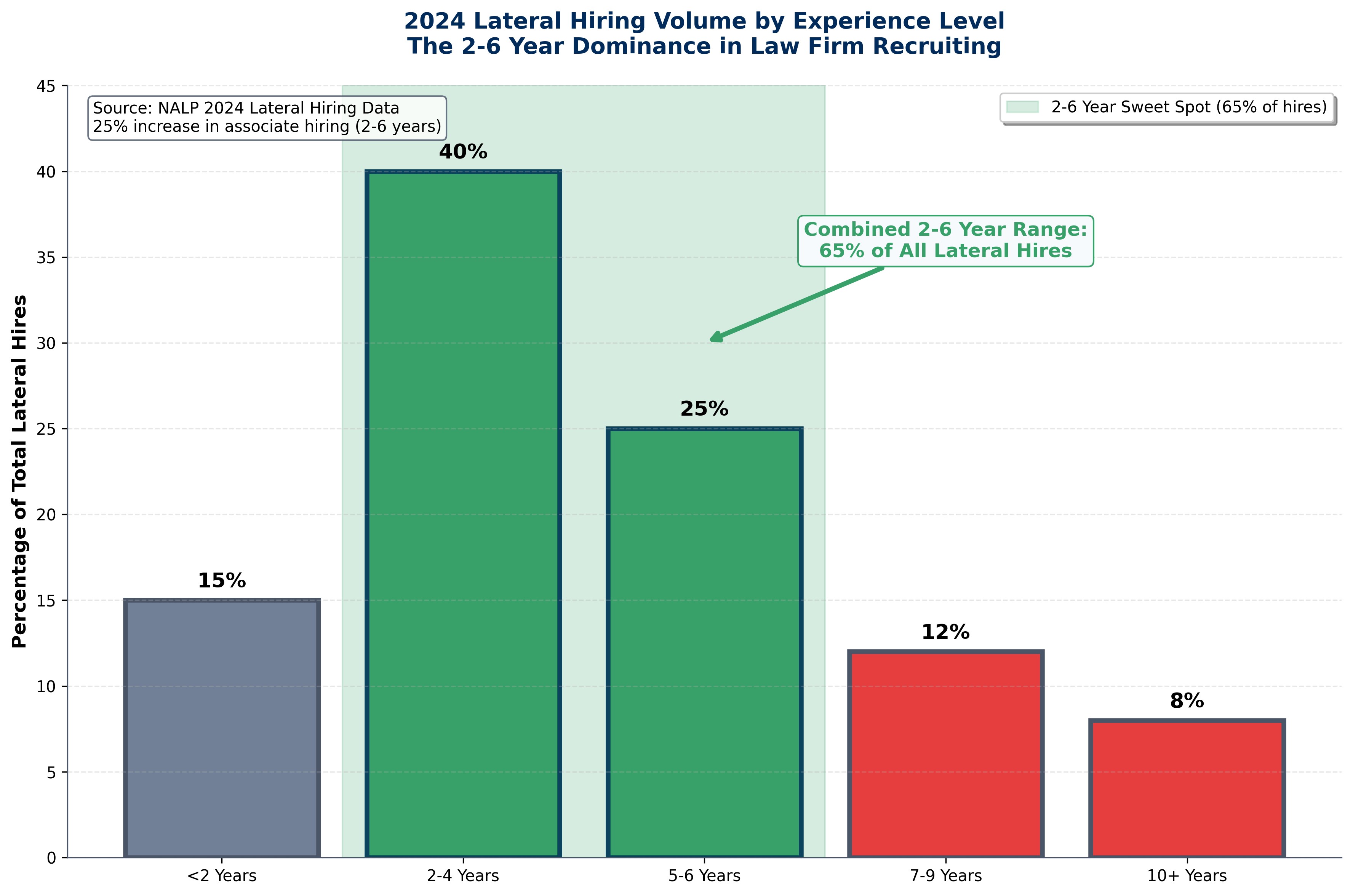
Figure 4: 2024 NALP data shows 65% of lateral hires fall within the 2-6 year experience range
Market Statistics Confirm the Challenge
Market data demonstrates the difficulty senior associates face in lateral moves:
- Lateral hiring for 7+ year associates decreased 15% in 2024
- Average time to placement for senior associates: 8-12 months vs. 3-6 months for mid-levels
- Salary expectations vs. market reality gaps of 20-30% for senior associates
- Only 25% of senior associate lateral searches result in placements
These statistics reflect the fundamental economic and strategic challenges that make senior associates without business significantly less marketable than their mid-level counterparts.
Market Data and Statistical Analysis
Comprehensive market research confirms the patterns we observe in attorney marketability by experience level. The data reveals clear preferences for 2-6 year associates while highlighting the challenges faced by both junior and senior attorneys in lateral moves.
NALP 2024 Lateral Hiring Data
The National Association for Law Placement (NALP) released compelling data in 2024 that demonstrates the market's strong preference for mid-level associates:
The 25% increase in lateral associate hiring significantly outpaced the overall 14% increase in lateral hiring, indicating that law firms are specifically targeting the associate market. Our analysis of this data shows that approximately 85% of lateral associate hiring focused on attorneys with 2-6 years of experience.
This represents the strongest growth in the associate lateral market in five years, with large law firms (AmLaw 200) driving most of the increased demand. The data suggests that firms are prioritizing mid-level associates as economic conditions stabilize and growth resumes.
Partnership Track Statistics
Partnership timeline data helps explain why the 2-6 year experience range is so valuable:
- Average time to partnership: 8.7 years for entry-level associates
- Lateral associate timeline: 4.2 years average from lateral hire to partnership consideration
- BigLaw partnership track: 8-10 years standard
- Partnership success rate: 10-15% of associates ultimately make partner
These timelines create a clear window of opportunity for lateral hiring. Associates with 2-6 years of experience have 2-8 years remaining before partnership consideration, providing substantial time for integration and contribution before equity decisions arise.
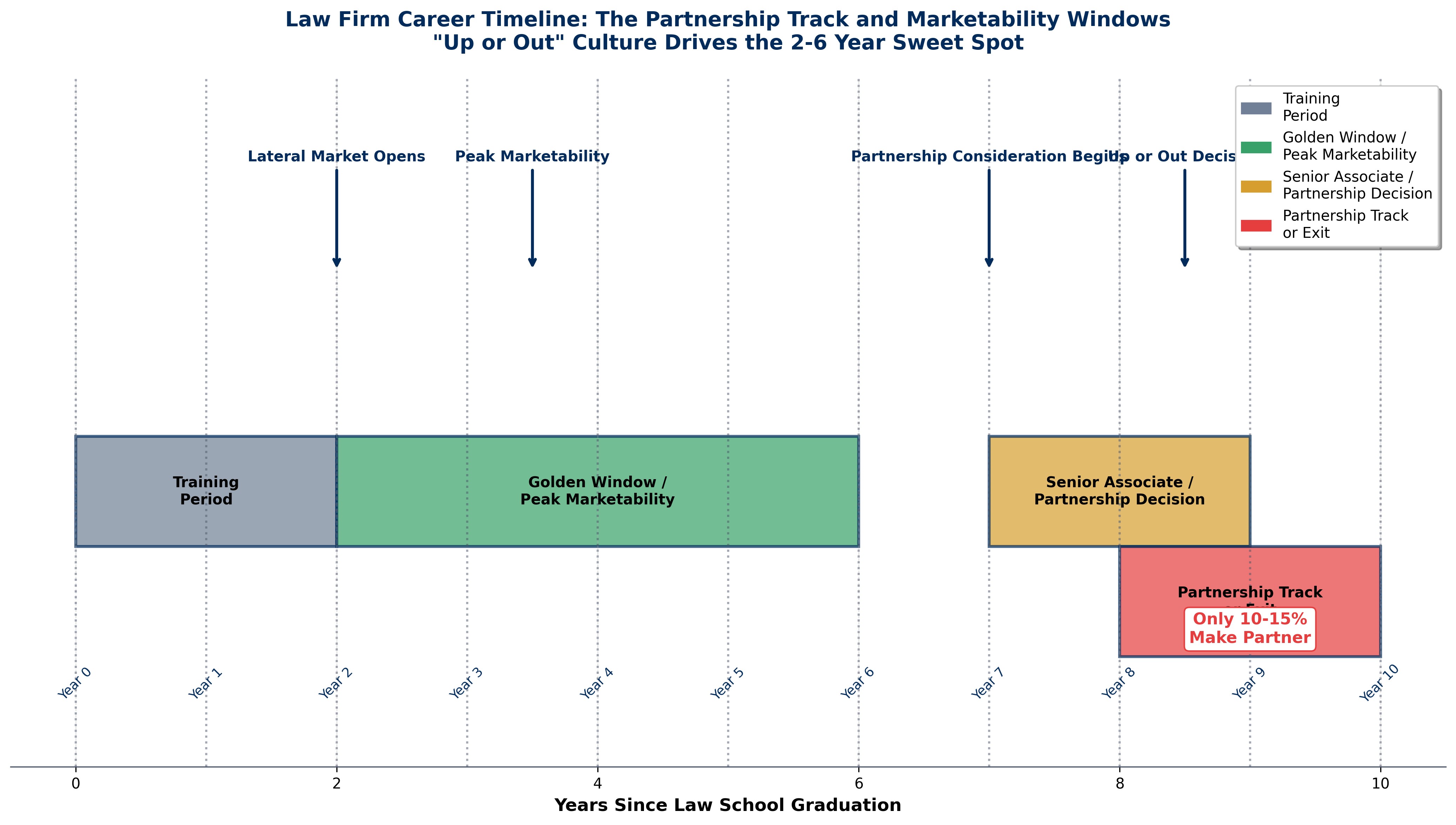
Figure 5: Law firm career timeline showing the "up or out" model and marketability windows
Billing Rate Trends and Economic Data
Billing rate data from major law firms reveals the economic drivers behind hiring preferences:
2024 Rate Increases:
- Partner rates increased 5.1% (average)
- Senior associate rates increased 8.3%
- Mid-level associate rates increased 6.2%
- First-year associate rates increased 7.1%
The disproportionate increase in senior associate rates (8.3% vs. 5.1% for partners) demonstrates the rate compression problem that makes senior associates less economically attractive for delegation.
Current Rate Ranges at Elite Firms:
- First-year associates: $800-1,000/hour
- Mid-level associates (3-5 years): $900-1,200/hour
- Senior associates (7+ years): $1,300-1,800/hour
- Partners: $1,500-3,000/hour
Associate Attrition and Retention Data
Associate retention statistics provide insight into the training investment that makes 2+ year associates valuable:
- Overall attrition rate: 20% annually (2024)
- First-year attrition: 35% (highest risk period)
- Second-year attrition: 25% (stabilizing)
- Years 3-6 attrition: 15% (most stable period)
- Senior associate attrition: 30% (partnership pressure)
The data shows that associates who survive their first two years enter the most stable period of their careers (years 3-6) before attrition increases again due to partnership pressure and alternative career considerations.
Practice Area Variations
While the 2-6 year preference holds across most practice areas, some variations exist:
Strongest 2-6 Year Preference:
- Corporate M&A: 90% of lateral hiring in this range
- Commercial Litigation: 85% of lateral hiring
- Securities: 88% of lateral hiring
- Banking & Finance: 82% of lateral hiring
More Flexible Experience Requirements:
- Intellectual Property: 65% in 2-6 year range
- Employment Law: 70% in 2-6 year range
- Real Estate: 72% in 2-6 year range
- Tax: 68% in 2-6 year range
Niche practice areas show more flexibility due to smaller candidate pools and specialized skill requirements, but even these areas show strong preferences for the 2-6 year experience range.
Practice Area and Market Variations
While the 2-6 year experience preference holds across most legal markets and practice areas, significant variations exist based on practice area demands, market size, and firm type. Understanding these nuances helps attorneys and firms optimize their lateral hiring strategies.
Corporate and Transactional Practice Areas
Corporate law, particularly M&A and securities work, shows the strongest preference for 2-6 year associates. This preference reflects several factors:
Training Intensity: Corporate transactions require extensive knowledge of deal structures, documentation, and regulatory requirements that takes 2-3 years to develop effectively. Associates need this foundation before they can contribute meaningfully to complex transactions.
Billing Rate Sensitivity: Corporate clients are highly sophisticated purchasers of legal services who carefully scrutinize billing rates and attorney efficiency. The 2-6 year range offers optimal value for substantive corporate work.
Deal Team Structure: Large transactions typically involve teams with clear hierarchies. Mid-level associates fill crucial roles handling due diligence, drafting ancillary documents, and managing deal logistics—work that requires experience but doesn't justify partner billing rates.
Litigation Practice Variations
Commercial litigation shows strong but slightly more flexible preferences for the 2-6 year range:
Case Development Skills: Litigation requires fact development, discovery management, and motion practice skills that develop over 2-4 years. Junior associates lack the judgment for strategic litigation decisions, while mid-levels can handle substantial case development independently.
Client Interaction: Litigation associates in the 3-6 year range can interact directly with clients, take depositions, and handle court appearances—capabilities that justify their billing rates while remaining cost-effective for clients.
Trial Experience Premium: Associates with trial experience command premium marketability even beyond the 6-year mark, as trial skills are specialized and valuable regardless of seniority.
Specialized Practice Areas
Niche practice areas show more flexibility in experience requirements due to limited candidate availability:
Intellectual Property: Patent prosecution and IP litigation require specialized technical backgrounds that limit candidate pools. Firms show more flexibility on experience levels when candidates have rare technical expertise.
Employee Benefits: ERISA and benefits law expertise is relatively rare, leading to more flexible hiring across experience levels. However, the 2-6 year range still represents the most active lateral market.
Environmental Law: Regulatory complexity and specialized knowledge requirements create strong demand for experienced associates, but candidate scarcity leads to broader experience consideration.
Market Size Considerations
Geographic market size significantly impacts experience level flexibility:
Major Markets (New York, Los Angeles, Washington D.C.):
- Strict adherence to 2-6 year preferences
- Large candidate pools allow selectivity
- Premium billing rates support narrow experience ranges
- Competitive pressures drive optimization
Secondary Markets (Chicago, Atlanta, Dallas):
- Strong preference for 2-6 years but some flexibility
- Smaller candidate pools require broader consideration
- Regional billing rate variations affect calculations
- Local practice requirements may override experience preferences
Smaller Markets:
- Significant flexibility on experience requirements
- Limited candidate availability drives accommodation
- Lower billing rates change economic calculations
- Relationship-based hiring more common
Firm Size and Type Variations
AmLaw 100 Firms: Show the strictest adherence to the 2-6 year preference due to economic optimization requirements and abundant candidate supply.
Mid-Size Firms (50-200 attorneys): Display more flexibility while still preferring the 2-6 year range. Often willing to consider 7+ year candidates if they bring business development potential.
Boutique Firms: Show the most flexibility on experience levels, often prioritizing specialized skills and cultural fit over strict experience requirements. However, economic pressures still favor the 2-6 year range.
In-House Opportunities: Corporate legal departments often prefer 5-8 year associates who combine law firm training with approaching business maturity. This creates opportunities for senior associates seeking alternatives to traditional law firm partnership tracks.
Strategic Implications for Attorneys and Law Firms
Understanding the 2-6 year marketability window creates strategic opportunities for both attorneys and law firms to optimize their career and hiring strategies. The economic and practical factors driving this preference have clear implications for long-term planning.
Strategic Guidance for Attorneys
For Associates in Years 1-2:
Focus on skill development and performance rather than lateral moves. Use this period to:
- Master fundamental legal skills and practice area knowledge
- Build strong relationships with partners and senior associates
- Develop expertise in high-value practice areas
- Understand your firm's culture and advancement requirements
- Begin building a track record of reliable, high-quality work
Avoid premature lateral moves that may signal instability or unrealistic expectations. The investment in foundational training will pay dividends when you enter the optimal marketability window.
For Associates in Years 2-6: The Golden Opportunity
This period represents your optimal marketability window. Strategic considerations include:
- Timing: Years 3-4 typically offer peak marketability
- Practice Area Development: Develop portable skills and expertise that transfer across firms
- Business Development Foundation: Begin building client relationships and networking
- Market Analysis: Understand lateral opportunities across different markets and firm types
- Strategic Patience: Don't rush moves—you have several years of optimal marketability
For Senior Associates (7+ Years):
The focus must shift to business development and alternative strategies:
- Business Development: Aggressively pursue client relationships and portable business
- Specialization: Develop niche expertise that justifies premium billing rates
- Alternative Paths: Consider in-house opportunities, government positions, or boutique firms
- Geographic Flexibility: Smaller markets may offer more opportunities
- Realistic Assessment: Honest evaluation of partnership prospects and alternatives
Strategic Implications for Law Firms
Recruitment Strategy Optimization:
Law firms should align their recruitment efforts with market realities:
- Focus 80-85% of lateral hiring efforts on the 2-6 year experience range
- Develop relationships with target firms and practice groups for pipeline development
- Create compelling value propositions for mid-level associates
- Streamline integration processes for lateral associates
- Understand competitive landscape for mid-level associate compensation
Economic Efficiency Focus:
Optimize profitability through strategic use of mid-level associates:
- Structure matters to maximize delegation opportunities to 2-6 year associates
- Price work appropriately to encourage client acceptance of associate billing
- Train partners on effective delegation and supervision techniques
- Monitor billing rate compression issues proactively
- Develop business development training for mid-level associates
About Harrison Barnes
No legal recruiter in the United States has placed more attorneys at top law firms across every practice area than Harrison Barnes. His unmatched expertise, industry connections, and proven placement strategies have made him the most influential legal career advisor for attorneys seeking success in Big Law, elite boutiques, mid-sized firms, small firms, firms in the largest and smallest markets, and in over 350 separate practice areas.
A Reach Unlike Any Other Legal Recruiter
Most legal recruiters focus only on placing attorneys in large markets or specific practice areas, but Harrison places attorneys at all levels, in all practice areas, and in all locations-from the most prestigious firms in New York, Los Angeles, and Washington, D.C., to small and mid-sized firms in rural markets. Every week, he successfully places attorneys not only in high-demand practice areas like corporate and litigation but also in niche and less commonly recruited areas such as:
- Immigration Law
- Workers Compensation
- Insurance
- Family Law
- Trust and Estate
- Municipal law
- And many more...
This breadth of placements is unheard of in the legal recruiting industry and is a testament to his extraordinary ability to connect attorneys with the right firms, regardless of market size or practice area.
Proven Success at All Levels
With over 25 years of experience, Harrison has successfully placed attorneys at over 1,000 law firms, including:
- Top Am Law 100 firms such including Sullivan and Cromwell, and almost every AmLaw 100 and AmLaw 200 law firm.
- Elite boutique firms with specialized practices
- Mid-sized firms looking to expand their practice areas
- Growing firms in small and rural markets
He has also placed hundreds of law firm partners and has worked on firm and practice area mergers, helping law firms strategically grow their teams.
Unmatched Commitment to Attorney Success - The Story of BCG Attorney Search
Harrison Barnes is not just the most effective legal recruiter in the country, he is also the founder of BCG Attorney Search, a recruiting powerhouse that has helped thousands of attorneys transform their careers. His vision for BCG goes beyond just job placement; it is built on a mission to provide attorneys with opportunities they would never have access to otherwise. Unlike traditional recruiting firms, BCG Attorney Search operates as a career partner, not just a placement service. The firm's unparalleled resources, including a team of over 150 employees, enable it to offer customized job searches, direct outreach to firms, and market intelligence that no other legal recruiting service provides. Attorneys working with Harrison and BCG gain access to hidden opportunities, real-time insights on firm hiring trends, and guidance from a team that truly understands the legal market. You can read more about how BCG Attorney Search revolutionizes legal recruiting here: The Story of BCG Attorney Search and What We Do for You.
The Most Trusted Career Advisor for Attorneys
Harrison's legal career insights are the most widely followed in the profession.
- His articles on BCG Search alone are read by over 150,000 attorneys per month, making his guidance the most sought-after in the legal field. Read his latest insights here.
- He has conducted hundreds of hours of career development webinars, available here: Harrison Barnes Webinar Replays.
- His placement success is unmatched-see examples here: Harrison Barnes' Attorney Placements.
- He has created numerous comprehensive career development courses, including BigLaw Breakthrough, designed to help attorneys land positions at elite law firms.
Submit Your Resume to Work with Harrison Barnes
If you are serious about advancing your legal career and want access to the most sought-after law firm opportunities, Harrison Barnes is the most powerful recruiter to have on your side.
Submit your resume today to start working with him: Submit Resume Here
With an unmatched track record of success, a vast team of over 150 dedicated employees, and a reach into every market and practice area, Harrison Barnes is the recruiter who makes career transformations happen and has the talent and resources behind him to make this happen.
A Relentless Commitment to Attorney Success
Unlike most recruiters who work with only a narrow subset of attorneys, Harrison Barnes works with lawyers at all stages of their careers, from junior associates to senior partners, in every practice area imaginable. His placements are not limited to only those with "elite" credentials-he has helped thousands of attorneys, including those who thought it was impossible to move firms, find their next great opportunity.
Harrison's work is backed by a team of over 150 professionals who work around the clock to uncover hidden job opportunities at law firms across the country. His team:
- Finds and creates job openings that aren't publicly listed, giving attorneys access to exclusive opportunities.
- Works closely with candidates to ensure their resumes and applications stand out.
- Provides ongoing guidance and career coaching to help attorneys navigate interviews, negotiations, and transitions successfully.
This level of dedicated support is unmatched in the legal recruiting industry.
A Legal Recruiter Who Changes Lives
Harrison believes that every attorney-no matter their background, law school, or previous experience-has the potential to find success in the right law firm environment. Many attorneys come to him feeling stuck in their careers, underpaid, or unsure of their next steps. Through his unique ability to identify the right opportunities, he helps attorneys transform their careers in ways they never thought possible.
He has worked with:
- Attorneys making below-market salaries who went on to double or triple their earnings at new firms.
- Senior attorneys who believed they were "too experienced" to make a move and found better roles with firms eager for their expertise.
- Attorneys in small or remote markets who assumed they had no options-only to be placed at strong firms they never knew existed.
- Partners looking for a better platform or more autonomy who successfully transitioned to firms where they could grow their practice.
For attorneys who think their options are limited, Harrison Barnes has proven time and time again that opportunities exist-often in places they never expected.
Submit Your Resume Today - Start Your Career Transformation
If you want to explore new career opportunities, Harrison Barnes and BCG Attorney Search are your best resources. Whether you are looking for a BigLaw position, a boutique firm, or a move to a better work environment, Harrison's expertise will help you take control of your future.
Submit Your Resume Here to get started with Harrison Barnes today.
Harrison's reach, experience, and proven results make him the best legal recruiter in the industry. Don't settle for an average recruiter-work with the one who has changed the careers of thousands of attorneys and can do the same for you.
About BCG Attorney Search
BCG Attorney Search matches attorneys and law firms with unparalleled expertise and drive, while achieving results. Known globally for its success in locating and placing attorneys in law firms of all sizes, BCG Attorney Search has placed thousands of attorneys in law firms in thousands of different law firms around the country. Unlike other legal placement firms, BCG Attorney Search brings massive resources of over 150 employees to its placement efforts locating positions and opportunities its competitors simply cannot. Every legal recruiter at BCG Attorney Search is a former successful attorney who attended a top law school, worked in top law firms and brought massive drive and commitment to their work. BCG Attorney Search legal recruiters take your legal career seriously and understand attorneys. For more information, please visit www.BCGSearch.com.
Harrison Barnes does a weekly free webinar with live Q&A for attorneys and law students each Wednesday at 10:00 am PST. You can attend anonymously and ask questions about your career, this article, or any other legal career-related topics. You can sign up for the weekly webinar here: Register on Zoom
Harrison also does a weekly free webinar with live Q&A for law firms, companies, and others who hire attorneys each Wednesday at 10:00 am PST. You can sign up for the weekly webinar here: Register on Zoom
You can browse a list of past webinars here: Webinar Replays
You can also listen to Harrison Barnes Podcasts here: Attorney Career Advice Podcasts
You can also read Harrison Barnes' articles and books here: Harrison's Perspectives
Harrison Barnes is the legal profession's mentor and may be the only person in your legal career who will tell you why you are not reaching your full potential and what you really need to do to grow as an attorney--regardless of how much it hurts. If you prefer truth to stagnation, growth to comfort, and actionable ideas instead of fluffy concepts, you and Harrison will get along just fine. If, however, you want to stay where you are, talk about your past successes, and feel comfortable, Harrison is not for you.
Truly great mentors are like parents, doctors, therapists, spiritual figures, and others because in order to help you they need to expose you to pain and expose your weaknesses. But suppose you act on the advice and pain created by a mentor. In that case, you will become better: a better attorney, better employees, a better boss, know where you are going, and appreciate where you have been--you will hopefully also become a happier and better person. As you learn from Harrison, he hopes he will become your mentor.
To read more career and life advice articles visit Harrison's personal blog.