Law School ROI Report: Expected Net Lifetime Income of U.S. Law School Graduates
School Prestige Impact
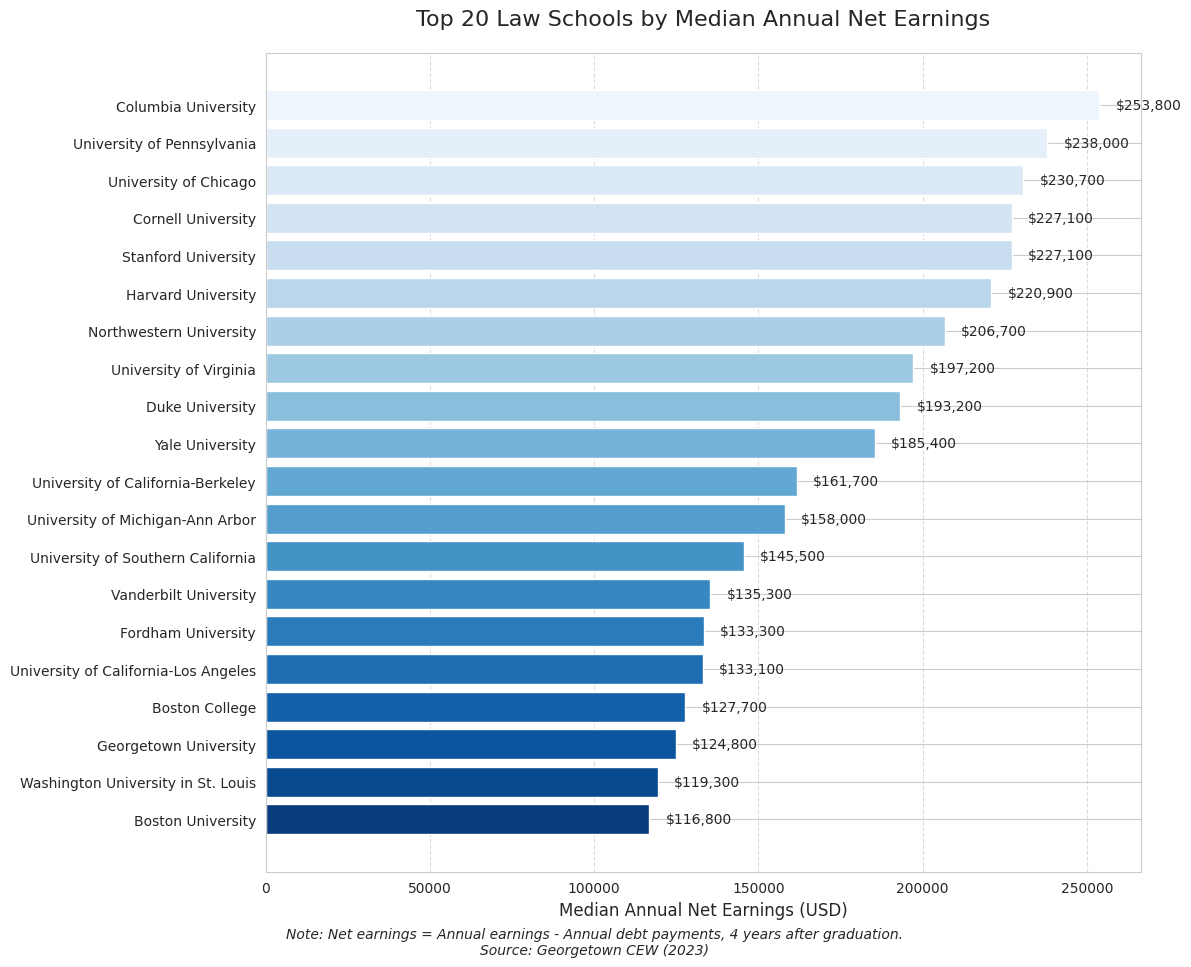
Graduates from top-ranked law schools can expect significantly higher lifetime earnings, with median net earnings ranging from $116,800 to $253,800 just four years after graduation for the top 20 schools.
Career Path Influence
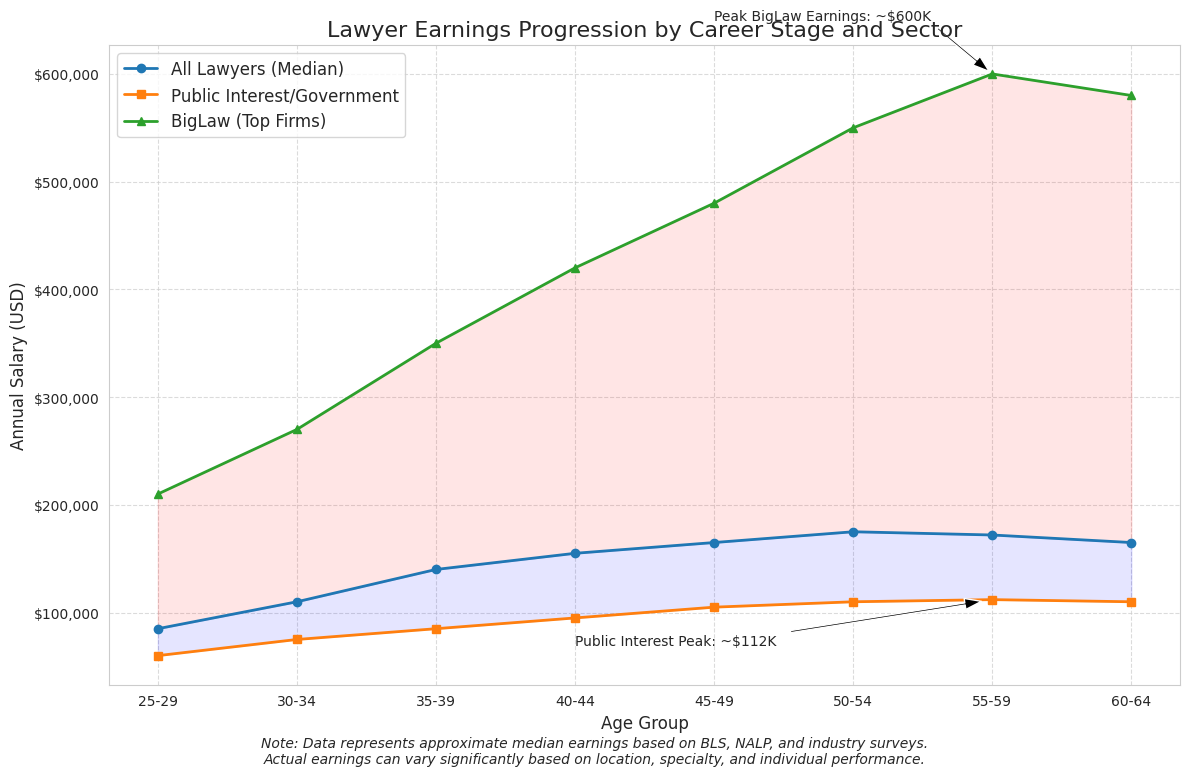
Lawyers in BigLaw earn substantially more than those in government, public interest, or small firms, with earnings differences widening over time.
Debt Burden Variance
While higher-ranked schools often have higher sticker prices, their superior placement rates in high-paying jobs result in better debt-to-income ratios and higher returns on investment.
Demographic Disparities
Women and underrepresented minorities face earnings gaps that widen over the course of legal careers.
The very top echelon of attorneys far exceed average ROI calculations, with some earning $25 million or more annually, as profiled in Elite Law Firm Partners Earning $25M+: Top Rainmaker Compensation Analysis 2024.
Methodology
This report synthesizes data from multiple authoritative sources to provide a comprehensive assessment of expected lifetime earnings for law school graduates:
- Financial metrics: Primary earnings and debt data from the Georgetown University Center on Education and the Workforce (CEW) analysis of the US Department of Education's College Scorecard, which measures median earnings four years after graduation, net of debt payments.
- Career progression modeling: Salary growth trajectories based on Bureau of Labor Statistics (BLS) data, NALP surveys, and American Bar Foundation (ABF) "After the JD" longitudinal studies.
- Employment outcomes: Job placement rates from ABA Employment Summary Reports and NALP data.
- Lifetime earnings calculation: 40-year earnings projection considering starting salaries, career progression patterns, attrition rates, cost of living, and debt repayment burden.
- Return on investment: Calculated as net lifetime earnings minus opportunity cost of three years of foregone income and total cost of education.
As demonstrated in why law school grades do not matter forever, initial academic performance often fades in importance over a career’s lifetime.
Top Law Schools by Net Lifetime Income
| Rank | Institution | Median Annual Earnings Net of Debt (4 Years After Graduation) | Estimated Net Lifetime Income |
|---|---|---|---|
| 1 | Columbia University | $253,800 | ~$12.5 million |
| 2 | University of Pennsylvania | $238,000 | ~$12.0 million |
| 3 | University of Chicago | $230,700 | ~$11.7 million |
| 4 | Cornell University | $227,100 | ~$11.6 million |
| 5 | Stanford University | $227,100 | ~$11.6 million |
| 6 | Harvard University | $220,900 | ~$11.3 million |
| 7 | Northwestern University | $206,700 | ~$10.8 million |
| 8 | University of Virginia | $197,200 | ~$10.4 million |
| 9 | Duke University | $193,200 | ~$10.2 million |
| 10 | Yale University | $185,400 | ~$9.9 million |
Note: Lifetime income estimates are projections based on 40-year career progression models. Sources: Georgetown CEW (2023), BLS, NALP salary surveys.
Graduates from the best law schools for BigLaw jobs tend to command higher starting salaries, accelerating ROI.
Lowest-Performing Law Schools
At the other end of the spectrum, graduates of the lowest-performing law schools face challenging financial outcomes:
| Rank | Institution | Median Annual Earnings Net of Debt (4 Years After Graduation) | Estimated Net Lifetime Income |
|---|---|---|---|
| 186 | Pontifical Catholic University of Puerto Rico-Ponce | $22,000 | ~$2.7 million |
| 185 | Inter American University of Puerto Rico-School of Law | $29,000 | ~$3.0 million |
| 184 | Atlanta's John Marshall Law School | $32,100 | ~$3.2 million |
| 183 | Thomas M. Cooley Law School | $33,200 | ~$3.2 million |
| 182 | Faulkner University | $35,200 | ~$3.3 million |
Source: Georgetown CEW (2023)
Career Trajectories and Salary Progression
Mid-career professionals often find that experience outweighing class rank in legal careers drives opportunities and earnings.
BigLaw Career Path
- Years 1-3 (Junior Associate): $215,000-$250,000
- Years 4-6 (Mid-level Associate): $295,000-$375,000
- Years 7-8 (Senior Associate): $385,000-$425,000
- Years 9-12 (Junior Partner/Non-equity): $450,000-$650,000
- Years 13-20 (Mid-level Partner): $750,000-$1,500,000
- Years 21-40 (Senior Partner): $1,500,000-$3,000,000+
Public Interest/Government Career Path
- Years 1-3: $60,000-$75,000
- Years 4-6: $75,000-$85,000
- Years 7-10: $85,000-$95,000
- Years 11-15: $95,000-$105,000
- Years 16-25: $105,000-$110,000
- Years 26-40: $110,000-$112,000
Sources: NALP Public Service Attorney Salary Survey (2023), BLS (2024), ALM Partner Compensation Surveys
For older candidates, law school for mature students offers insights into weighing costs against potential lifetime income.
Key Factors Affecting Lifetime Earnings
1. School Placement Performance
Top law schools place significantly higher percentages of graduates in high-earning positions:
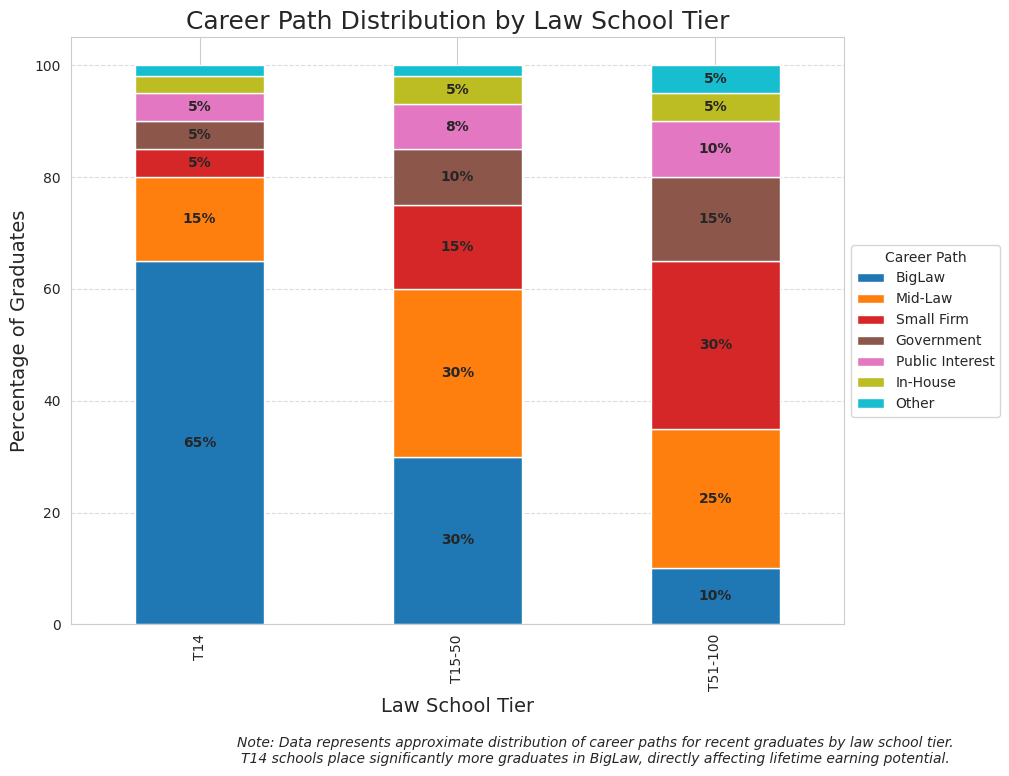
- T14 Schools: 65% BigLaw placement, 9% federal clerkships
- T15-50 Schools: 30% BigLaw placement, 5% federal clerkships
- T51-100 Schools: 10% BigLaw placement, 2% federal clerkships
2. Career Path Distribution
3. Regional Salary Variations
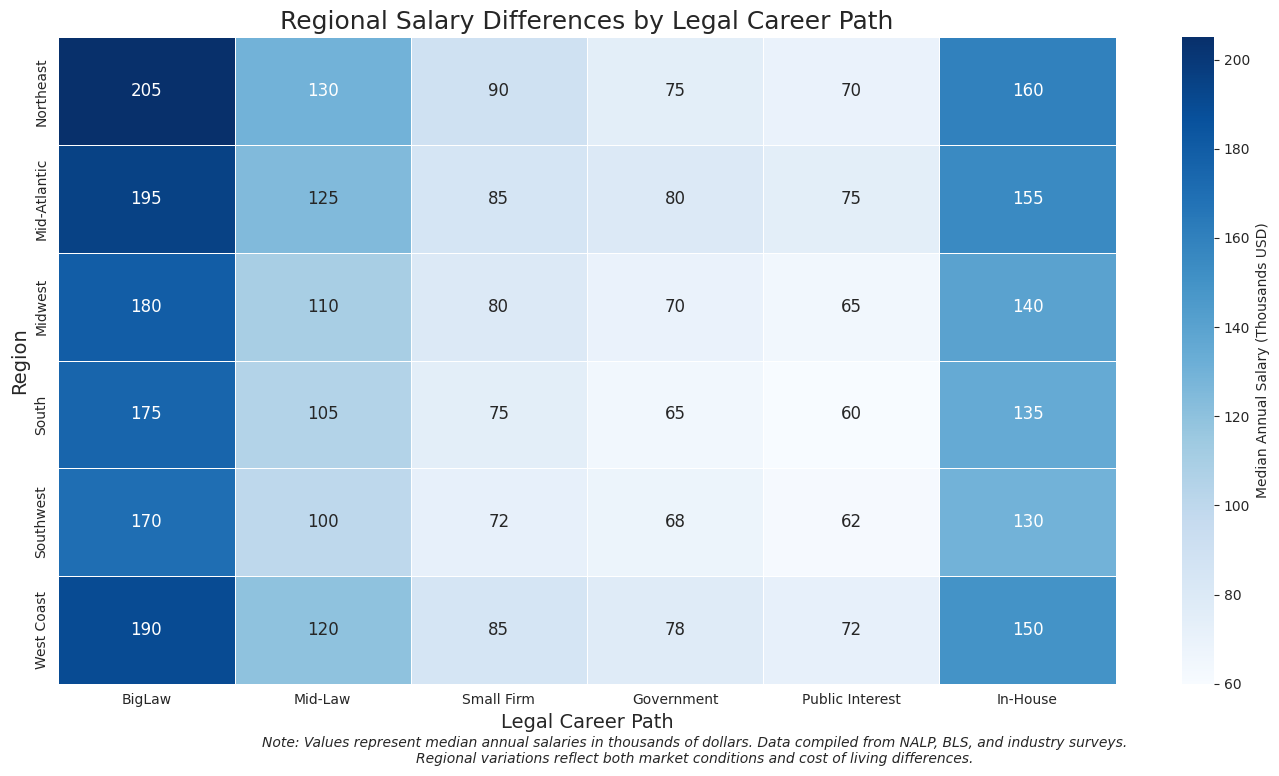
It’s worth noting that certain boutique and mid-sized law firms paying BigLaw salary scale can offer ROI competitive with the largest firms.
4. Opportunity Cost of Law School
The opportunity cost of attending law school includes:
- Three years of foregone earnings: ~$150,000-$225,000 (based on typical bachelor's degree salaries)
- Tuition and fees: ~$100,000 (public in-state) to $200,000+ (private)
- Living expenses: ~$60,000-$120,000 (depending on location)
5. Student Loan Debt Impact
Law school debt varies significantly by race/ethnicity:
- 18% of Black/African American graduates carry more than $200,000 in debt
- 47% of Black/African American lawyers have between $100,000-$200,000 in debt
- Asian American and white graduates typically have lower debt burdens
Many graduates aiming for high returns consider firms listed in The Elite Boutique Law Firms in the United States.
Law School Debt vs. Lifetime Earnings
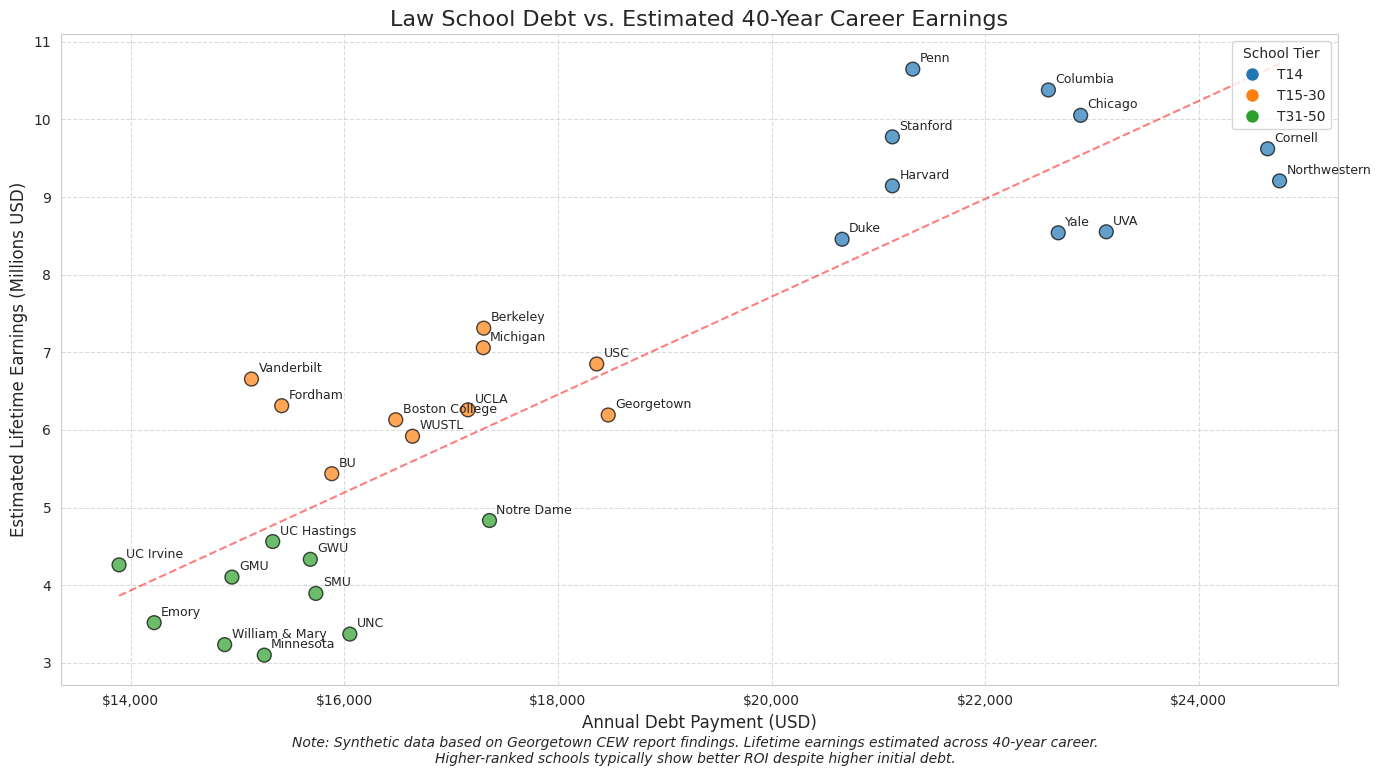
Prospective students should be aware of the things you should know about law school that can influence both academic and financial outcomes.
Average Return on Investment by Law School Tier
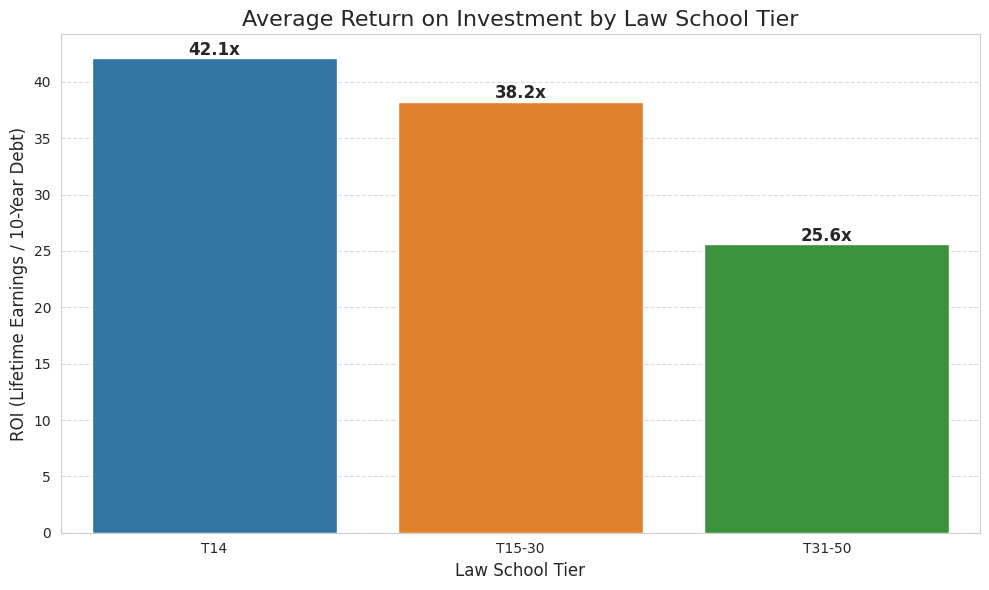
ROI calculated as lifetime earnings divided by 10-year debt.
Gender and Racial Disparities
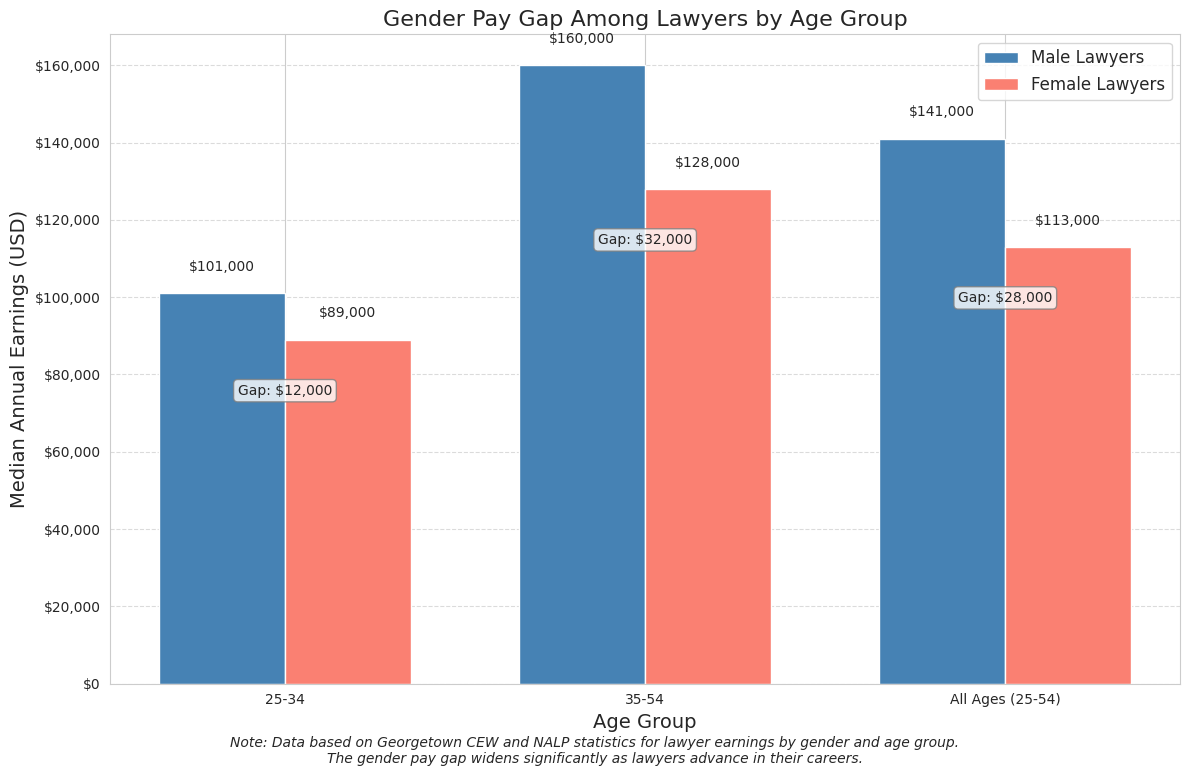
The gender gap is influenced by:
- Lower promotion rates for women to partner positions
- Higher attrition from BigLaw positions
- Greater representation in lower-paying public service roles
- Work-life balance pressures and career interruptions
This finding mirrors trends seen in recent analyses of work-life balance and compensation trade-offs in the U.S. legal profession, where higher salaries often come with significant lifestyle sacrifices.
Racial/Ethnic Earnings Disparities
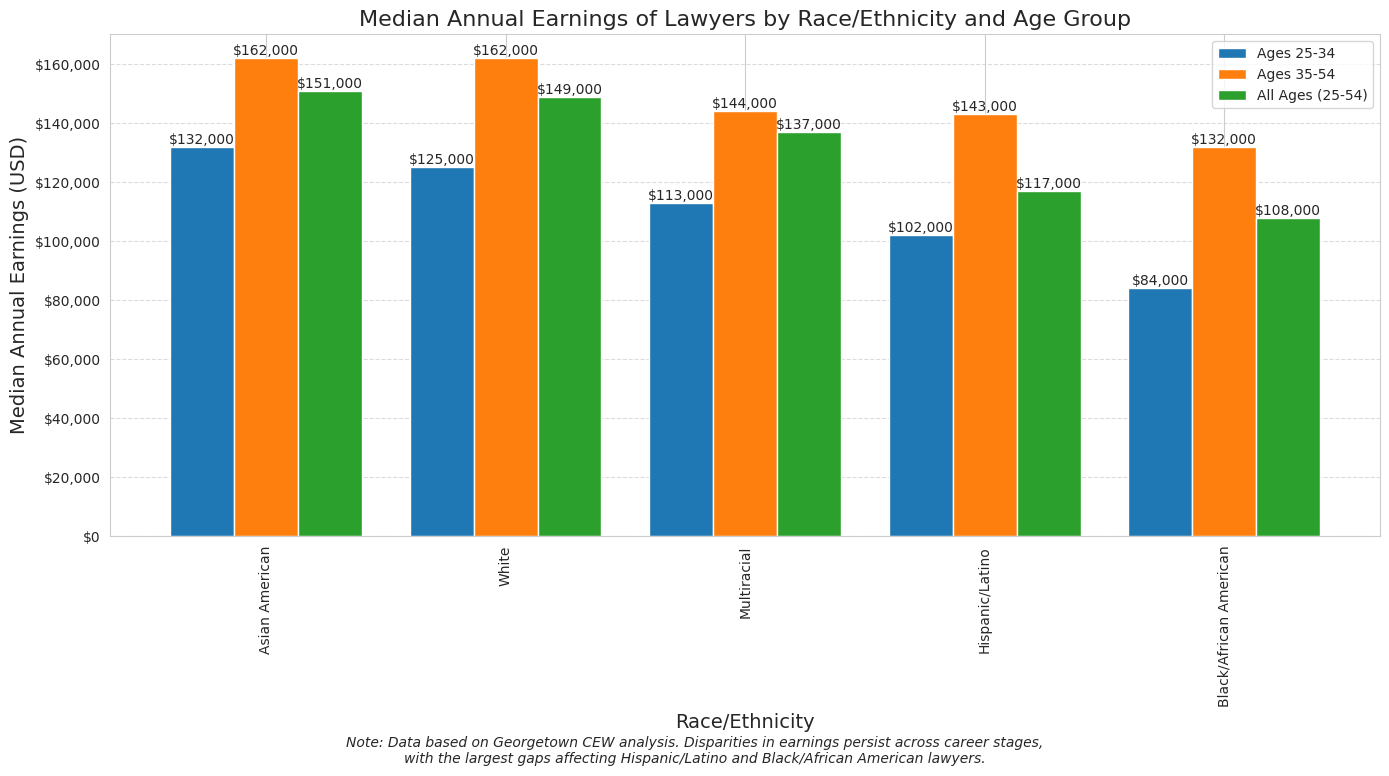
While ROI varies, some of the highest-paid attorney jobs can dramatically outpace national averages.
Median earnings for lawyers ages 25-54 by race/ethnicity:
- Asian American: $151,000
- White: $149,000
- Multiracial: $137,000
- Hispanic/Latino: $117,000
- Black/African American: $108,000
Impact of Technology and AI on Legal Careers
The legal profession is undergoing transformation due to technological changes:
- Approximately one-third of skills associated with legal work are at high risk of automation
- AI and large language models are transforming document review, legal research, and contract drafting
- BLS projections show legal field growth of 5% from 2023-2033, approximately 103,600 annual job openings
- Technical change may create new legal specialties rather than simply eliminating positions
Conclusion: Maximizing ROI on Legal Education
To maximize return on investment in a law degree:
2. Debt management is critical: Minimize undergraduate debt, seek scholarships, and consider public service loan forgiveness for public interest careers.
3. Regional planning affects outcomes: Consider cost of living alongside salary when evaluating job offers in different regions.
4. Career path dramatically impacts lifetime earnings: Early career choices between BigLaw, government, and public interest roles have long-term financial implications.
5. Persistence in high-earning roles pays off: The earnings gap between sectors widens over time; staying on the BigLaw partner track yields the highest financial returns despite higher initial stress and workload.
Historical trends, such as those outlined in the real-deal with attorney salaries, show steady increases at the top firms.
Data Limitations and Considerations
This analysis has several limitations to consider:
2. Career mobility between sectors occurs regularly
3. Non-financial factors significantly impact career satisfaction
4. Technological disruption may alter traditional career paths
5. Individual performance and networking can overcome institutional disadvantages
Long-term earnings potential often depends on factors that matter to BigLaw firms beyond law school.
This report represents the most comprehensive analysis available of lifetime earnings outcomes for law school graduates across all ABA-approved institutions. The findings strongly suggest that for most prospective law students, school selection and early career path decisions dramatically influence financial outcomes across a 40-year legal career. When assessing the long-term financial journey from law school to partner, also consider Law Firm Economics and Partnership ROI Analysis to see how actual partnership returns compare.
Sources: Georgetown University Center on Education and the Workforce (2023), Bureau of Labor Statistics (2023-2024), National Association for Law Placement (NALP), American Bar Association (ABA), American Bar Foundation (ABF).
- Before diving into long-term earnings projections, it’s equally important to ask Is Law School Right for Me? Key Factors to Consider Before Pursuing a Legal Career — ensuring you’ve weighed the decision itself before focusing on potential ROI.
© 2025 All Rights Reserved.
Want to read more law firm news?
For past editions of our weekly law firm news, click here.
Contact Our Recruiters Now!