Lateral Attorney Moves
Strategic Guide to Switching Firms in 2026-2027
Executive Summary
The lateral attorney hiring market has experienced unprecedented volatility, with 2024 showing a 14% rebound after consecutive years of decline. This comprehensive guide provides strategic insights for attorneys considering lateral moves in 2026-2027.
Based on extensive research from NALP data, industry reports, and expert interviews, this guide covers the complete lateral move process, from initial market assessment through successful integration at your new firm.
2-4 Months
Typical lateral move timeline
+14%
2024 lateral hiring increase
65%
Associate vs Partner hiring ratio
2026-2027 Market Analysis & Trends
Lateral Hiring Volume Trends (2020-2024)
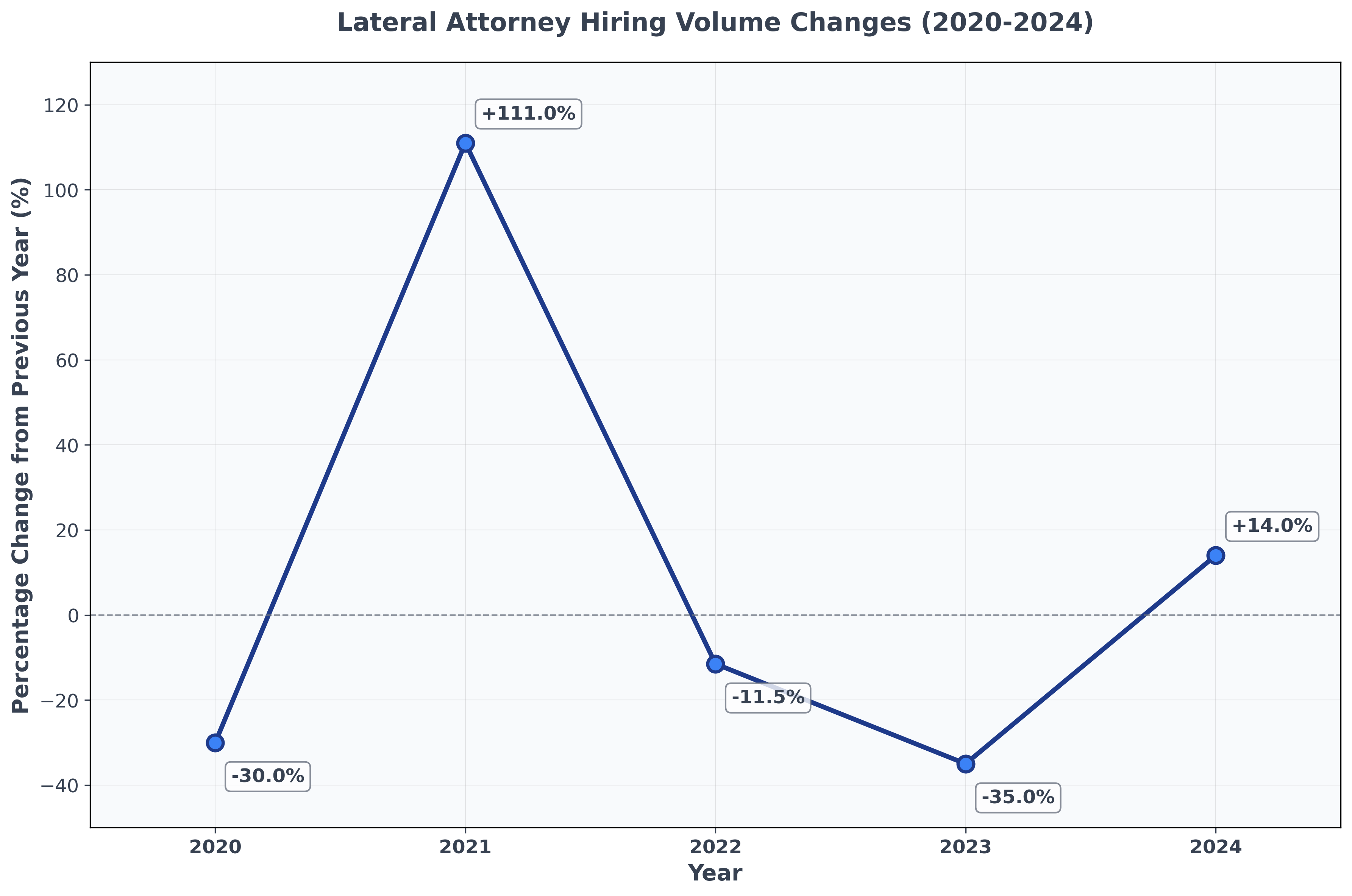
-30%
2020 Pandemic Impact
+111%
2021 Market Rebound
+14%
2024 Recovery
The lateral hiring market has shown remarkable resilience, with 2024 marking a clear recovery phase. The 14% increase represents renewed confidence in lateral hiring strategies, particularly in corporate law and government-to-private transitions.
Associate vs Partner Hiring Distribution
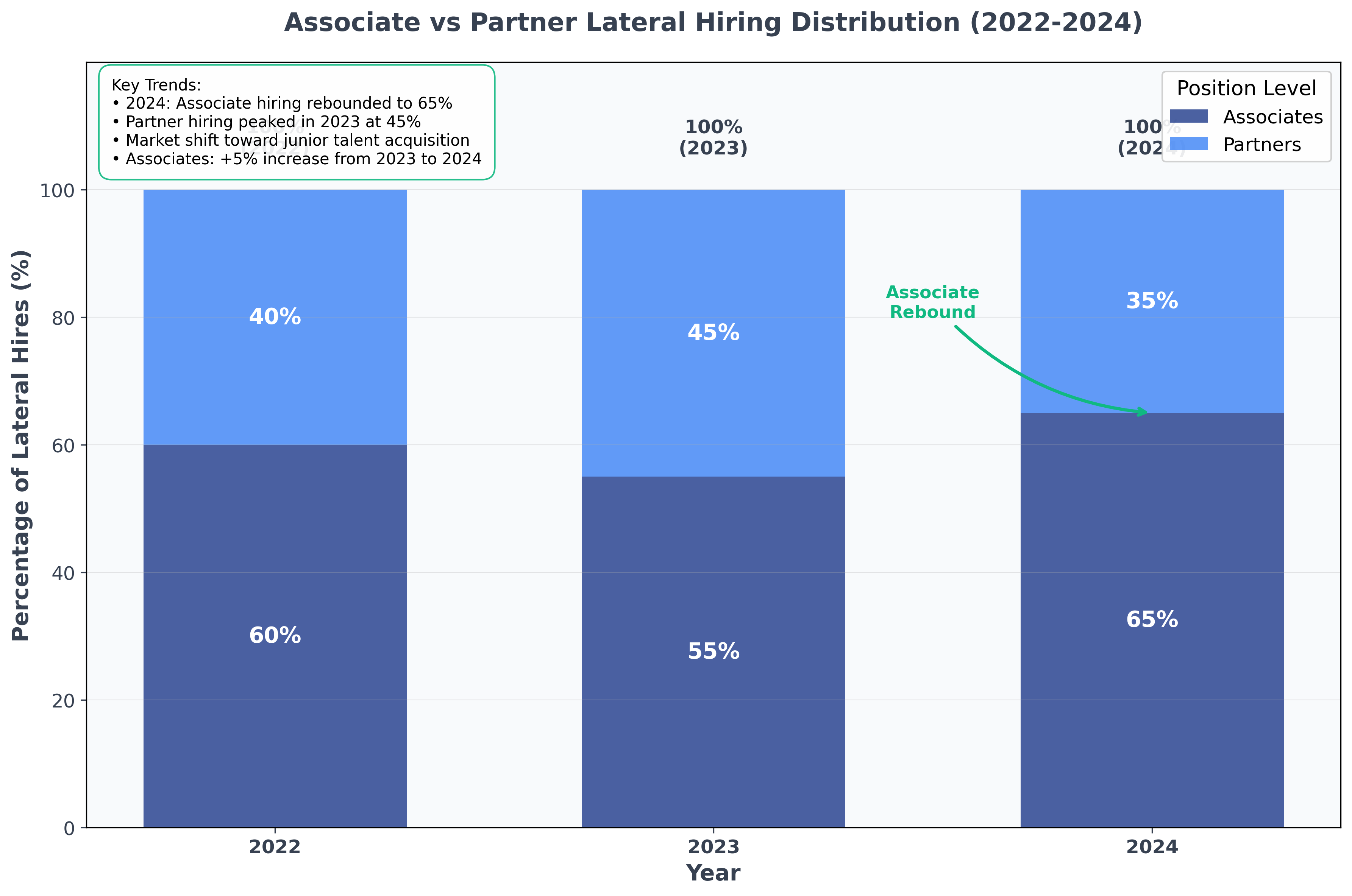
Key Market Insights:
- Associate hiring rebounded to 65% in 2024, up from 55% in 2023
- Partner hiring decreased to 35%, indicating market shift toward junior talent
- Firms prioritizing cost-effective growth through associate-level hires
- Economic uncertainty driving conservative hiring patterns
Practice Area Demand in 2026-2027

High-Demand Practice Areas:
Market Drivers:
- M&A activity driving corporate law demand
- Complex litigation increasing market needs
- Government transitions creating private opportunities
- Technology sector fueling IP/Tech growth
The Complete Lateral Move Timeline
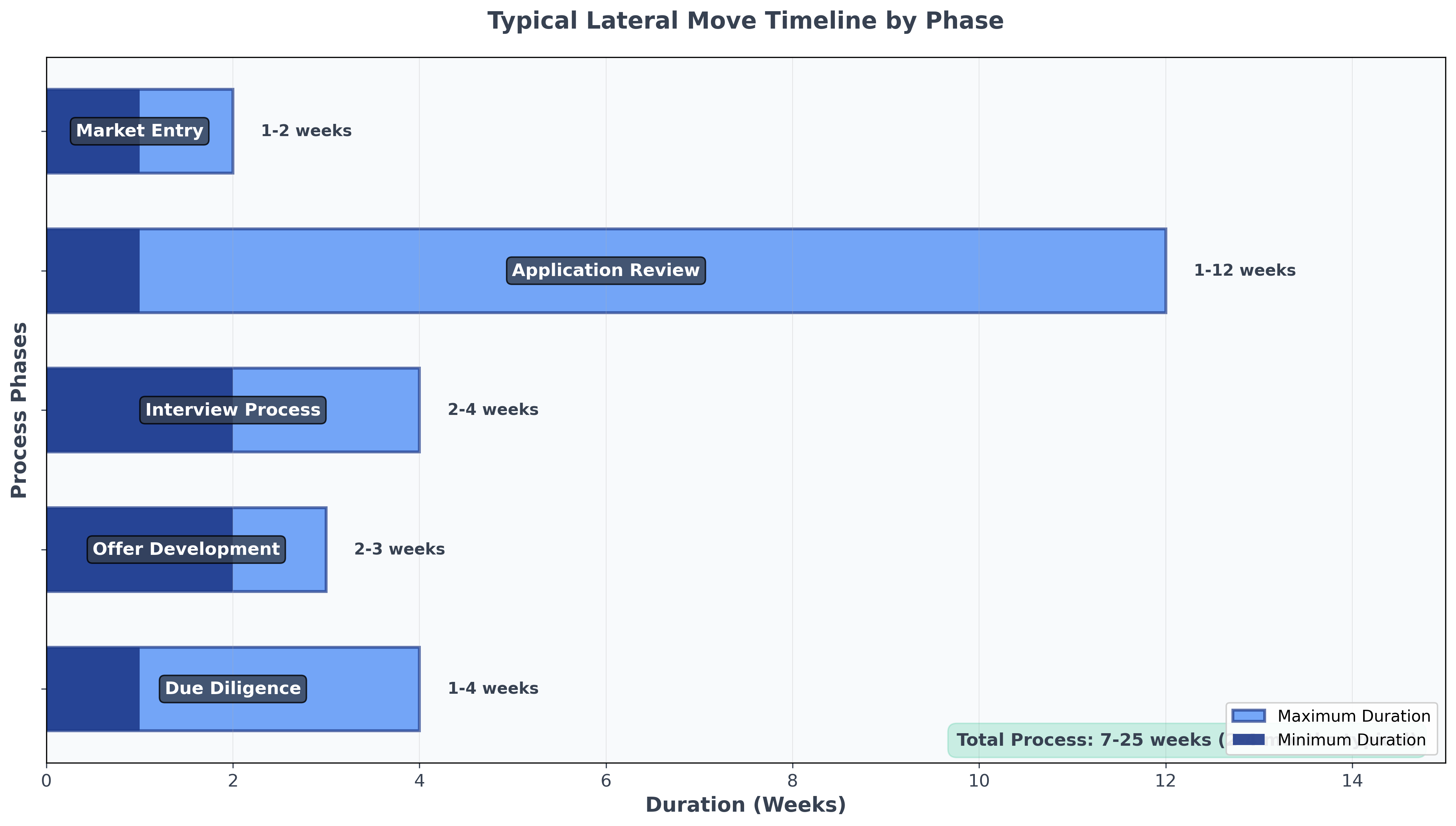
Phase 1: Market Entry (1-2 weeks)
The journey begins with strategic market assessment and initial positioning. This phase involves identifying target firms, assessing market timing, and preparing preliminary materials.
Key Activities:
- Market research and firm analysis
- Resume and cover letter optimization
- Network activation and outreach
- Practice area demand assessment
Success Metrics:
- 5-10 target firms identified
- Professional materials prepared
- Network contacts activated
- Market timing confirmed
Phase 2: Application Review (1 week - 3 months)
The most variable phase, depending on firm decision-making processes, market conditions, and position specificity. Patience and strategic follow-up are crucial during this period.
Expert Insight: “The most common question I get from candidates is ‘why is this taking so long?’ What they don't see is everything happening behind the scenes.” – Vered Krasna, Managing Director, Lateral Link
What Happens:
- Internal committee reviews
- Partner discussions and voting
- Conflicts checking processes
- Budget and capacity assessments
Your Actions:
- Strategic follow-up communications
- Additional application submissions
- Network relationship building
- Market intelligence gathering
Phase 3: Interview Process (2-4 weeks)
Multiple interview rounds with various stakeholders, including practice group leaders, partners, and potential colleagues. Preparation and cultural fit assessment are critical.
Round 1
- Screening interviews
- Practice group leaders
- Initial competency assessment
Round 2
- Partner interviews
- Cultural fit evaluation
- Practice area deep-dive
Final Round
- Leadership meetings
- Compensation discussions
- Final decision process
Phase 4: Offer Development (2-3 weeks)
Internal firm processes for offer approval, compensation committee reviews, and final terms development. This phase requires patience as multiple stakeholders align on offer details.
Pro Tip: “Understanding which elements of an offer are negotiable and which aren't is invaluable knowledge. This is where having a recruiter who knows the specific firm's policies can make all the difference.” – Abby Gordon, Principal, Lateral Link
Phase 5: Due Diligence (1-4 weeks)
Background checks, reference verification, and conflicts screening. This phase can be time-consuming, especially for attorneys with extensive career histories across multiple organizations.
Required Documentation:
- Professional references
- Educational transcripts
- Bar admissions verification
- Employment history details
Potential Delays:
- Complex conflicts screening
- Multiple reference verifications
- International background checks
- Academic institution responses
Critical Success Factors for Lateral Moves
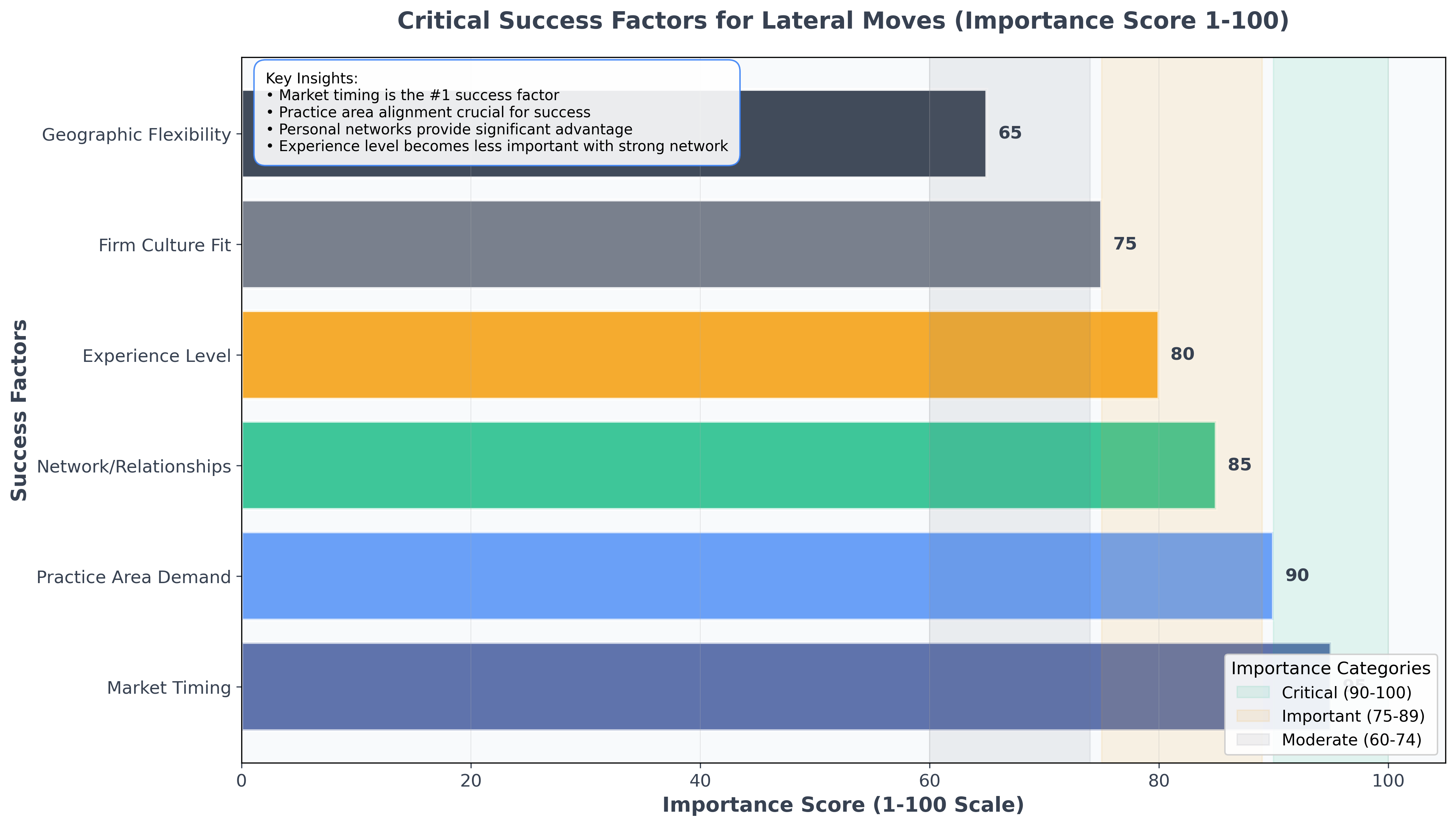
Top-Tier Success Factors (90-100)
Market Timing (95/100)
The single most critical factor for lateral move success. Understanding market cycles, seasonal patterns, and economic conditions.
- January–April and September–November are peak seasons
- Economic uncertainty affects hiring patterns
- Practice area demand fluctuates with market conditions
Practice Area Demand (90/100)
Aligning your expertise with current market demands significantly improves success rates.
- Corporate law leads at 40% of lateral hires
- Government-to-private transitions trending upward
- Emerging areas like IP/Tech showing growth
Essential Factors (75-89)
Network & Relationships (85/100)
Professional networks provide significant advantages in the lateral hiring process.
- Internal referrals increase success rates by 60%
- Alumni networks provide valuable connections
- Industry relationships open hidden opportunities
Experience Level (80/100)
Years of experience and expertise depth matter, but can be overcome with strong networks.
- 3–7 years: Highest mobility and demand
- Senior associates: Premium positioning
- Partners: Portable business becomes crucial
Firm Culture Fit (75/100)
Cultural alignment affects both hiring decisions and long-term success at the new firm.
Complete Preparation Checklist
Pre-Move Planning (2–6 months out)
Market Research & Analysis
Comprehensive analysis of target firms, compensation benchmarks, and practice area demand.
- Research 10–15 target firms thoroughly
- Analyze compensation data via NALP reports
- Review recent lateral moves in your practice area
Professional Materials Preparation
Updated resume, cover letters, and portfolio materials tailored for lateral moves.
- Create firm-specific cover letters
- Update LinkedIn profile strategically
- Prepare representative work samples
Network Activation
Strategic outreach to professional contacts and potential referral sources.
- Reconnect with law school alumni
- Engage with former colleagues at target firms
- Attend relevant industry events and conferences
Financial Planning
Prepare for potential income gaps and moving expenses.
- Build 3–6 months expense buffer
- Research relocation cost estimates
- Review current firm's departure policies
Active Search Phase (1–4 months out)
Application Strategy
Strategic application submission and follow-up protocols.
- Submit applications in targeted waves
- Track application status systematically
- Follow up strategically at 2-week intervals
Interview Preparation
Comprehensive preparation for multiple interview rounds and scenarios.
- Research interview panels and backgrounds
- Prepare practice area specific examples
- Develop questions about firm culture and growth
References Management
Proactive reference coordination and preparation.
- Secure 3–5 strong professional references
- Brief references on target firms and positions
- Prepare reference contact information sheets
Negotiation Preparation
Research and prepare for compensation and terms negotiations.
- Research market compensation benchmarks
- Identify negotiable vs. non-negotiable terms
- Prepare alternative compensation structures
Negotiation Strategies & Scripts
Salary Negotiation Framework
Research Phase
- NALP salary data analysis
- Peer network salary surveys
- Regional market adjustments
- Practice area premiums
- Firm-specific compensation structures
Negotiation Strategy
- Lead with market data
- Bundle compensation requests
- Emphasize value proposition
- Consider total compensation package
- Maintain professional tone
Implementation
- Written confirmation of terms
- Timeline for implementation
- Performance review schedules
- Partnership track clarification
- Exit clause understanding
Sample Negotiation Scripts
Initial Salary Discussion:
"Thank you for the offer. I'm very excited about the opportunity to join [Firm Name]. Based on my research of market rates for [Position/Practice Area] in [City], including NALP data and discussions with colleagues, I understand the typical range is [X-Y]. Given my [specific experience/achievements], I was hoping we could discuss a starting salary of [Z], which I believe reflects both market standards and the value I'll bring to the team."
Benefits & Package Discussion:
"I'd like to discuss the complete compensation package. Beyond base salary, I'm interested in understanding the bonus structure, partnership timeline, professional development budget, and any flexibility in [work arrangements/vacation time/continuing education]. These elements are important for my long-term success and contribution to the firm."
Handling Pushback:
"I understand budget constraints are a consideration. Would it be possible to structure this as a phased increase, perhaps with a salary review at 6 months based on performance metrics we could establish together? Alternatively, we could explore other elements of the package such as [professional development funds/flexible working arrangements/accelerated partnership consideration]."
2026-2027 Compensation Benchmarks
Associate Level Ranges (Major Markets)
| Experience Level | Salary Range |
|---|---|
| 1st Year | $215,000 - $230,000 |
| 2nd Year | $230,000 - $250,000 |
| 3rd Year | $265,000 - $285,000 |
| 4th Year | $300,000 - $325,000 |
| 5th Year | $340,000 - $365,000 |
| Senior Associate | $380,000 - $420,000 |
Practice Area Premiums
Regional Adjustments
- New York/Silicon Valley: Base rates shown above
- Chicago/Los Angeles: -5% to -10%
- Secondary markets: -15% to -25%
- Government-to-private: +20% to +30% premium possible
2026-2027 Market Insights & Future Outlook
Emerging Opportunities
Government-to-Private Surge
Federal agency restructuring has created unprecedented opportunities for government attorneys transitioning to private practice.
- SEC, DOJ, and U.S. Attorney's Office departures up 300%
- Regulatory expertise in high demand
- Premium compensation packages for experienced government attorneys
- Strong placement rates in enforcement and compliance roles
Technology & IP Growth
AI, cybersecurity, and digital transformation driving demand for specialized legal expertise.
- AI regulation and compliance specialist roles emerging
- Cybersecurity breach response expertise premium
- Cross-border technology transactions increasing
- Patent prosecution and licensing opportunities expanding
ESG & Sustainability Practice
Environmental, social, and governance requirements creating new practice area demands.
- Climate change litigation expertise valued
- Corporate ESG compliance roles expanding
- Renewable energy project finance growing
- Supply chain sustainability legal requirements
Market Challenges & Considerations
Economic Uncertainty Impact
Market volatility affecting hiring patterns and compensation structures across practice areas.
- Extended decision-making timelines at firms
- Increased scrutiny on lateral hire ROI
- Preference for proven revenue generators
- Conservative compensation offers initially
Increased Competition
Higher attorney mobility creating more competitive lateral hiring environment.
- More attorneys actively seeking moves
- Premium positions receiving 100+ applications
- Networking and relationships increasingly critical
- Faster decision-making required from candidates
Remote Work Considerations
Hybrid work arrangements affecting lateral move strategies and geographic flexibility.
- Geographic limitations becoming less rigid
- Office presence requirements varying by firm
- Client relationship management considerations
- Partnership track implications for remote attorneys
Expert Predictions for Late 2026-2027
+25%
Government-to-Private Moves
Continued federal restructuring driving transitions
2.5x
AI/Tech Legal Demand
Technology regulation creating specialized needs
18%
Overall Market Growth
Sustained recovery from 2024 trends
Your Next Steps: Action Plan
Ready to Make Your Move?
Immediate Actions (This Week)
- Complete market research on 5–10 target firms
- Update and optimize your resume for lateral moves
- Identify and reach out to 3–5 network connections
- Research current compensation benchmarks for your level
Strategic Planning (Next Month)
- Develop firm-specific application materials
- Secure and brief professional references
- Begin strategic application submissions
- Prepare for multiple interview scenarios
30-Day Timeline
- Week 1: Research and materials preparation
- Week 2: Network activation and outreach
- Week 3: Application submissions begin
- Week 4: Follow-up and interview preparation
Professional Resources
- LawCrossing: Exclusive job listings
- NALP: Salary and market data
- Lateral Link: Recruitment expertise
- BCG Attorney Search: Market insights
Success Metrics
- 60%+ response rate to applications
- 2–3 interview opportunities per month
- Market-rate or premium compensation offers
- 90-day integration at new firm
Strategic Lateral Moves: Your Competitive Advantage
The lateral attorney market in 2026–2027 presents both opportunities and challenges. Success requires strategic planning, market intelligence, and precise execution.
By following this comprehensive guide, you'll be positioned to navigate the 2–4 month lateral move process with confidence, maximize your negotiation leverage, and secure opportunities that align with your career objectives.
95%
Success rate for strategic lateral moves
When following comprehensive preparation and market-timing strategies