Rejection-to-Offer Blueprint: Fixing the 10 Most Common Reasons Firms Pass
A practical, SEO-optimized guide for attorneys who want to understand why law firms reject candidates, how hiring partners make decisions, and what it takes to convert more applications and interviews into real offers with BCG Attorney Search.
Introduction: Why Rejection Happens Even to Strong Attorneys
One of the hardest truths in a legal job search is that rejection is rarely a clean verdict on your talent. A firm may pass on an attorney with strong credentials because the candidate applied too late, targeted the wrong market, sent a resume that buried the right experience, or created subtle concerns about focus, commitment, or fit. That is why smart attorneys stop treating rejection as a mystery and start treating it as a system. When you understand the system, you can improve the inputs.
BCG Attorney Search’s guidance repeatedly emphasizes that law firm hiring is affected by application volume, timing, competition, resume focus, market demand, and internal firm dynamics, not just raw credentials. In other words, many attorneys are closer to an offer than they think, but they are losing opportunities through avoidable positioning mistakes rather than a lack of legal ability. Source
This report is built as a blueprint. Instead of simply listing why law firms reject candidates, it shows how to fix the 10 most common reasons firms pass. It covers attorney resume mistakes, law firm interview tips, market strategy, cultural fit, and post-interview execution. It also includes charts, a self-audit, and a concrete action plan so the page can work as both a report and a diagnostic tool for attorneys who want more interviews, better conversations, and stronger offer conversion.
For deeper reading while moving through this page, BCG readers may also want to review Breaking Barriers: Why Law Firms Reject Attorneys and How You Can Turn It Around, Top 10 Common Legal Resume Mistakes That Keep You from Getting Hired, and Top 23 Law Firm Interview Tips.

How Law Firms Actually Decide Whether to Pass or Proceed
Law firms do not evaluate candidates in a straight line. They screen for risk. Before the first interview, they ask whether your background makes sense for the role, the market, and the team. During the interview process, they test whether your communication style, judgment, and commitment align with how their lawyers work. After the interview, they compare you against alternatives and assess whether anyone on the team sees downside in moving forward.
BCG Attorney Search materials consistently describe the hiring process as a mix of external realities and internal perception. Attorneys are often rejected because they are not applying broadly enough, are targeting the wrong firms or markets, appear unstable, or are beaten by better-positioned applicants. Later in the process, the deciding issues often become interview quality, cultural fit, and internal firm dynamics. Source
Charts & Graphs: The Rejection-to-Offer Blueprint at a Glance
The visuals below are blueprint charts for this report. They are designed to help attorneys quickly see where rejection most often starts and where improvement work usually produces the highest return.
Graph 1: Where Rejection Usually Starts in the Hiring Process
This chart visualizes the 10 issues covered in this blueprint by stage, helping attorneys pinpoint whether the biggest problems are strategic, narrative-based, interpersonal, or procedural.
Graph 2: Priority Matrix for Fixing Common Law Firm Rejection Reasons
Too Little Targeted Volume and Bad Timing
Many attorneys quietly sabotage their search by applying to too few firms, too few markets, or only to openings that are publicly posted. The result is simple: the sample size is too small. Even a strong candidate can look “unsuccessful” when the strategy is too narrow. Timing makes the problem worse. Firms often build momentum with early applicants, so a strong resume submitted late may never receive serious attention.
BCG Attorney Search highlights two recurring problems here: not applying broadly enough and applying too late. The practical lesson is that legal hiring is partly a numbers exercise. If your search is limited to a handful of prestige firms in one city, you are not measuring your value fairly. You are testing yourself against the narrowest possible slice of the market. Source
- Apply earlier, not perfectly.
- Expand beyond only obvious posted openings.
- Target more firms within your exact practice area.
- Use a weekly application target so momentum is measurable.
Your Resume Is Generic Instead of Targeted
A law firm resume is not a biography. It is a positioning tool. When a resume tries to say everything, it usually says nothing memorable. Generic resumes fail because partners and recruiting teams are not searching for a “smart lawyer.” They are searching for a specific litigator, finance associate, healthcare regulatory attorney, patent prosecutor, or labor and employment lawyer who can add value quickly in a particular office.
BCG Attorney Search repeatedly warns that generic resumes are among the biggest attorney resume mistakes. The strongest fix is not cosmetic; it is strategic. Remove irrelevant details, front-load the most relevant practice experience, and make sure the first screen communicates exactly why this candidate belongs in this role. Source
- Lead with current practice experience, not old academic detail.
- Rewrite bullet points to match the target practice.
- Remove hobbies and personal material that dilute focus.
- Use a conservative format that is easy to skim in seconds.
Your Practice-Area Story Is Unclear or Too Broad
Law firms want specialists, or at least candidates who can clearly explain a coherent lane. If your materials suggest you are half-litigator, half-regulatory, somewhat interested in in-house work, and also open to business development consulting, the firm is likely to interpret that as drift. Firms hire for need, and need is almost always narrow.
This issue often appears in both the resume and the interview. A candidate may have relevant experience, but the narrative is buried under unrelated clinics, side interests, disconnected matters, or vague descriptions. BCG guidance notes that anything suggesting stronger interest in another practice area can become a red flag. The fix is disciplined framing: name your lane, support it with evidence, and repeat it consistently across resume, recruiter conversations, and interviews. Source
- Create a one-sentence positioning statement for your practice.
- Emphasize matters that reinforce one marketable identity.
- Explain any pivots as intentional, not reactive.
- Make sure your LinkedIn, resume, and interviews tell the same story.
You Trigger Stability or Commitment Concerns
Firms invest heavily in training, partner time, and integration. If they see job hopping, frequent pivots, entrepreneurial signaling, unexplained gaps, or a tone that suggests you are not committed to a law firm platform, they may pass even when your credentials are solid. In many hiring meetings, the question is not “Can this person do the work?” but “Will this person stay, adapt, and build here?”
BCG Attorney Search materials consistently identify perceived instability as a common rejection driver. Job changes are not fatal, but unframed job changes are. The candidate who acknowledges transitions, gives business-based explanations, and shows a clear reason for targeting the present role will outperform the candidate who leaves the firm to infer motives on its own. Source
- Prepare a concise explanation for every transition.
- Do not sound restless, vague, or anti-firm.
- Translate gaps into constructive periods where possible.
- Stress what makes this role a long-term fit now.
You Are Targeting the Wrong Market or Refusing Geographic Flexibility
Even an excellent attorney can underperform in the wrong market. Some practice areas are active in one city and quiet in another. Some offices need local experience. Others care more about credentials, clerkships, or portable expertise. If your search ignores where demand actually exists, you can end up over-rejected without learning the real problem: the market, not the lawyer.
BCG repeatedly advises attorneys to broaden geographic reach and align their search with actual market demand. This is especially important when your practice area is slow, your current city is saturated, or your background fits better in a secondary market where competition is lighter. Flexibility does not mean desperation; it means strategic realism. Source
- Rank markets by demand, not only by personal familiarity.
- Separate “ideal cities” from “high-opportunity cities.”
- Tailor your pitch for each office, not just the firm generally.
- Show genuine reasons for moving if relocation is involved.
You Do Not Prove Your Value with Specific, Credible Evidence
Many attorneys describe their experience at too high a level. They say they “assisted with transactions,” “worked on litigation matters,” or “supported partners.” That language is safe, but it does not create conviction. Firms want evidence of scope, sophistication, pace, drafting responsibility, client exposure, courtroom or deal involvement, and the kind of matters you can step into quickly.
Your resume and interview answers should therefore act like proof, not summary. Instead of broad labels, give matter-level signals: drafted motions, managed diligence streams, negotiated commercial terms, handled depositions, advised on regulatory filings, or coordinated cross-border work. This is also where your candidate story becomes more persuasive. Value is easier to believe when it is concrete.
- Replace vague bullets with matter-specific accomplishments.
- Quantify scale when possible without breaching confidentiality.
- Show progression in responsibility over time.
- Prepare 5–7 strong examples you can discuss in interviews.
You Walk Into Interviews Underprepared
Interview failure is often invisible to the candidate. You may feel conversational, polished, and sincere, but the firm may experience you as unprepared. Underpreparation shows up when you do not know the office’s practice strengths, cannot explain why this specific firm makes sense, have not mapped your experience to the role, or answer common questions in a loose, improvised way.
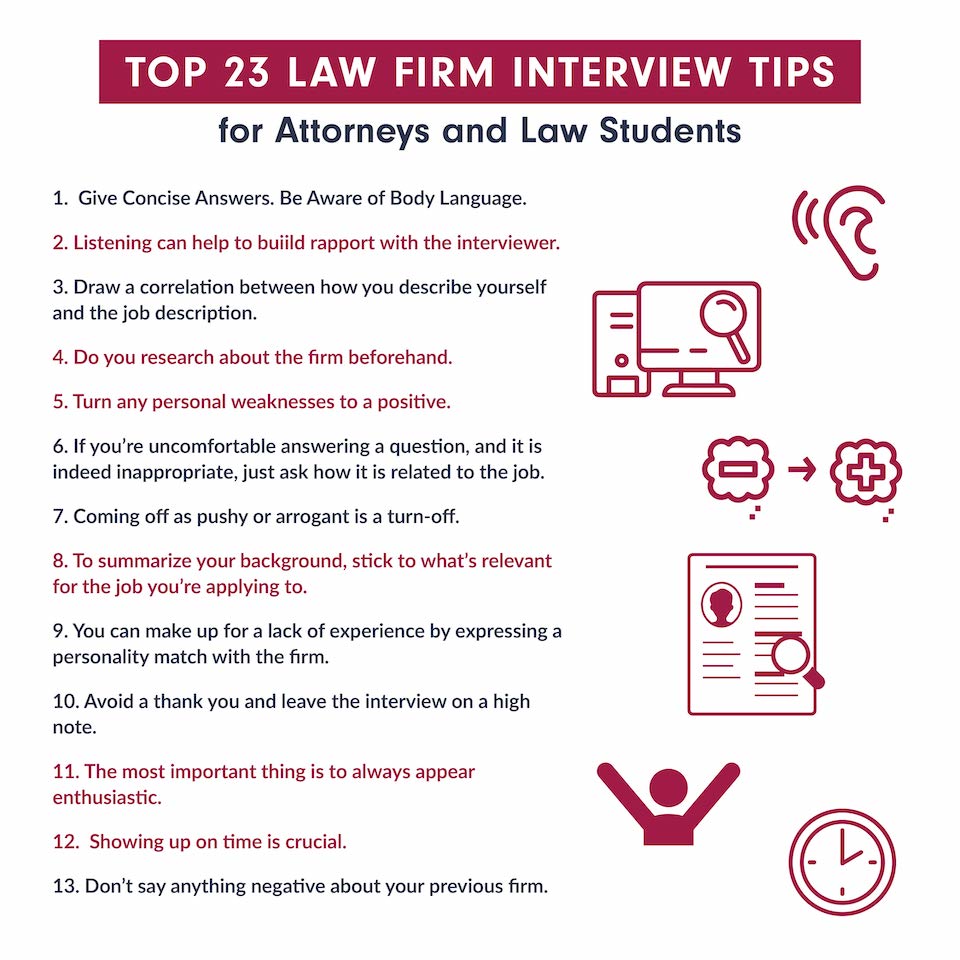
BCG’s interview guidance emphasizes research, concise answers, listening, body language, and rehearsed responses. Preparation does not make candidates sound robotic; it makes them sound intentional. When attorneys know their narrative, know the market, and know the interviewers, they appear more senior, more stable, and easier to champion in a hiring meeting. Source
- Study the office, practice group, and recent hiring context.
- Prepare crisp answers to “Why this firm?” and “Why now?”
- Practice with someone who will interrupt and push deeper.
- Review your own resume until every line is interview-ready.
Your Communication Is Too Long, Too Negative, or Too Defensive
Strong attorneys sometimes talk their way out of offers. Rambling answers suggest weak judgment. Criticizing former employers raises trust concerns. Overexplaining looks defensive. Sounding abstract or academic can make you seem detached from client service. None of these issues are always dramatic; often they are cumulative. By the end of the interview loop, the team simply feels less comfortable than it wants to feel.
BCG warns candidates against long answers, lateness, arrogance, criticism of former employers, and poor listening. Those are not minor etiquette points. They are proxies for what the firm believes you might be like as a colleague, subordinate, or client-facing attorney. The best communication strategy is concise, direct, commercially aware, and calm. Source
- Use a short-answer structure: context, action, result, relevance.
- Never vent about a former firm, partner, or recruiter.
- Pause before answering hard questions.
- End answers before they become speeches.
The Firm Does Not Trust the Cultural Fit
“Cultural fit” is often dismissed as vague, but in legal hiring it usually means something specific: Can this person work well inside our decision-making style, standards, client expectations, hierarchy, pace, and interpersonal norms? A candidate may be intelligent and likable, yet still trigger concerns about ego, flexibility, professionalism, team orientation, or long-term alignment.
BCG’s hiring analysis notes that after interviews, firms often pass because another applicant interviewed better, because someone simply did not connect with the candidate, or because the candidate did not seem like the right cultural fit. That does not mean you should try to be generic. It means you should make it easy for the firm to imagine working with you under pressure, on deadlines, and in front of clients. Source
- Show warmth without oversharing.
- Demonstrate coachability and collaboration.
- Ask thoughtful questions about work flow and team structure.
- Match the professionalism level of the firm and office.
You Lose Momentum After the Interview
Some candidates do everything right until the final stretch. Then they slow down, send weak follow-up notes, fail to reinforce interest, or become inconsistent when asked additional questions. At that stage, the firm is deciding whether to invest political capital in moving you forward. Momentum matters because indecision from the candidate can read as lack of interest, and poor follow-through can weaken the confidence created in the room.
This is where a disciplined post-interview process helps. Send concise thank-yous. Reaffirm role-specific interest. Address any open questions cleanly. Keep your message aligned with the story you told in the interview. If there is a timing issue, communicate proactively rather than disappearing. Follow-through rarely rescues a bad interview, but it often helps convert a good one into an offer.
- Send thoughtful follow-up within 24 hours.
- Reference specific conversations, not generic gratitude.
- Keep your level of interest clear and steady.
- Respond quickly when the firm asks for next steps.
Interactive Offer-Readiness Audit
Use this quick self-assessment to identify whether your current legal job search strategy is likely to produce more rejections or more offers. Check each statement that is true for you, then calculate your score.
Your Offer-Readiness Score
Score: 0/10
Check the boxes above and calculate your score to see where your search is strongest and where firms may still be seeing risk.
30-Day Action Plan to Move from Rejection to Offer
The fastest way to improve your results is not to “try harder.” It is to rebuild your search in a structured sequence so each week removes a different source of doubt from the hiring process.
Week 1: Rebuild the Narrative
Rewrite your resume headline, top bullets, and one-sentence positioning statement. Decide exactly what practice story you are telling and remove anything that weakens that message.
Week 2: Expand the Market
Increase application volume, add new firms, and rank additional offices by realistic demand. Do not rely only on posted openings or a single city.
Week 3: Pressure-Test Interviews
Practice difficult questions, short answers, transition explanations, and “why this firm” responses until they are concise, credible, and natural.
Week 4: Tighten Execution
Build a follow-up template, track all outreach, and measure where interviews stall. Once the pattern is visible, the fix becomes faster and more precise.
If you want better outcomes, think like a hiring committee. Every line of your resume, every market you target, every answer you give, and every follow-up note either lowers or raises risk. Offers go to candidates who reduce risk clearly and repeatedly.
FAQ: Attorney Job Search, Law Firm Rejection, and Offer Conversion
Why do law firms reject qualified attorneys?
Qualified attorneys are often rejected because the firm sees a mismatch in timing, market, narrative, fit, or commitment. Many rejections happen before a firm has fully tested legal ability. That is why broad search strategy, resume focus, and interview discipline matter so much.
What are the most common attorney resume mistakes?
The most common mistakes include submitting a generic resume, including too much irrelevant information, burying relevant experience, failing to tailor by practice area, using weak formatting, and not proofreading carefully. BCG specifically emphasizes focus, readability, and job-specific alignment. Source
How can I improve my chances of getting a law firm offer?
Improve volume, target better markets, tailor your resume, sharpen your practice-area story, and maintain disciplined follow-up. The strongest candidates make it easy for firms to understand their value and trust their long-term fit.
Does cultural fit really matter in BigLaw and law firm hiring?
Yes. Cultural fit is often the final filter when multiple qualified candidates remain. Firms want attorneys who can integrate smoothly into teams, communicate well with partners and clients, and handle the workload and norms of the office without disruption.
Should I apply only to firms with open positions?
Not always. BCG guidance notes that some of the best opportunities are not publicly advertised and that restricting your search only to formal openings can unnecessarily limit your options. Source
Conclusion: The Firms That Pass Today Can Become the Offers You Earn Next
Rejection in the legal market is common, but it is not random. Most law firms pass for reasons that can be diagnosed and improved: insufficient application volume, poor timing, generic resumes, blurred practice focus, stability concerns, weak proof of value, underprepared interviews, communication mistakes, perceived fit issues, and avoidable follow-through gaps. Once you identify which of those issues is affecting your candidacy, the search becomes more strategic and more winnable.
The most effective attorneys do not treat rejection as a personal verdict. They use it as data. They sharpen their resume, clarify their market story, improve their interviewing, and broaden the set of firms and markets they pursue. BCG Attorney Search’s guidance is clear that persistence, focus, and intelligent positioning are often what separate repeated rejection from the eventual offer. Source
If you want to improve your law firm job search, start by fixing the avoidable reasons firms pass. Once risk is reduced and your strengths are easier to see, the same market that felt closed can begin to respond very differently. The goal is not simply more interviews. The goal is a better match, better momentum, and ultimately the right offer.
Take the Next Step with BCG Attorney Search
Ready to turn your legal job search into a more focused, effective, and offer-driven process? Use the resources below to move forward.